





Beggs
3.0
Developed by P.R. Begg in the 1950s, Begg's brackets are ribbon-arch fixed-appliance brackets with a gingival-facing vertical slot locked by a brass Begg's pin, used in the three-stage Begg light-wire technique with 0.016" round Australian wire as the working archwire. Dentalkart stocks OSL Begg's brackets and U Ortho Begg's bondable tubes.
Sort by - Recommended
 Recommended
 Price- High to LowPrice- Low to High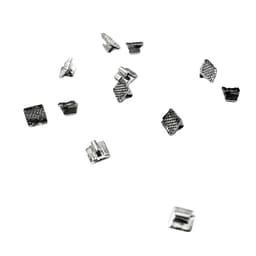


Enables fast, comfortable orthodontic treatment using light forces and intra-oral anchorage for effective alignment
Starting at₹ 325
View Similar Products


★ 3.0
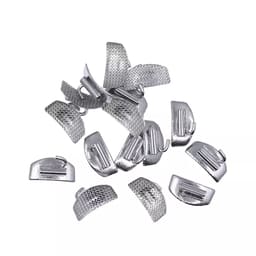
(2)Precision-engineered, round-shaped bondable tube with hook for superior orthodontic alignment
Starting at₹ 235
View Similar Products
Filters
Sort By
RecommendedBegg's Brackets & Begg's Technique Components
Begg's brackets are the ribbon-arch fixed-appliance brackets developed by P.R. Begg in Australia in the 1950s for the Begg light-wire orthodontic technique — a three-stage treatment philosophy (tipping, uprighting, finishing) that uses light continuous forces from 0.016" round Australian wire to achieve full Class II and crowding correction with minimal anchorage loss. The bracket carries a vertical slot facing gingivally that receives the archwire and is locked with a Begg's pin, distinct from the horizontal-slot edgewise brackets used in modern straight-wire treatment. Dentalkart stocks the OSL Beggs Brackets alongside the matched U Ortho Beggs Bondable Tube with Hook.
Components of the Begg's Appliance
Begg's Brackets
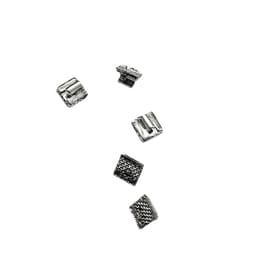
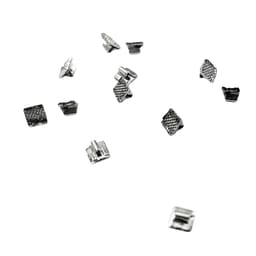
Begg's brackets such as the OSL Beggs Brackets feature a vertical slot opening gingivally with a single attachment wing for archwire engagement and elastic ligation — the slot accepts the round Australian wire and is locked in position by a small brass Begg's pin inserted through a horizontal hole in the bracket body, producing the loose-wire tipping mechanics that define the Begg technique.
Begg's Bondable Tubes & Buccal Attachments
Begg's posterior buccal attachments such as the U Ortho Beggs Bondable Tube include an integral hook for inter-arch elastic attachment and the matched bondable base for direct enamel bonding on the maxillary or mandibular first molar, supplied in 10-piece refill packs for chair-side use.
Pins, Springs & Auxiliaries
The full Begg technique uses Begg's locking pins, auxiliary uprighting springs, vertical loops on the archwire and inter-arch elastics to drive the three-stage tipping-uprighting-finishing mechanics — these components are sold alongside the brackets to complete the Begg appliance setup.
When Is the Begg's Technique Used?
The Begg's technique is used by orthodontists trained in the light-wire philosophy for Class II crowding correction, extraction-stage space closure and any case where the operator prefers loose-wire tipping mechanics over the precise tooth-position control of edgewise straight-wire technique. It pairs with 0.016" round Australian Wires as the working archwire across all three treatment stages.
How to Choose the Right Begg's Components
Match the bracket prescription and slot dimensions to the Begg technique training the operator has received — modern modified Begg brackets add limited torque and angulation control compared to the original 1950s design. For posterior anchorage, pair the Begg's bracket set with the matched bondable buccal tube with hook on the maxillary and mandibular first molars. Confirm pin compatibility (brass vs stainless steel) with the planned archwire size before bulk ordering, and pair with the broader Buccal Tubes and Lingual attachments range as needed.
Brands of Begg's Components at Dentalkart
The catalogue features OSL Beggs Brackets as the core bracket set for the Begg light-wire technique, and the matched U Ortho Beggs Bondable Tube with Hook for posterior molar anchorage — covering the bracket-and-buccal-tube core of the Begg appliance for orthodontists practising light-wire technique alongside their conventional edgewise straight-wire cases.
Why Buy Begg's Components from Dentalkart
Dentalkart sources Begg's orthodontic appliance components directly from authorised manufacturers including OSL and U Ortho, with batch-coded packaging, cash-on-delivery, GST invoices and 110000+ pincode coverage across India. Practices can pair Begg's brackets with Australian wire spools and matched Begg's pins for the complete light-wire orthodontic appliance kit in one bulk order.
Frequently Asked Questions (FAQs):
What is a Begg's bracket?
A Begg's bracket is a ribbon-arch fixed-appliance orthodontic bracket developed by P.R. Begg in Australia in the 1950s for the Begg light-wire technique. It features a vertical slot facing gingivally that receives the archwire and is locked with a Begg's pin, distinct from the horizontal-slot edgewise brackets used in modern straight-wire treatment.
What is the Begg's light-wire technique?
The Begg's light-wire technique is a three-stage orthodontic treatment philosophy (tipping, uprighting, finishing) that uses light continuous forces from 0.016" round Australian wire engaged loosely in vertical-slot Begg brackets. The technique achieves full Class II and crowding correction with minimal anchorage loss but requires specific operator training distinct from edgewise straight-wire orthodontics.
What wire is used with Begg's brackets?
The wire used with Begg's brackets is 0.016" round Australian high-tensile stainless-steel wire across all three treatment stages — its high springback and resilience allow the loose-fitting wire to deliver the light tipping forces that define the Begg technique without permanent deformation during chair-side activation.
Are Begg's brackets still used today?
Begg's brackets are still used today by orthodontists trained in the light-wire technique, particularly for Class II crowding correction and extraction-stage space closure cases where the operator prefers loose-wire tipping mechanics over edgewise precision. Most modern orthodontic curricula prioritise straight-wire technique, but the Begg technique remains taught in some Indian, Australian and Asian dental programmes.
What is a Begg's pin used for?
A Begg's pin is a small brass locking pin inserted through a horizontal hole in the Begg bracket body to hold the round Australian archwire in the vertical slot. Unlike elastomeric ligatures or stainless-steel ligature ties on edgewise brackets, the Begg's pin locks the wire loosely enough to permit the tipping movements central to the light-wire technique.