

B-Ostin
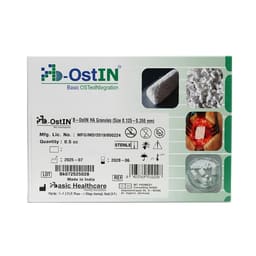
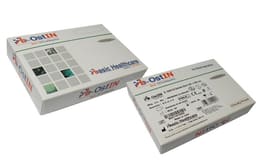
B-Ostin is an Indian brand of 100% synthetic bone graft materials, made by Basic Healthcare Products in Himachal Pradesh. Its range covers hydroxyapatite (HA Nano) and beta-tricalcium phosphate (TP) granules plus biphasic and block forms — alloplasts carrying no animal or donor tissue, used for ridge augmentation, sinus lift and socket preservation.
 Recommended
 Price- High to LowPrice- Low to High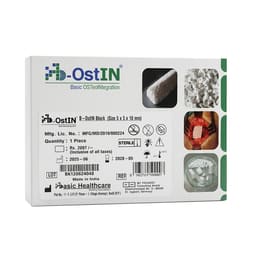
 7
7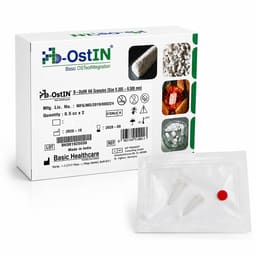
Only 4 Left
9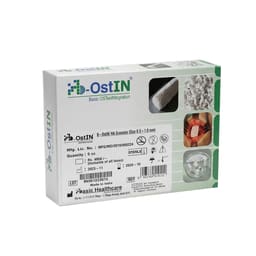
 7
7B-Ostin — 100% Synthetic Bone Grafts, Engineered in India
B-Ostin is a synthetic bone graft brand developed by Basic Healthcare Products Pvt. Ltd. in Himachal Pradesh. Everything it makes is an alloplast: calcium-phosphate ceramic produced in a laboratory rather than taken from a cow, a cadaver or the patient. For a surgeon that removes an entire category of concern — no animal-source processing to explain, no donor-tissue chain to trace, and no second surgical site to harvest from — while still giving the porous mineral scaffold that new bone needs to grow into.
What makes the material work
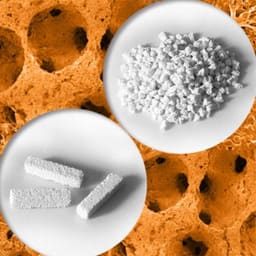
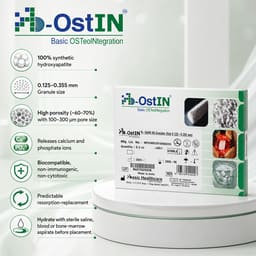
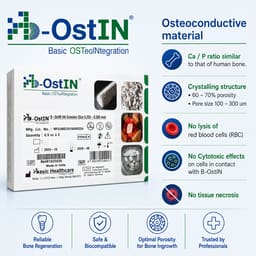
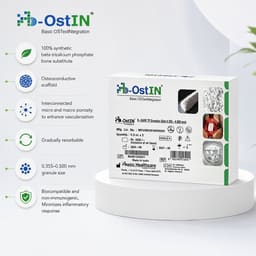
The performance of a synthetic graft comes down to its architecture and its chemistry. B-Ostin granules are made by a wet chemical process to carry 60–70% porosity with pores in the 100–300 µm range — the window in which blood vessels and osteogenic cells can actually migrate in and lay down bone. Its calcium-to-phosphate ratio is set close to that of human bone, which is what allows the graft to bond to the host rather than sit in it as an inert filler.
The B-Ostin range
B-Ostin HA Nano — hydroxyapatite granules
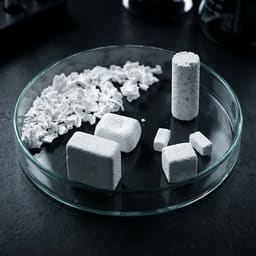
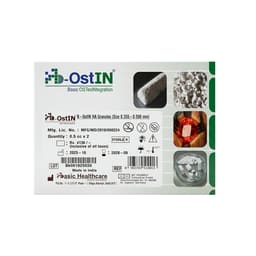
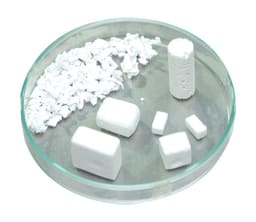
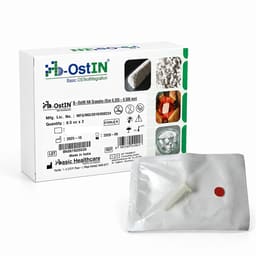
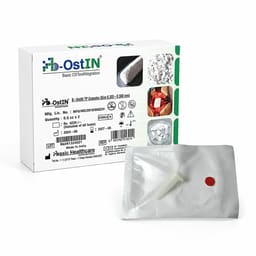
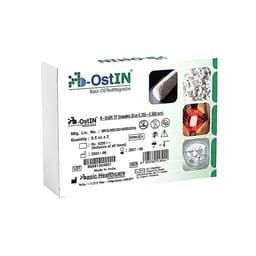
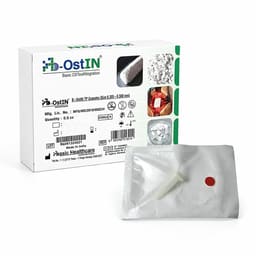
HA Nano is pure synthetic hydroxyapatite, the same calcium-phosphate mineral that gives natural bone its hardness. It resorbs very slowly, so it behaves as a long-term scaffold that holds grafted volume while host bone grows through it — the choice when a site must not collapse before an implant goes in. It comes in graded granule sizes from 0.125 mm up to 1.0 mm. The B-Ostin HA Nano (0.355–0.500 mm) is the mid-size granule in that line.
B-Ostin TP — beta-tricalcium phosphate granules
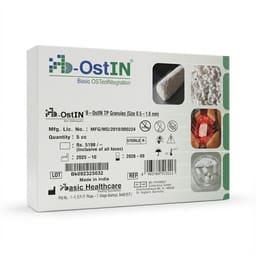
TP is 100% beta-tricalcium phosphate, and its defining property is that it disappears: the ceramic is progressively resorbed and substituted by the patient's own bone, leaving no permanent foreign material behind. That suits contained defects where a complete biological turnover is wanted rather than a lasting scaffold. The B-Ostin TP (0.500–1.000 mm) is the coarse granule for bulkier fills.
B-Ostin HT and HA Block
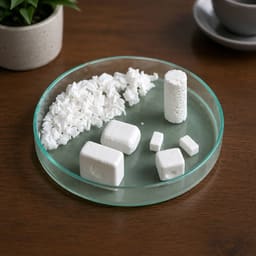
HT is the biphasic option, blending roughly 60% hydroxyapatite with 40% β-TCP so a single graft both holds volume and partly resorbs — a middle path between the two pure ceramics. Alongside the granules, B-Ostin also makes a porous hydroxyapatite block, a pre-formed 5×5×10 mm piece for ridge augmentation where a shaped, space-maintaining scaffold is easier to place than loose particles.
HA or β-TCP — which B-Ostin graft should I use?
The decision is about resorption. Choose HA Nano when the site must keep its volume for months while an implant is planned — a ridge, a sinus, a wall that would otherwise collapse. Choose TP when the defect is contained and the aim is for the graft to be fully replaced by living bone. Choose HT when the case wants some of each. Because B-Ostin is entirely synthetic, that decision is a purely mechanical one; how synthetic alloplasts compare with allograft and xenograft on origin and biology is set out in our guide to allograft vs xenograft vs synthetic graft materials.
What is B-Ostin used for?
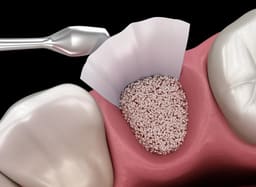
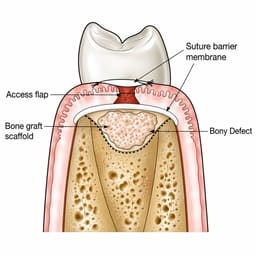
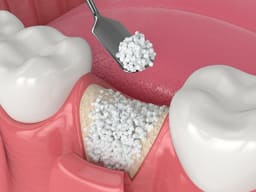
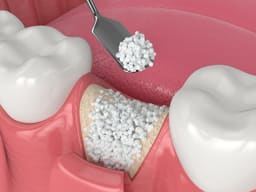
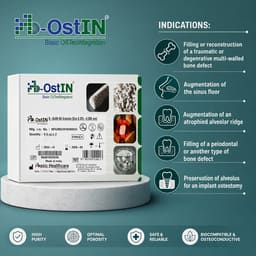
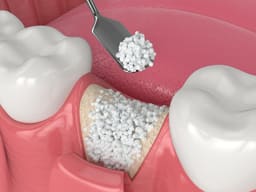
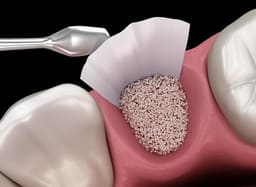
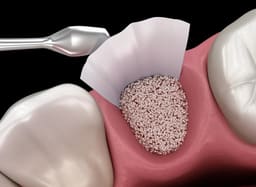
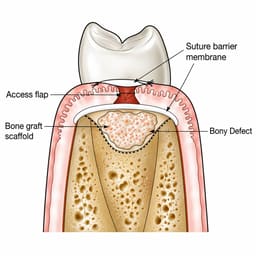
The indications are the standard bone-regeneration list in dentistry: filling and reconstructing traumatic or degenerative bone defects, sinus floor augmentation, alveolar ridge augmentation, periodontal defect repair, and preserving the socket after extraction so an implant osteotomy has bone to sit in. Granule size is matched to the site — fine particles for a socket, coarse for a sinus or a bulk ridge fill.
Where B-Ostin sits in the wider graft range
B-Ostin covers the synthetic end of the shelf. A practice that also wants slow-resorbing bovine mineral, bioactive glass or demineralised matrix will find those alongside it in the full bone grafts range, and can choose per case rather than per brand.
Why buy B-Ostin from Dentalkart
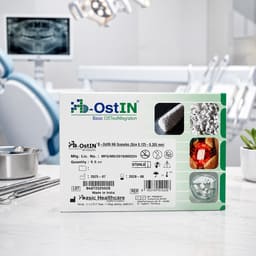
Because B-Ostin is made in India, a clinic gets a graft with genuine regenerative specification — porosity, particle grade, Ca/P ratio — at a price that makes routine grafting viable rather than reserved for the occasional big case. Each vial states its granule range and volume so the right grade reaches the right defect, and it ships sterile with its batch and expiry legible, which is the minimum a material entering a surgical site has to offer.
Frequently Asked Questions (FAQs):
What is B-Ostin?
B-Ostin is an Indian brand of synthetic bone graft materials made by Basic Healthcare Products Pvt. Ltd. in Himachal Pradesh. Its grafts are alloplasts — laboratory-produced calcium-phosphate ceramics containing no animal or human donor tissue — supplied as hydroxyapatite and beta-tricalcium phosphate granules, a biphasic blend and a porous HA block.
B-Ostin HA or TP — which should I choose?
Choose by how long you need the graft to last. HA Nano is hydroxyapatite that resorbs very slowly, holding ridge or sinus volume as a long-term scaffold. TP is beta-tricalcium phosphate that resorbs completely and is replaced by the patient's own bone. The HT biphasic blend sits between the two, part-holding and part-resorbing.
What is B-Ostin used for?
B-Ostin is used for bone regeneration in dentistry: filling traumatic or degenerative bone defects, sinus floor augmentation, alveolar ridge augmentation, periodontal defect repair, and socket preservation after extraction so an implant can later be placed. Granule size is selected to suit the site, from fine particles for sockets to coarse grades for sinus and ridge work.
How long does B-Ostin take to integrate with bone?
B-Ostin grafts typically show bone bonding within about three to six months, varying with the product and the clinical situation. The 60–70% porosity and 100–300 µm pore size let blood vessels and bone-forming cells migrate into the scaffold, while the calcium-to-phosphate ratio, set close to natural bone, supports that integration.
Is B-Ostin safe, sterile and free of animal tissue?
Yes — B-Ostin is 100% synthetic, so it carries no animal or human donor tissue and none of the sourcing questions those raise. The grafts are supplied sterile and have been tested as non-cytotoxic and non-haemolytic, with no tissue necrosis or toxic leachants after implantation, and are manufactured to be biocompatible and non-immunogenic.