
.jpg)

.jpg?w=512)
.jpg?w=512)
Dentaltech
4.3
Dentaltech is an implant-prosthetics brand that machines abutments, healing caps, cover screws, impression copings, scan bodies, and analogs to fit other makers' implants. On Dentalkart the range fits Osstem, Dentium, DIO, Adin, MIS, Straumann, Nobel Biocare, and Neodent connections in titanium and PEEK. Being compatible parts rather than OEM, they restore the same implant at a fraction of the original-brand price.
Sort by - Recommended
 Recommended
 Price- High to LowPrice- Low to High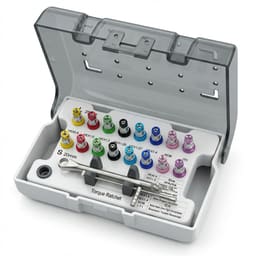

★ 4.7
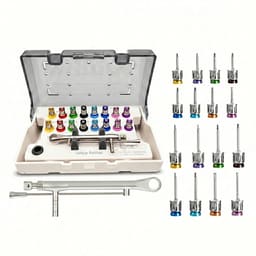
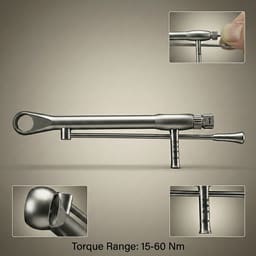
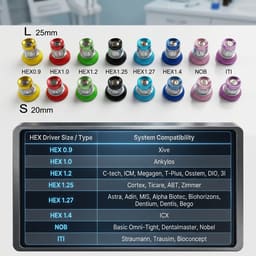
(24)Complete implant driver kit with torque ratchet and color-coded Hex Driver for precise prosthetic screw placement
₹ 3145₹ 13990
77.52% Off
 155
155View Similar Products
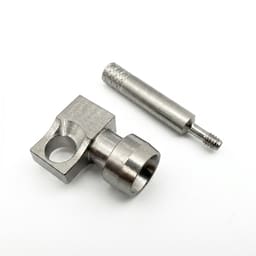
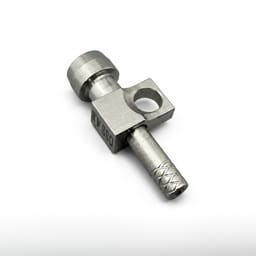
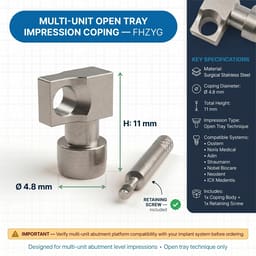
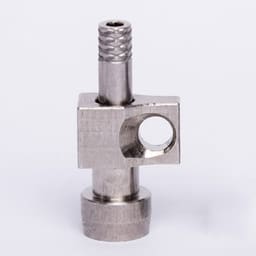
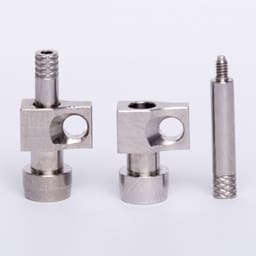

Accurate stainless steel open tray coping for precise multi-unit implant impressions
₹ 315₹ 590
46.61% Off
15View Similar Products
★ 5.0
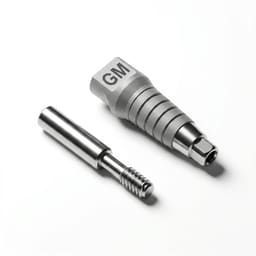
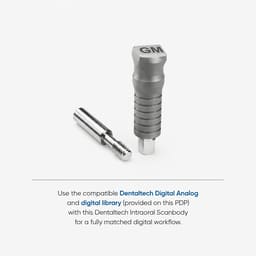
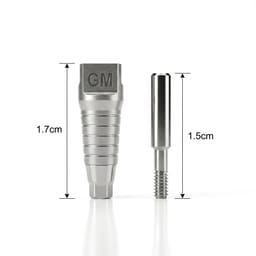
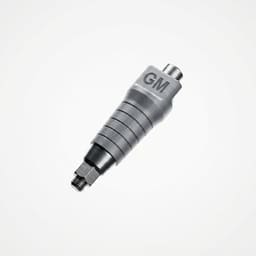
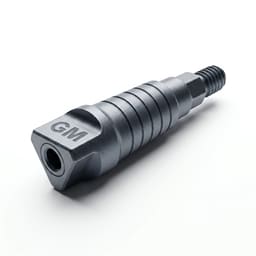
(1)Precision titanium scan body for digital impressions of Neodent GM implants in CAD CAM workflows
₹ 840₹ 1500
44.00% Off
40View Similar Products
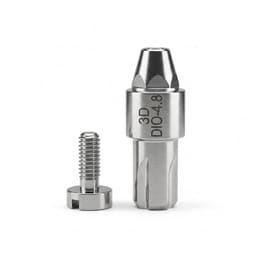
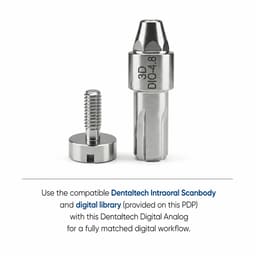
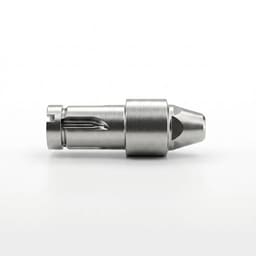
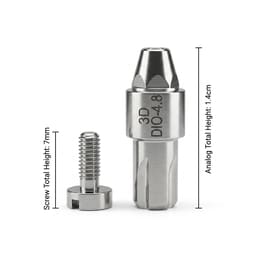
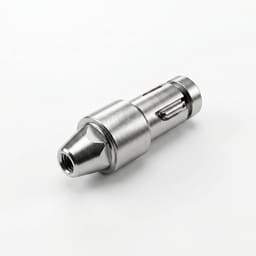
Digital Analog replicating DIO implant position for accurate 3D printed model workflows
₹ 525₹ 1190
55.88% Off
25View Similar Products
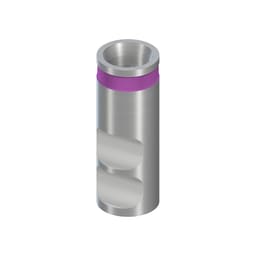
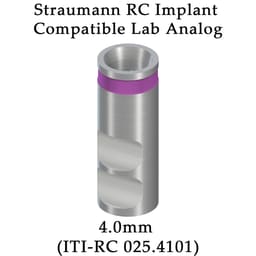
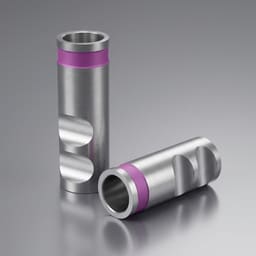
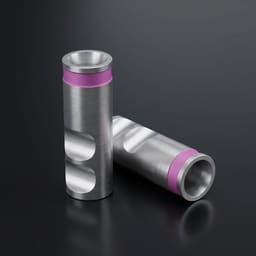
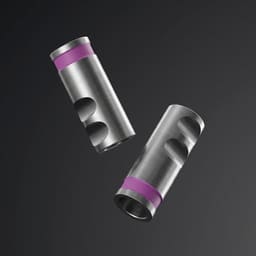
Precise Straumann RC compatible implant analog for accurate laboratory model reproduction
₹ 200₹ 390
48.72% Off
8View Similar Products
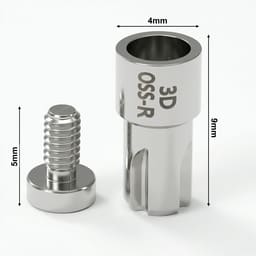
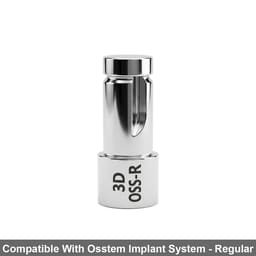
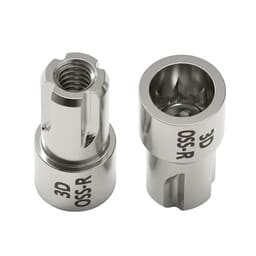
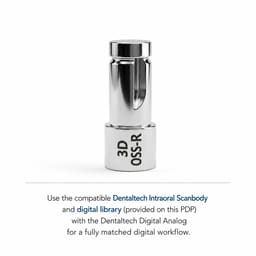
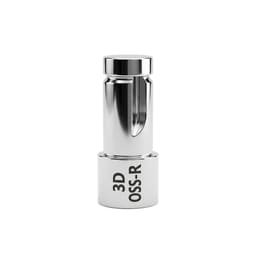
Titanium digital implant analog for Osstem systems used in 3D printed models and CAD/CAM workflows
₹ 525₹ 790
33.54% Off
25View Similar Products
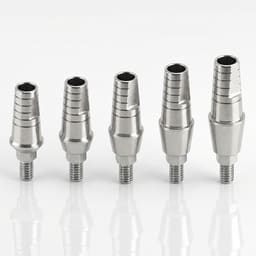
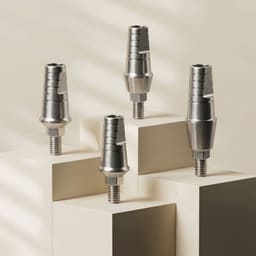
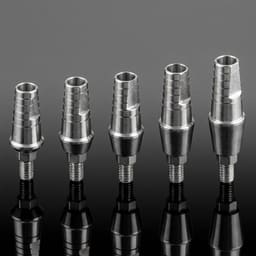
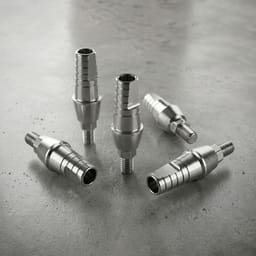
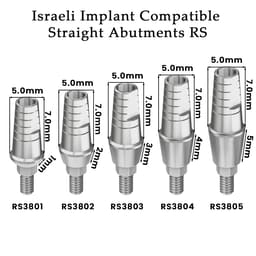
Straight titanium abutments for secure prosthetic connection to Israeli implants
Starting at₹ 265
View Similar Products
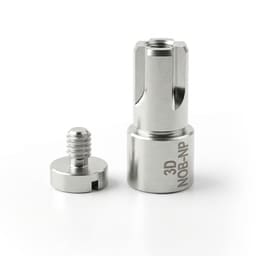
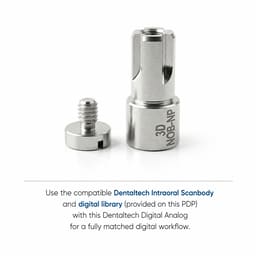
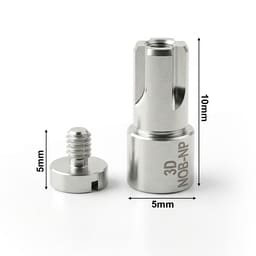
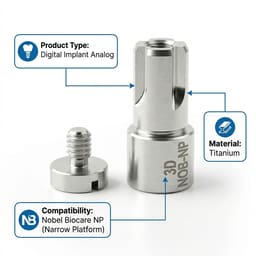
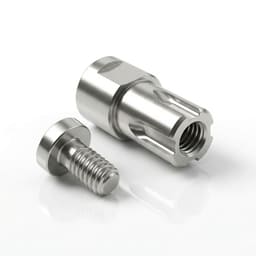
Digital analog compatible with Nobel Biocare NP implants for accurate implant position replication in 3D models
₹ 525₹ 790
33.54% Off
25View Similar Products
Filters
Sort By
RecommendedDentaltech — Compatible Implant Prosthetic Components for Osstem, Dentium, Straumann, Nobel and More
Dentaltech makes the prosthetic side of an implant — the abutments, screws, copings, and lab pieces that sit on top of a fixture rather than the fixture itself. Its whole catalogue is built to match other companies' implant connections, so a clinic that has placed an Osstem, a Dentium, a Straumann, or a Nobel Biocare fixture can restore it with a Dentaltech component in place of the original-brand part. The pieces are cut from implant-grade titanium, with stainless-steel analogs and PEEK scan bodies where the job calls for them, and the line runs the length of the implantology prosthetic stage.
Types of Dentaltech components
Abutments — straight, angular, castable and multi-unit
The abutment is the piece that carries the crown, and Dentaltech makes the full spread: straight abutments for an aligned implant, 15° and 17° angular abutments to correct a divergent one, castable abutments for a lab-cast custom design, and multi-unit abutments that lift a full-arch bridge to a screw-retained level. The Dentaltech Osstem Regular Compatible Hex CCM Castable Abutment is one castable example.
Cover screws and healing abutments
A cover screw caps the implant while it heals submerged; a healing abutment takes over at the second stage to shape the gum cuff before the impression is taken. Dentaltech supplies both in matched platform sizes across the common Korean, Israeli, and Western systems, in mini, regular, and wide diameters, so the healing phase runs on the same fit the final restoration will use.
Impression copings and scan bodies
To transfer the implant position there are open-tray and closed-tray impression copings for a conventional analog impression, and titanium scan bodies for a digital one — the scan body is what tells an intraoral scanner the exact platform and angle to build the crown around. The Dentaltech Osstem Regular Implant Compatible Scan Body is the digital-workflow piece for that platform.
Lab analogs and digital analogs
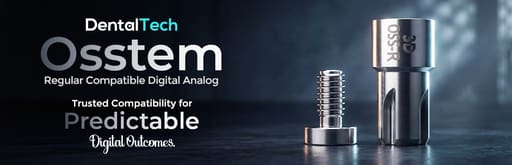
Back at the bench, an analog stands in for the implant inside the working model. Dentaltech makes stainless-steel analogs for a poured stone cast and digital analogs that click into a 3D-printed model for a CAD/CAM workflow. The Dentaltech Osstem Regular Compatible Digital Analog is a printed-model version.
Drivers and prosthetic kits
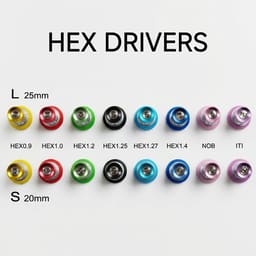
Turning any of it takes the right driver. Dentaltech's hex drivers come one per system, and its universal kit gathers the common hex sizes with a torque ratchet into a single case, which spares a clinic buying a separate driver for every implant brand it restores. The Dentaltech Universal Prosthetic Driver Kit is the all-in-one option.
When Dentaltech components are used
The parts come out across the prosthetic phase, from the moment a fixture is placed to the day the crown is delivered:
- Sealing the implant during first-stage submerged healing with a cover screw
- Shaping the soft-tissue cuff at second-stage exposure with a healing abutment
- Transferring the implant position with an open- or closed-tray coping for an analog impression
- Capturing that same position digitally with a scan body for a CAD/CAM crown
- Building the master model on a stainless or a Dentaltech DIO Compatible Digital Analog (DIO-Hybrid) in the lab
- Converting a full arch to screw-retained with multi-unit abutments and temporary cylinders
How to choose a Dentaltech component
- Match the implant system first — every part is cut to one connection, so confirm the patient's fixture brand and line (Osstem TS, Dentium SuperLine, Straumann RC, Nobel NP/RP) before ordering anything.
- Platform diameter — pick mini, regular, or wide to the diameter that was actually placed, or the prosthetic will not seat flush.
- Hex and connection — check internal hex, external hex, or conical against the fixture, and make sure the driver matches the screw it has to turn.
- Restorative plan — castable for a custom cast abutment, multi-unit for a screw-retained bridge, scan body for a digital case, coping for a conventional impression.
- Angulation and cuff height — straight versus 15° or 17° angled, and the cuff height, follow the emergence profile and the axis the crown has to take.
Implant systems Dentaltech fits
Rather than run one house system, Dentaltech is organised around fitting everyone else's. On the Korean side that covers Osstem, Dentium, DIO, Neobiotech, Cowellmedi, and Dentis; on the Israeli side Adin, MIS, Noris, and AB Dental; and on the Western side Straumann RC and BLX, Nobel Biocare NP and RP, and Neodent GM. The Dentaltech Scan body - Neodent GM Implant Compatible shows how specific each SKU is — cut to one platform and one connection, and labelled that way.
Why buy Dentaltech from Dentalkart
The reason to reach for a compatible line is cost: a Dentaltech part restores the same implant as the original-brand component, usually at a small fraction of the price — its universal driver kit lands near ₹3,145 against roughly ₹14,000 for the equivalent branded set. What makes that workable is coverage and labelling. The range spans the abutments, screws, copings, scan bodies, analogs, and drivers for most systems a mixed caseload will meet, and every SKU states the platform, diameter, and connection it fits, so a lab or clinic restoring several implant brands can source the whole prosthetic stage in one place instead of chasing each manufacturer separately.
Frequently Asked Questions (FAQs):
What does Dentaltech actually make?
Dentaltech makes the prosthetic side of an implant, not the fixture. Its range is the abutments, cover screws, healing caps, impression copings, scan bodies, lab and digital analogs, and driver kits used to restore an implant once it has integrated — all built to fit other manufacturers' implant connections rather than a system of its own.
Will a Dentaltech part fit my implant system?
Most likely, if you are on a mainstream system. Dentaltech covers the Korean lines (Osstem, Dentium, DIO, Neobiotech, Cowellmedi, Dentis), the Israeli ones (Adin, MIS, Noris, AB Dental), and Western systems including Straumann RC and BLX, Nobel Biocare NP and RP, and Neodent GM. Each SKU names its compatible system, platform diameter, and connection, so match those to your fixture before ordering.
Are compatible components as reliable as original-brand parts?
Compatible components are machined from the same implant-grade titanium — Grade 4 and Ti-6Al-4V — and made to the same connection geometry, which is why they seat and function like the branded equivalent at a lower price. The point to verify is the fit at the implant interface for your exact system; confirming the platform and connection printed on the SKU is what keeps that joint precise.
Scan body or impression coping — which do I use?
It depends on whether the case is digital or analog. A scan body is read by an intraoral or lab scanner and drives a CAD/CAM restoration, so it belongs in a digital workflow. An impression coping — open-tray or closed-tray — transfers the implant position into a conventional silicone impression and stone model. The position they capture is identical; the medium is not.
What is the universal prosthetic driver kit for?
The universal driver kit gathers hex drivers, a torque ratchet, and long and short tips that fit most implant systems into one autoclavable case. Instead of stocking a different driver set for each implant brand a practice treats, one kit covers the common hex sizes, and its calibrated ratchet lets abutment and prosthetic screws be tightened to the correct spec.