





Broaches
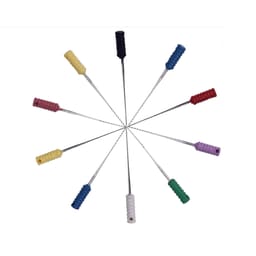
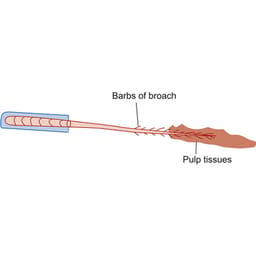
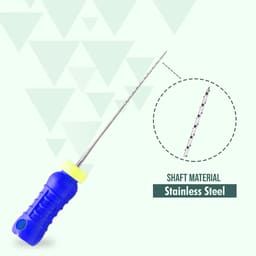
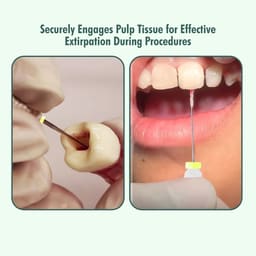
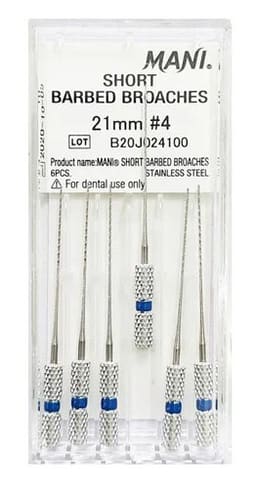
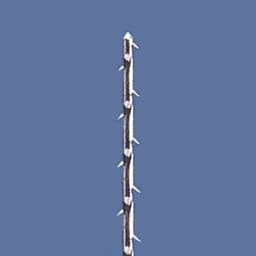
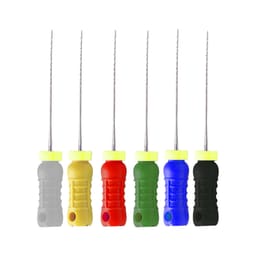
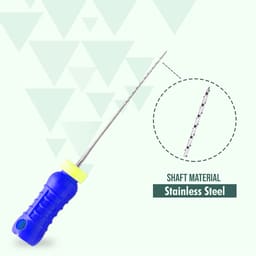
A barbed broach is an endodontic hand instrument used to remove pulp tissue from a root canal. Fine barbs raised along a tapered stainless-steel wire catch the soft tissue, so the broach is inserted, gently rotated, and withdrawn to pull the pulp out in one piece. It also lifts out cotton pellets, paper points, and loose debris left inside the canal.
 Recommended
 Price- High to LowPrice- Low to High

 10
10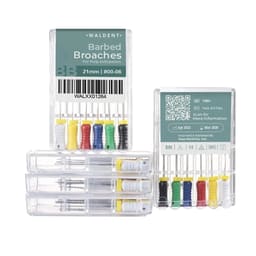
 10
10




Broaches
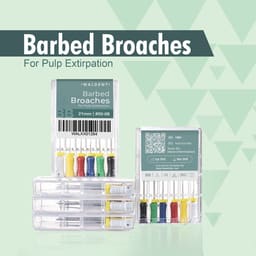
A barbed broach clears the canal, it does not shape it. The instrument is a thin tapered wire with small barbs cut along its length; pushed gently into the canal and rotated, the barbs grip the pulp so it draws out whole when the broach is withdrawn. That makes it the extirpation step early in root canal treatment, before the rotary files take over the shaping. Broaches are also handy for retrieving cotton pellets, absorbent points, or loose debris left in a canal. They are inexpensive, single-use hand instruments.
Sizes and picking one
Broaches are graded by canal fit and shank length:
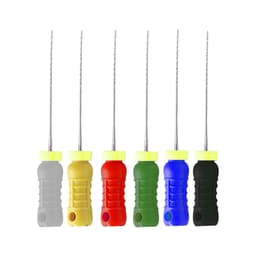
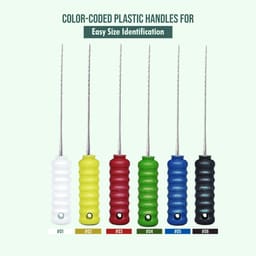
- Colour/number sizes — #00 up to #06, from very fine for narrow canals to larger for wide ones.
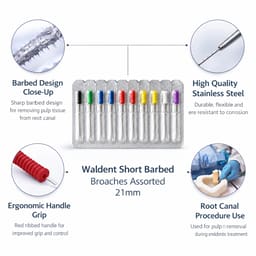
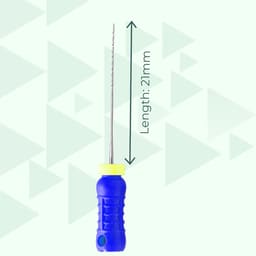
- 21mm and 25mm — shorter shank for posterior access, longer for anterior or deeper canals.
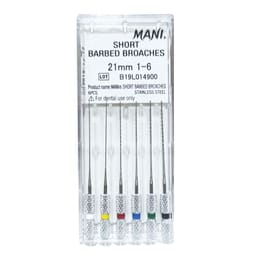
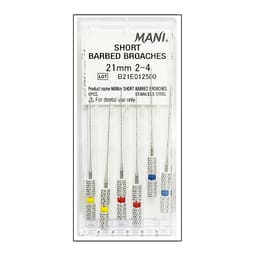
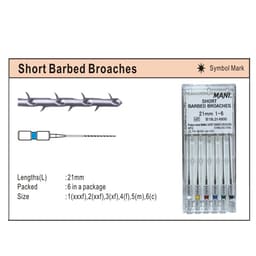
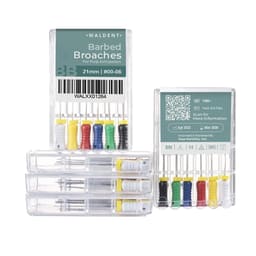
- Assorted packs — a #01-06 or #2-4 assortment covers a range of canal widths in one box.
- Short broaches — for limited-access molars where a full-length shank will not seat.
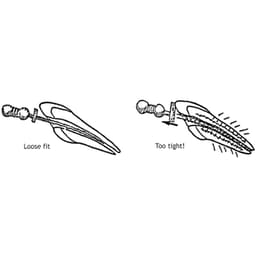
Match the broach to the narrowest part of the canal so the barbs engage without binding, part of the wider endodontics range.
How it is used
The broach handles the tissue-removal stage only:
- Access — open the pulp chamber and locate the canal orifice.
- Extirpate — insert the broach short of the working length, rotate a quarter to half turn to catch the pulp, and withdraw slowly.
- Clear — use it again to lift out remaining shreds, then dry with a paper point before shaping.
Never force a broach or turn it fully — the wire is thin and can separate.
Where it sits in the canal workflow
Broaching comes right after access and before shaping and filling:
- Broach — pull out the bulk pulp tissue.
- Shape and clean — files enlarge and smooth the canal.
- Fill — the dried canal is obturated with gutta percha and sealer.
Used once and discarded, a broach keeps the extirpation quick and clean.
Frequently Asked Questions (FAQs):
What is a barbed broach used for?
It removes pulp tissue from a root canal. Barbs along the wire catch the soft pulp, so pushing the broach in, turning it, and drawing it out pulls the tissue free in one piece. It is the extirpation instrument used early in root canal treatment, and it also lifts out cotton pellets, paper points, and loose debris left in the canal.
What is the difference between a broach and a file?
They do different jobs. A barbed broach only grabs and removes soft tissue — it has barbs, not cutting flutes, and does not enlarge the canal. A file has cutting edges that shape and smooth the canal wall to a set width. Broaching comes first to clear the pulp; filing follows to prepare the canal for filling.
What size broach should I use?
Pick by the canal width at its narrowest point. Sizes run from fine (#00) for slim canals up to larger numbers for wide ones, and an assorted pack covers the range. The broach should reach in and let the barbs engage the tissue without binding against the walls. Too large a broach jams; too fine a one misses the tissue.
Can a barbed broach be reused?
No. Barbed broaches are single-use instruments. The thin barbed wire weakens with use and can fracture inside the canal, which is difficult to retrieve. They are also hard to fully clean and sterilise because tissue lodges between the barbs. Use a fresh broach for each canal and discard it afterwards.
What is the difference between 21mm and 25mm broaches?
It is the shank length. A 21mm broach has a shorter shank, easier to angle into posterior teeth with limited mouth opening. A 25mm broach is longer, reaching deeper canals and anterior teeth more comfortably. Short broaches go further still for tight molar access. Choose the length that reaches the canal without the handle fouling the opposing teeth.