



Apex Locators
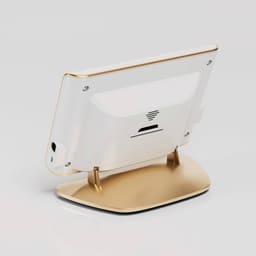
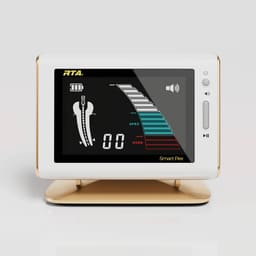
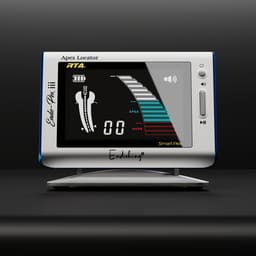
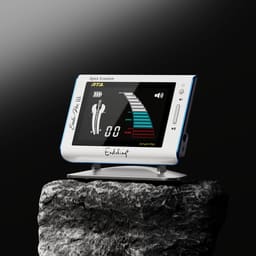
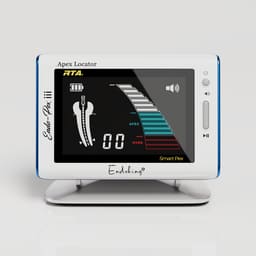
An apex locator is an electronic endodontic device that measures a root canal's working length by reading the impedance between a canal file and a lip electrode, pinpointing the apical constriction. It gives a live length reading during treatment and cuts reliance on radiographs. Both standalone units and endomotors with a built-in locator are available, from Woodpecker, Waldent, and Endoking.
 Recommended
 Price- High to LowPrice- Low to High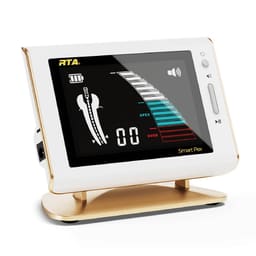
.jpg?w=256)

 445
445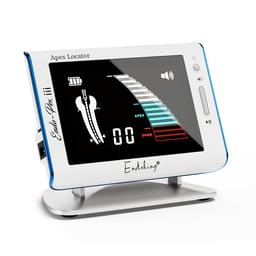
 140
140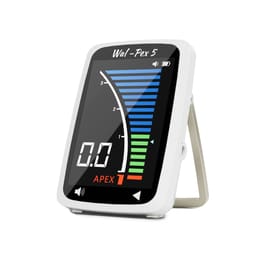
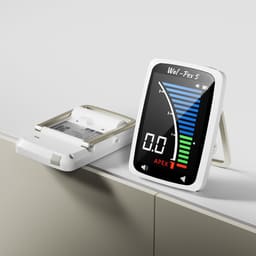
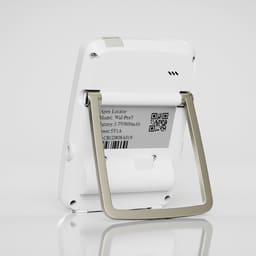
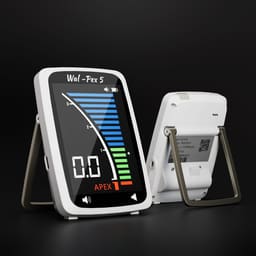
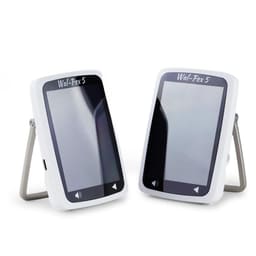
Only 3 Left
540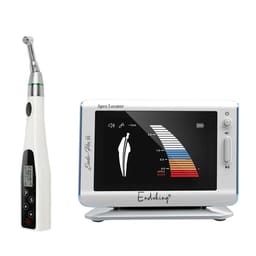
 565
565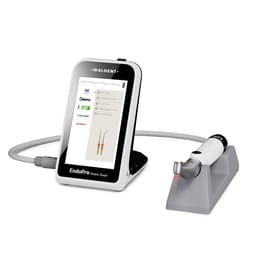

Only 5 Left
1.9k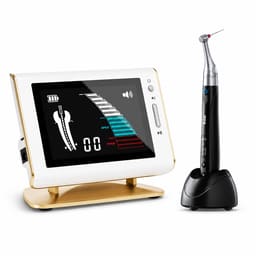
.jpg?w=256)
.jpg?w=256)
.jpg?w=256)
 1.3k
1.3kApex Locators
Knowing how far a root canal runs — its working length — is fundamental to cleaning and filling it correctly, and an apex locator is the electronic device that measures it. The device completes an electrical circuit through the tooth — a file in the root canal at one end, a hook resting on the lip at the other — and monitors the impedance across it. As the tip nears the apical constriction that impedance shifts, and the reading is converted into an on-screen length. That live reading tells the operator where the canal effectively ends, so instrumentation and obturation stop at the right point rather than short of it or beyond it. Modern locators measure across several frequencies for a stable reading even in a wet canal, and they belong among the electronic endo equipment a practice relies on for accurate root canal treatment.
How it measures length
An apex locator turns an electrical signal into a length reading:
- The circuit — a lip clip and a file clip complete a circuit through the tooth and the canal.
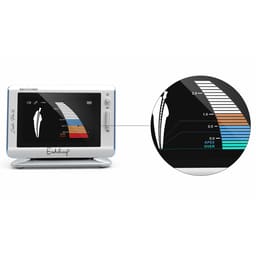
- The reading — as the file advances, the device tracks the impedance and shows progress toward the apex on its screen.
- The endpoint — a marked zone near the tip signals the apical constriction, the target for working length.
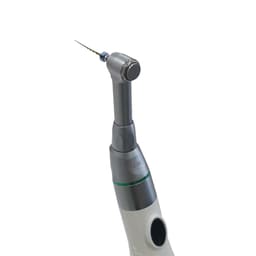
Because it reads the canal directly, a locator confirms length where a radiograph alone can mislead through angulation or superimposition. The file being measured is usually one of the rotary files or a hand file used to shape the canal.
Standalone or endomotor-integrated
The category splits into two formats:
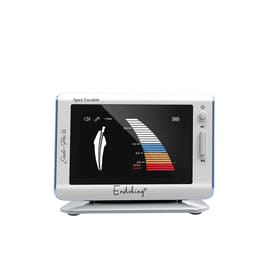
- Standalone locator — a dedicated device that does one job, length measurement, with a clear display.
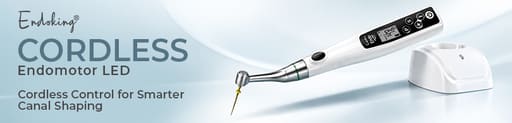
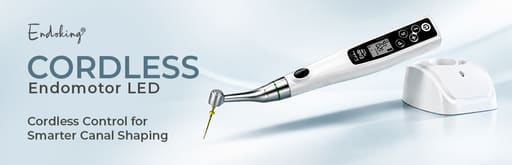
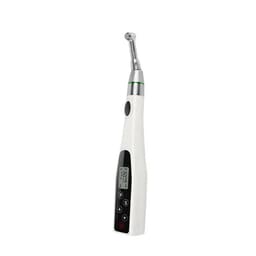
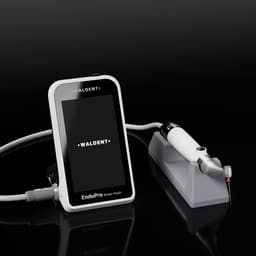
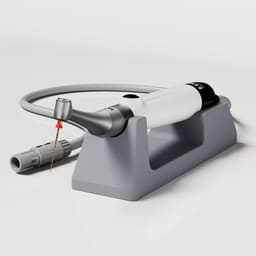
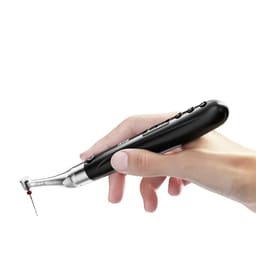
- Endomotor with built-in locator — a rotary motor that shows canal length as it drives the file, combining shaping and measurement in one handpiece.
- Choosing between them — a standalone suits a practice already running a motor or wanting a separate readout; an integrated unit saves a device and ties length to the motor's controls.
For the driving side of an integrated unit, the motor itself sits in the endo motor range.
What to look at when choosing
A few things separate one apex locator from another:
- Multi-frequency measurement — several frequencies give a steadier reading in the presence of moisture or blood.
- A clear display — a large, well-marked screen or colour zones make the approach to the apex easy to read.
- Integration and extras — endomotor integration, auto-reverse tied to length, and rechargeable operation add convenience.
Matching the format and features to how a practice works — standalone or integrated, simple or feature-rich — is the practical guide to the choice.
Buy apex locators at Dentalkart
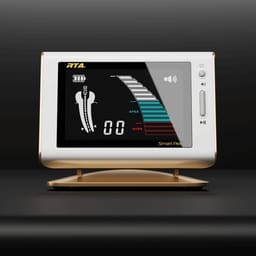
Choosing here comes down to one question — a dedicated length meter, or a single motor that shapes and measures at once. Standalone Smart-Pex and Wal-Pex Pro Gold units answer the first; endomotors with a built-in locator answer the second, from Woodpecker, Waldent, and Endoking. Full specifications and current stock sit on the individual product pages.
Frequently Asked Questions (FAQs):
What does an apex locator do?
It measures the working length of a root canal electronically — the distance from a reference point to the apical constriction near the canal's end. A hook on the lip and the file in the root canal close a circuit, and the device reads its impedance to place the file tip relative to the apex. That length guides cleaning and filling.
Is an apex locator more reliable than a radiograph for length?
It is a strong complement. A radiograph can mislead through angulation, superimposition, or a curved canal, whereas a locator reads the canal directly and gives a live length. Most clinicians use the locator for the working measurement and a radiograph to confirm and document, rather than relying on either alone.
Standalone locator or an endomotor with one built in?
A standalone locator only measures length, on its own display. An endomotor with an integrated locator both drives the rotary file and shows canal length as it works, combining two functions in one handpiece. The integrated unit saves a separate device; a standalone suits a practice that already runs a motor or wants a dedicated readout.
Why do apex locators use multiple frequencies?
A single-frequency reading can drift when the canal holds irrigant, blood, or tissue fluid. Measuring across several frequencies lets the device compensate for those conditions and hold a steadier, more dependable length reading. Multi-frequency operation is why modern locators stay accurate where older single-frequency ones struggled in a moist canal.
Does the canal need to be dry to use one?
Not completely, but excess fluid affects the reading, so the canal is usually not flooded during measurement. Modern multi-frequency locators tolerate normal moisture well; very heavy bleeding or a canal brimming with irrigant can still disturb the reading, so drying the excess first gives the most reliable length.