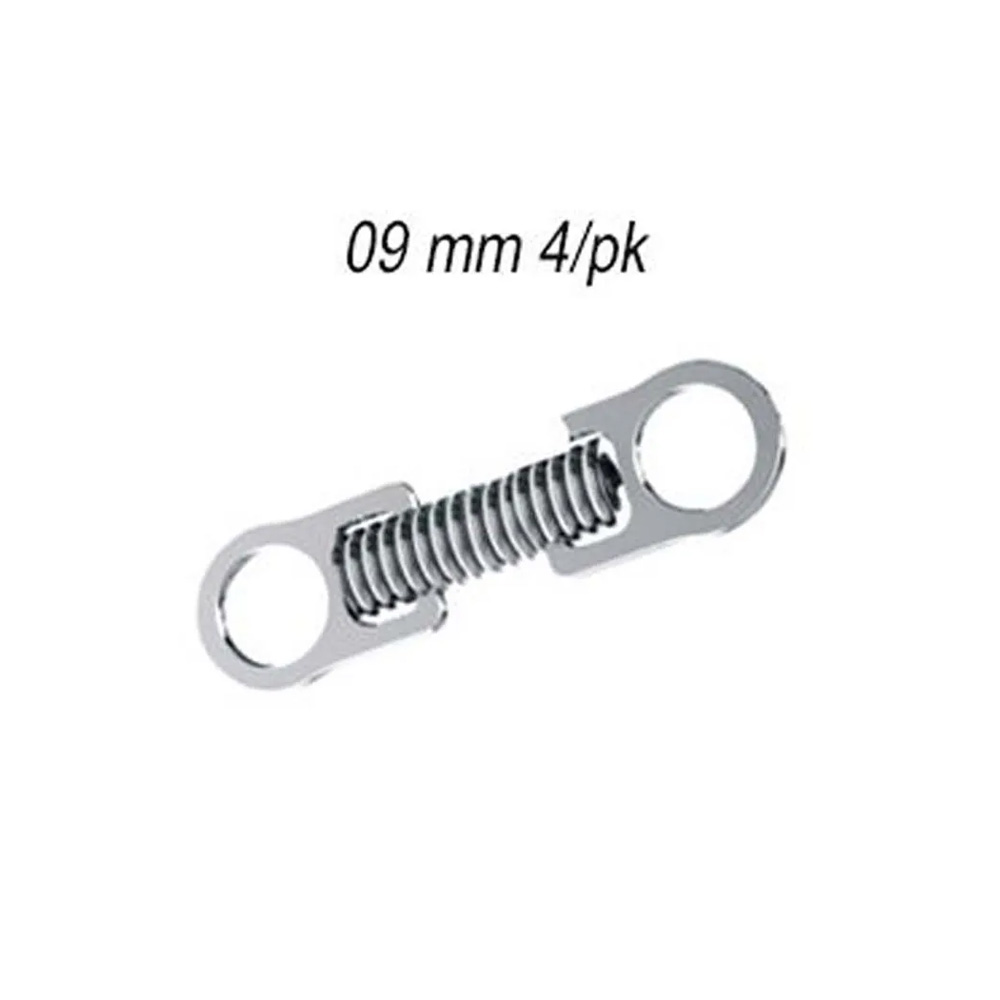
Closed Coil Springs – Efficient Space Closure in Orthodontic Treatment
Successful orthodontic therapy depends on precise control of tooth movement, particularly when closing extraction spaces or correcting spacing issues. Closed coil springs are essential orthodontic auxiliaries that provide reliable, continuous pulling forces to move teeth together efficiently and predictably. They are a staple in fixed appliance therapy, helping clinicians achieve optimal alignment, occlusion, and treatment outcomes.
Constructed from high-quality orthodontic-grade materials, closed coil springs deliver consistent biomechanical performance while ensuring patient comfort. Their ease of use and precise force application make them indispensable in both adolescent and adult orthodontic cases.
What Are Closed Coil Springs?
Closed coil springs are helical springs designed to exert pulling forces along the archwire, effectively closing spaces between teeth. Unlike open coil springs, which push teeth apart, closed coil springs apply tension to bring teeth together.
When attached to brackets or tubes, they provide controlled and continuous force, making them highly effective for:
- Closing extraction spaces
- Correcting residual gaps
- Fine-tuning tooth alignment
- Supporting anchorage control
Available in a variety of lengths, diameters, and materials, closed coil springs can be customized for different clinical requirements and treatment stages.
Clinical Applications of Closed Coil Springs
Closed coil springs are used in a range of orthodontic scenarios, including:
1. Extraction Space Closure
They are widely employed after premolar extraction to efficiently close the created space and align the dentition.
2. Gap Correction
Residual spacing from delayed eruption or tooth migration can be corrected using closed coil springs, ensuring uniform tooth positioning.
3. Anchorage Control
Closed coil springs can assist in anchorage reinforcement by applying controlled forces without overloading the anchorage units.
4. Arch Coordination
They help achieve harmonious dental arch form by managing inter-tooth spacing during final alignment.
Material Composition and Features
Closed coil springs are typically made from nickel-titanium (NiTi) or stainless steel, each offering specific advantages:
Nickel-Titanium Closed Coil Springs
- Deliver light, continuous forces ideal for gentle space closure
- Exhibit superelasticity and shape memory for consistent activation
- Reduce the need for frequent reactivation, enhancing clinical efficiency
Stainless Steel Closed Coil Springs
- Provide stronger, more controlled forces for rapid space closure
- High stiffness ensures predictable tooth movement in later treatment stages
- Durable and resistant to deformation under sustained tension
Choice of material depends on treatment goals, force requirements, and patient-specific biomechanics.
Advantages of Using Closed Coil Springs
1. Predictable and Continuous Force
Closed coil springs maintain consistent tension, allowing precise space closure without frequent adjustments.
2. Efficient Space Management
They help reduce treatment duration by providing continuous and reliable forces to move teeth into desired positions.
3. Simple Clinical Handling
Closed coil springs are easy to engage, adjust, and monitor chairside, enhancing workflow efficiency for orthodontists.
4. Patient Comfort
Properly selected and applied closed coil springs deliver effective forces while minimizing discomfort during treatment.
5. Versatility
Compatible with multiple archwire types and sizes, closed coil springs integrate seamlessly into routine fixed appliance therapy.
Closed Coil Springs vs Open Coil Springs
Understanding the difference between open and closed coil springs is essential for proper clinical application:
- Closed Coil Springs: Apply pulling forces to close spaces between teeth
- Open Coil Springs: Apply pushing forces to create or maintain space
Correct selection ensures accurate tooth movement and predictable orthodontic outcomes.
Clinical Considerations and Best Practices
For safe and effective use of closed coil springs, orthodontists should:
- Choose appropriate spring length, material, and tension
- Avoid over-stretching to prevent excessive force
- Monitor soft tissue to reduce irritation or discomfort
- Ensure compatibility with bracket and archwire systems
Regular evaluation of force levels and tooth movement ensures predictable results and patient satisfaction.
Product Range Available on Dentalkart
Dentalkart offers a curated selection of closed coil springs suitable for routine clinical use. Each product is manufactured to professional orthodontic standards, ensuring reliability, performance, and consistency throughout treatment.
Clinicians can rely on Dentalkart for:
- Verified product authenticity
- Detailed specifications for proper selection
- Trusted orthodontic brands
- Easy availability for clinics and institutions
Why Buy Closed Coil Springs from Dentalkart?
Dentalkart provides a convenient, reliable, and professional platform for orthodontic procurement. Benefits of purchasing closed coil springs from Dentalkart include:
- Competitive pricing and bulk availability
- Authentic, high-quality orthodontic products
- Accurate product information for informed clinical choices
- Efficient delivery and customer support
This ensures uninterrupted access to essential orthodontic components while allowing clinicians to focus on patient care.
FAQs – Closed Coil Springs
1. What is the main purpose of closed coil springs in orthodontics?
Closed coil springs are used to close spaces between teeth by applying continuous pulling forces along the archwire.
2. When should NiTi closed coil springs be preferred?
NiTi closed coil springs are ideal when gentle, continuous forces are required, especially during early or moderate space closure phases.
3. Can closed coil springs be used on all archwire sizes?
Yes, they are available in different internal diameters to match various archwire dimensions.
4. Are closed coil springs uncomfortable for patients?
When properly selected and activated, closed coil springs are generally comfortable. Excessive tension should be avoided to minimize discomfort.
5. How do closed coil springs differ from open coil springs?
Closed coil springs pull teeth together to close spaces, while open coil springs push teeth apart to create or maintain space.















 Recommended
 Price- High to Low