





Compomers
A compomer is a polyacid-modified composite resin — a tooth-coloured filling material that combines the easy handling and aesthetics of composite with the fluoride release of glass-ionomer. Compomers are used mainly for paediatric restorations, cervical (Class V) lesions and other low-stress sites, applied in a single paste and light-cured like composite.
 Recommended
 Price- High to LowPrice- Low to High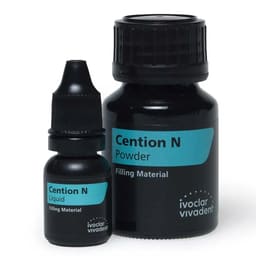


 31
31Compomers
Composite gives a strong, aesthetic restoration but releases no fluoride; glass-ionomer releases fluoride and bonds to tooth without etching but is weaker and less polishable. The compomer was created to bridge that gap — a material that handles and looks close to composite while still giving off fluoride to the surrounding tooth.
That middle position is exactly its purpose. A compomer is not meant to replace composite in a large load-bearing filling, nor glass-ionomer where chemical bonding to a wet field matters most. It fills the space between: aesthetic, fluoride-releasing restorations in situations where the bite forces are modest.
Where compomers sit between composite and GIC
Understanding a compomer means placing it against the two materials it borrows from.
The composite side
From composite it takes the resin matrix, so it is supplied as a single light-cured paste, polishes to a smooth finish and comes in tooth shades. It handles like a resin from the composite range at the chair — placed, shaped and cured in the same way — which makes it familiar to use.
The glass-ionomer side
From glass-ionomer it takes fluoride-releasing glass filler, so the set restoration releases fluoride to the adjacent tooth, a benefit in caries-prone mouths. It does not, however, match glass-ionomer's full chemical adhesion, so it is placed with a bonding agent — one of the chairside consumables kept alongside it in basic dental products — rather than relying on self-adhesion alone.
Where compomers are used
The material's strengths point it at specific jobs rather than every filling.
- Paediatric restorations — the fluoride release and quick single-paste placement suit primary teeth and young patients.
- Cervical (Class V) lesions — non-load-bearing sites at the gumline where aesthetics and fluoride both help.
- Small anterior and low-stress restorations — where appearance matters but bite forces are light.
- Deciduous tooth fillings — restorations not expected to last beyond the life of the primary tooth.
Because these uses cluster in children's dentistry, compomers sit close to the wider paedodontics range.
Using a compomer
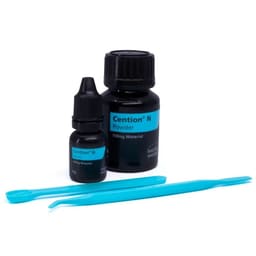
A compomer is placed much like a composite: the cavity is prepared, a bonding agent applied, the material placed in the paste form, shaped, and light-cured. Some modern materials in this space, such as the Ivoclar Cention N, are bulk-fill formulations that can be placed in a single increment and even self-cure, extending what this category of tooth-coloured, fluoride-releasing restoratives can do.
For larger, load-bearing posterior restorations where maximum strength and polish are the priority, a conventional resin remains the material of choice; the compomer is the fluoride-releasing option for the lower-stress cases described above.
Frequently Asked Questions (FAQs):
What is a compomer?
A compomer is a polyacid-modified composite resin — a tooth-coloured restorative that blends composite and glass-ionomer. It handles and looks like composite, being a single light-cured paste that polishes well, while releasing fluoride like a glass-ionomer. It is used mainly for paediatric, cervical and other low-stress restorations rather than large load-bearing fillings.
How does a compomer compare with a composite?
Fluoride and strength set them apart. A compomer releases fluoride to the surrounding tooth, which a plain composite does not, making it useful in caries-prone mouths. A composite is stronger and better for large, load-bearing posterior restorations. A compomer trades some of that strength for fluoride release, so it suits smaller, lower-stress and paediatric cases.
How does a compomer compare with a glass-ionomer?
Handling and chemistry set them apart. A compomer has a resin matrix, so it is light-cured, more aesthetic and better polishing than glass-ionomer, and is used with a bonding agent. A glass-ionomer bonds chemically to tooth without a separate adhesive and releases more fluoride, but is weaker and less polishable. The compomer is the more composite-like of the two.
What are compomers used for?
Compomers are used chiefly for paediatric restorations, cervical (Class V) lesions, small anterior fillings and restorations in deciduous teeth — situations that benefit from fluoride release and aesthetics but do not carry heavy bite forces. They are not the first choice for large load-bearing posterior fillings, where composite offers greater strength.
Do compomers release fluoride?
Yes. The fluoride-containing glass filler inherited from the glass-ionomer component means a set compomer releases fluoride to the adjacent tooth. This is one of the main reasons the material is favoured for children and caries-prone patients, though the release is generally lower than that of a conventional glass-ionomer.