

Dental Air Compressors
A dental air compressor supplies the clean, dry, oil-free compressed air that runs a clinic's airotor handpieces, three-way syringes, scalers and air-driven motors. Dental units must be oil-free, since oil mist damages handpiece bearings and contaminates bonding. They are rated by motor power and head count — from a 0.75 HP single-head chairside unit to a 2 HP double-head for a busy multi-chair practice.
 Recommended
 Price- High to LowPrice- Low to High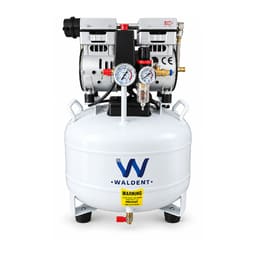



 318
318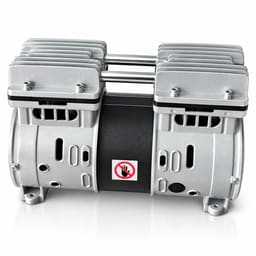
 290
290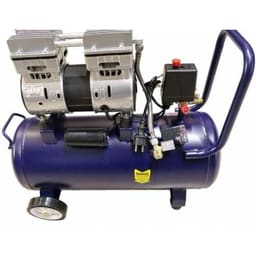

 1.2k
1.2k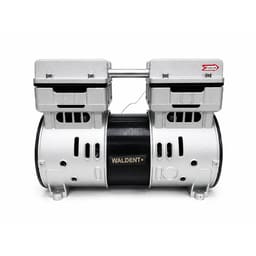
 340
340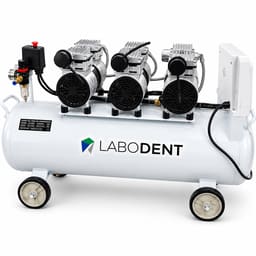
 4k
4k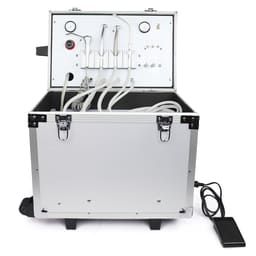
 2k
2k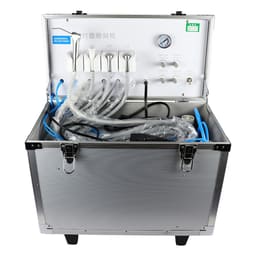

 500
500Dental Air Compressor
Nothing air-driven at the chair works without it. The airotor, the three-way syringe, the scaler tip, the bur-cooling spray — all of them run on compressed air, and the compressor is what puts that air in the line at a steady pressure. When it is undersized or fails, the whole operatory stops.
A dental air compressor is not an industrial one with a dental label. It has to deliver air that is dry and completely oil-free, at a clinical pressure of roughly 5.5 to 7.5 bar, quietly enough to sit near a treatment room.
Why a dental compressor must be oil-free
An industrial unit lubricates its piston with oil, and a fine oil mist carries into the air it produces. In a workshop that is harmless. In a dental line it is not.
That mist reaches the handpiece ceramic bearings and shortens their life, settles on composite and bonding surfaces and ruins the bond, and can carry into the patient's mouth. An oil-free pump removes the problem at source, which is why every unit stocked here is oil-free.
Sizing by output and power
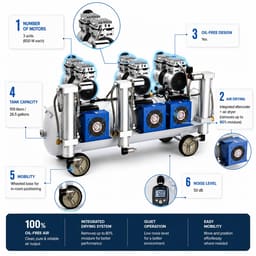
The right unit is the one that keeps up with how many instruments draw air at once. That is set by the number of pumping cylinders and the motor power.
Single-head units
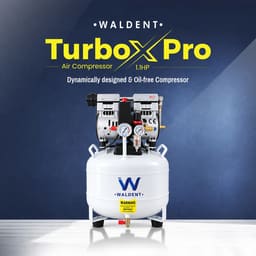
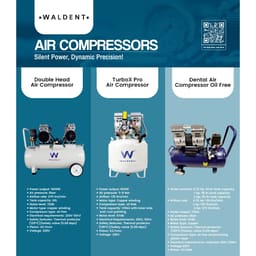
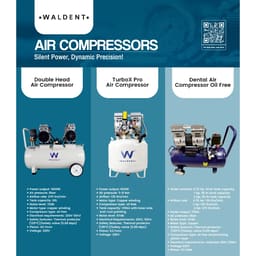
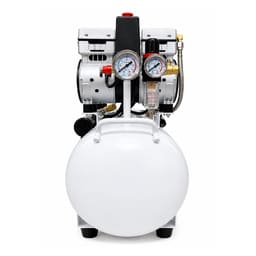
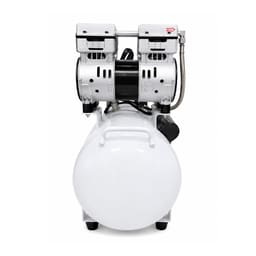
One pumping cylinder suits a single chair, where only one operator draws air at a time. It recovers quickly between uses and stays quiet. The Waldent TurboX Pro 1.1HP is a single-cylinder unit on a round tank for one operatory.
Double-head units
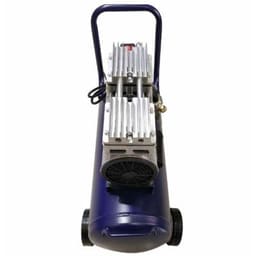
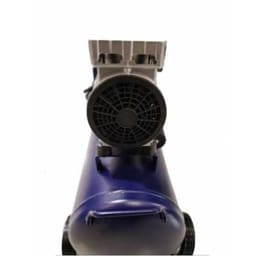
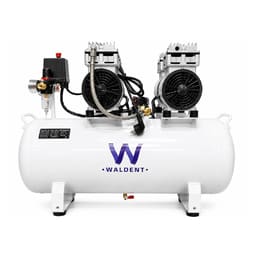
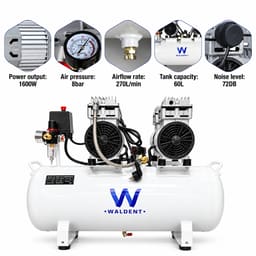
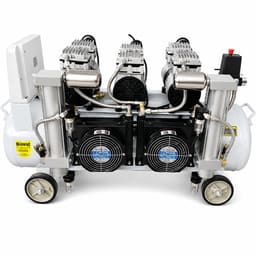
Two cylinders roughly double the airflow and shorten recovery, so pressure holds when two operators, or an airotor and a scaler, draw at once. The Waldent Double-Head 2HP covers a two-chair setup or a single chair worked hard.
Matching to chairs
As a rule, a 0.75 to 1 HP single unit runs one chair, and a 2 HP twin runs two. Oversizing wastes power and space; undersizing drops the pressure mid-procedure, which shows up as a bur stalling under load.
Replacing the pumping unit
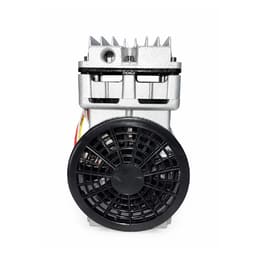
The pumping section is the wearing part. When an older machine loses pressure but the tank and motor are sound, fitting a fresh one restores it for far less than a whole replacement.
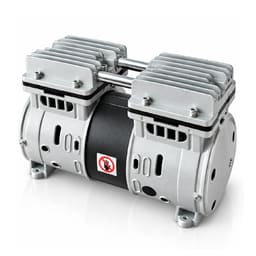
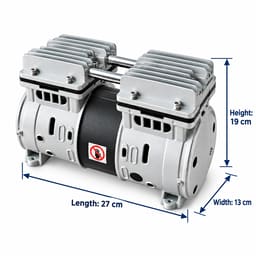
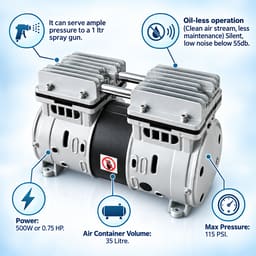
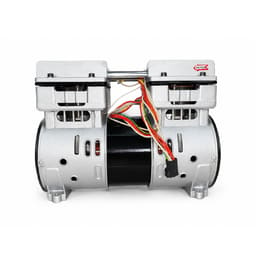
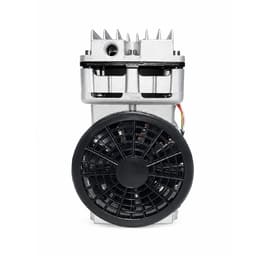
These parts are sold by power to match the unit they go into, so read the rating off the old one before ordering. A Waldent Oil-Free Head 0.75HP fits a single-chair unit of that rating.
Buying a dental air compressor
Match the unit to your chair count first, then check the tank size and noise level, since a compressor near a treatment room has to be quiet enough not to intrude. An oil-free pump is non-negotiable for dental use whatever the size.
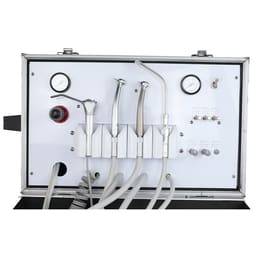
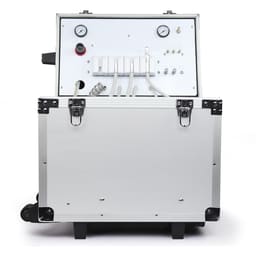
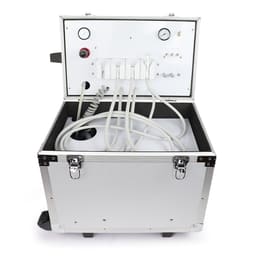
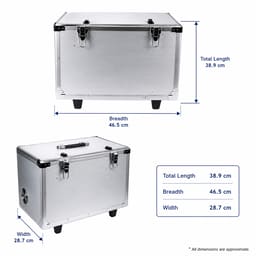
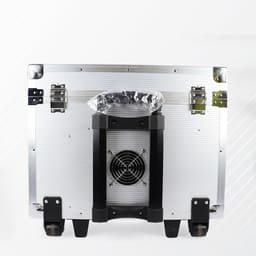
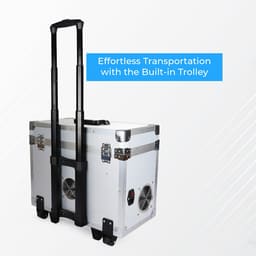
Portable chairside setups that bundle a compressor with a unit sit alongside the standalone models, and the wider fit-out range is in dental equipment.
Frequently Asked Questions (FAQs):
What is a dental air compressor used for?
It powers everything at the chair that runs on air. The airotor, the three-way syringe, the scaler and the cooling spray all draw from the same line, and the unit is what keeps that line pressurised at a steady clinical level. If it cannot keep up, treatment stops with it.
Why must a dental air compressor be oil-free?
An oil-lubricated motor sends a fine mist into the air it produces. Fed to the chair, that mist wears handpiece bearings, spoils composite and bonding surfaces, films over instruments and can carry into the mouth. Removing the lubricant at the pump end is the only way to keep the air safe for clinical use.
What is the difference between a single-head and double-head compressor?
It comes down to how much air the unit can move and how fast it recovers. One pumping cylinder is enough for a single chair where one operator draws at a time. Two cylinders roughly double the flow and hold pressure when a second instrument or a second chair pulls air at the same moment.
What size dental air compressor do I need?
Work from chair count. Around 0.75 to 1 HP with a single cylinder serves one chair; a 2 HP twin-cylinder serves two. Buy too small and the pressure sags mid-procedure — a bur stalling under load is the tell. Buy too big and you pay for power and floor space you never use.
Can I replace just the compressor head instead of the whole unit?
Usually. Where the tank and motor are still sound but pressure has dropped off, a fresh oil-free pumping unit brings performance back at a fraction of a full replacement. These parts are rated by power output, so take the figure off the existing machine and match it before you buy.