

Gingival Barrier
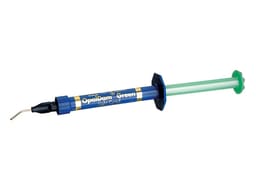
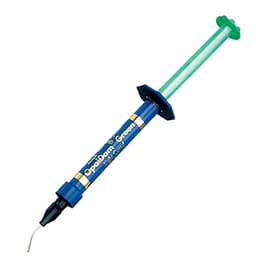
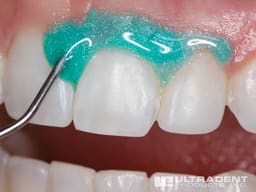
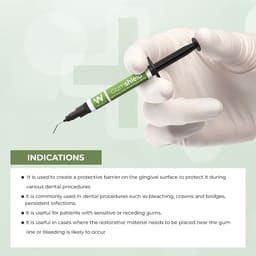
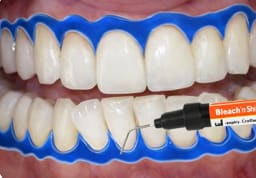
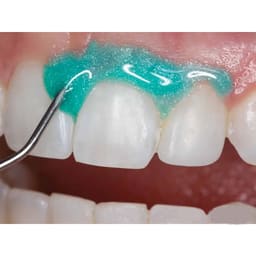
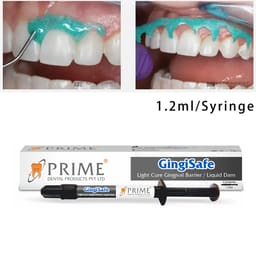
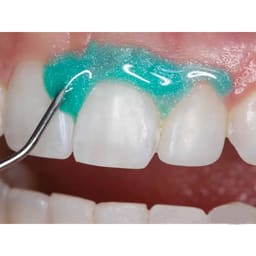
Gingival barriers isolate and protect the gums during whitening and other chemical procedures. Painted along the gum line from an Ultradent, Cerkamed, or Prime Dental syringe and hardened with a curing light, the resin sets into a peel-off dam that shields the gingiva from bleaching peroxide or acid. Most are tinted green so the coverage stays visible while it is placed.
 Recommended
 Price- High to LowPrice- Low to High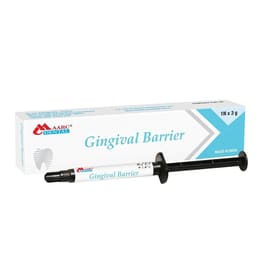

 8
8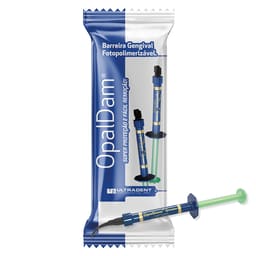
 11
11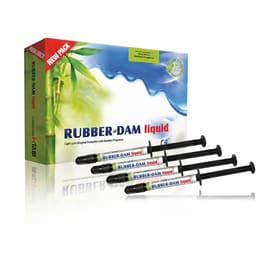
Only 4 Left
46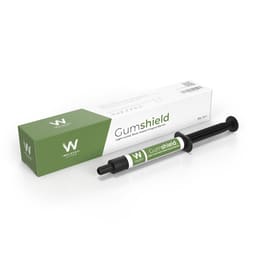
 15
15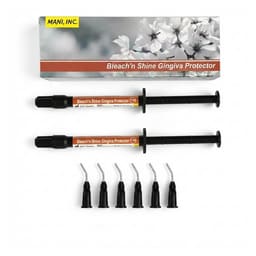
Only 5 Left
14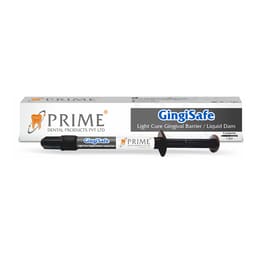
 3
3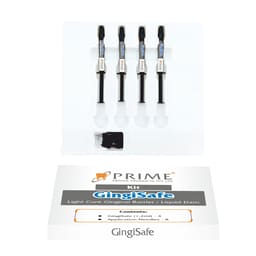
 10
10Gingival Barrier
This category covers the light-cured resin barriers that protect the gums during whitening, etching, and other chemical steps. Dispensed from a syringe along the gingival margin and cured in place, the resin sets into a firm dam that peels off cleanly afterwards. Shop the range to isolate the soft tissue before any bleaching or chairside whitening procedure.
What you can buy here
The range centres on syringe-dispensed light-cure resin dams:
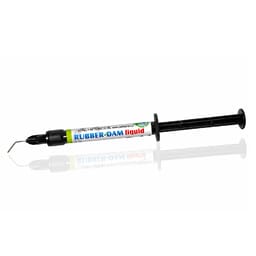
- Barrier syringes — a flowable resin applied straight along the gum line, such as OpalDam and Gingisafe.
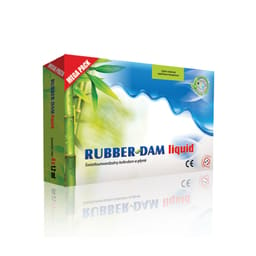
- Liquid dam packs — larger or multi-pack formats for high-volume whitening days, like the Cerkamed mega pack.
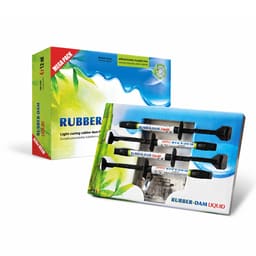
- Kits — a syringe with tips and accessories for a complete isolation setup.
All of it is a paint-on, light-cured barrier; it works with the same syringe-and-cure handling as an etchant gel.
Why a gingival barrier is worth it
For any procedure that puts a caustic gel near the gum, a barrier earns its place:
- Protects soft tissue — blocks bleaching peroxide and acids from burning or blanching the gingiva.
- Precise and removable — flowed exactly where needed, then peeled off in one piece after curing.
- Faster setup — quicker to place than cutting and clamping a sheet dam for a whitening case.
A sheet rubber dam still suits full isolation for endodontics, but a paint-on barrier is the practical choice for gum protection during whitening. It behaves like the flowable composite resins it is chemically related to.
How it fits your treatment
A gingival barrier handles the isolation step, before the active gel goes on:
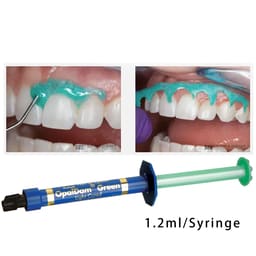
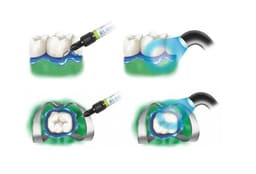
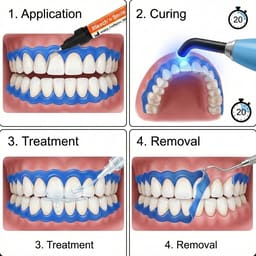
- Apply — retract the lip, dry the gum line, and flow the resin along the margin and into the embrasures.
- Cure — set the resin with a curing light so it forms a firm, sealed dam.
- Proceed and remove — carry out the whitening or chemical step, then peel the cured barrier off in one strip.
Placed and cured, the barrier holds the isolation for the whole procedure and lifts away without residue at the end.
Frequently Asked Questions (FAQs):
Why not just use a sheet rubber dam to protect the gums?
A sheet dam fully isolates teeth for endodontics but is slow to cut, punch, and clamp for a whitening case, and it does not seal the gum margin the way a flowed resin does. A gingival barrier is painted exactly along the gum line and cured in place, giving quick, close soft-tissue protection that peels off cleanly.
What procedures need a gingival barrier?
A gingival barrier is used wherever a caustic gel is applied near the gum, most often in-office whitening with high-concentration peroxide. It is also used to protect the gingiva during acid etching, microabrasion, and some restorative or bleaching steps. Any procedure where a chemical could blanch or burn the soft tissue is a candidate.
How is the barrier applied and removed?
The resin is flowed from its syringe along the dried gum line, worked into the embrasures, and set with a curing light into a firm dam. After the whitening or chemical step, the cured barrier is lifted at one edge and peeled off in a single strip. It leaves no residue when fully cured before removal.
Does the barrier need a curing light?
Yes, these are light-cured resins, so a curing light is needed to set them. The uncured gel stays flowable until light-activated, which lets it be placed precisely first, then hardened on command. A standard LED curing lamp cures the barrier the same way it cures composite or a bonding agent.
Which gingival barrier brands are available?
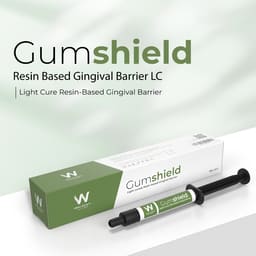
Brands include Ultradent OpalDam, Cerkamed, Prime Dental Gingisafe, Waldent Gumshield, and Maarc. They are supplied as syringes, kits, and larger liquid-dam packs, all light-cured resin barriers for gum protection. The choice comes down to pack size and preference, since all seal and peel in the same way.