





K Files
4.5
A K-file is an endodontic hand instrument, twisted from a square or triangular steel blank so cutting edges spiral along its length. Turned in short arcs between the fingers, it is the first thing into a root canal — locating the path, proving it carries through to the apex, and reporting back what the anatomy is doing.
Sort by - Recommended
 Recommended
 Price- High to LowPrice- Low to High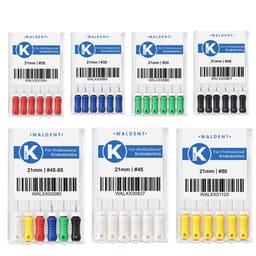



★ 4.2
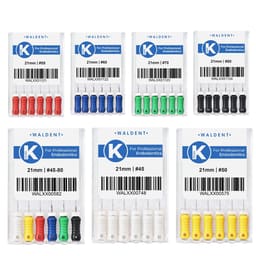
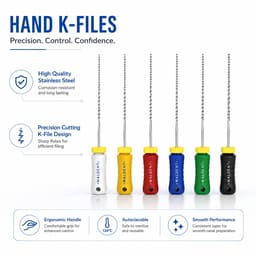
(5)Durable stainless steel hand file with sharp edges, tight spiral, and strong tensile strength for safe canal preparation
Starting at₹ 130
View Similar Products


★ 4.5
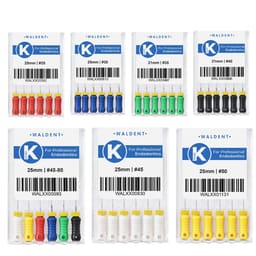
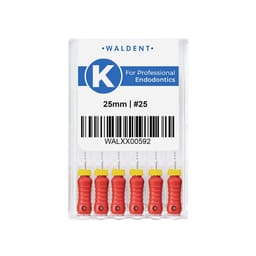
(2)25mm stainless steel hand K-Files with enhanced cutting efficiency
Starting at₹ 130
View Similar Products


★ 3.0
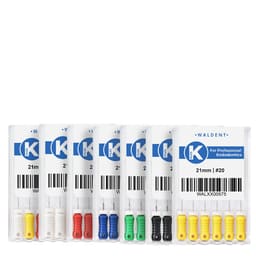
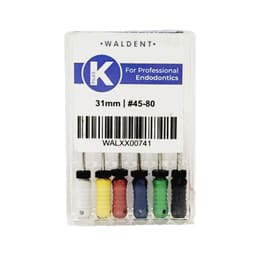
(2)Professional K files made with superior quality stainless steel
Starting at₹ 130
View Similar Products


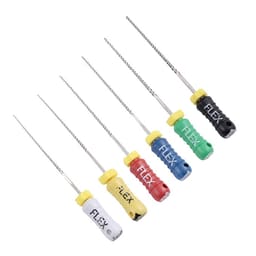
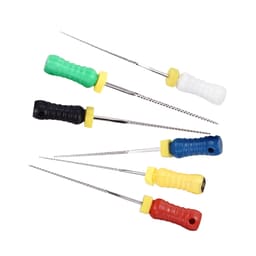
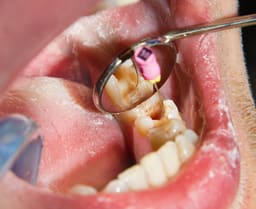
K-Flex files to prepare root canals with minimal risk of ledging and perforation, ensuring safe and efficient endodontic procedures
Starting at₹ 275
View Similar Products

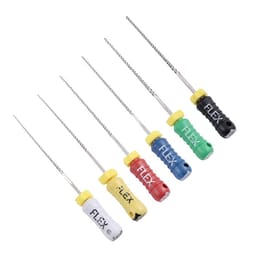
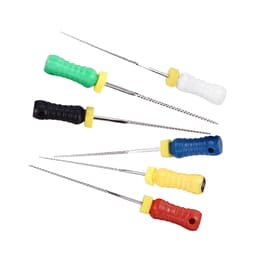
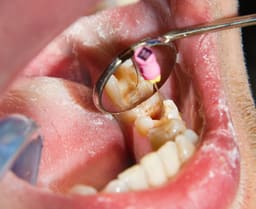
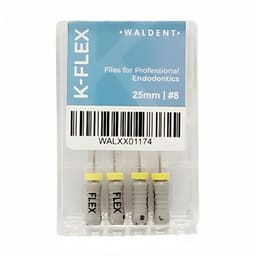
K-Flex files to prepare root canals with minimal risk of ledging and perforation, ensuring safe and efficient endodontic procedures
Starting at₹ 275
View Similar Products

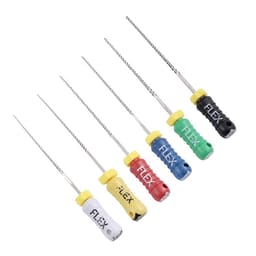
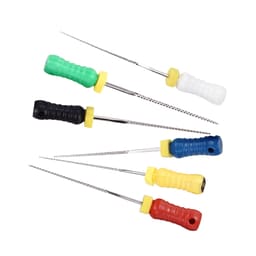


K-Flex files to prepare root canals with minimal risk of ledging and perforation, ensuring safe and efficient endodontic procedures
Starting at₹ 275
View Similar Products
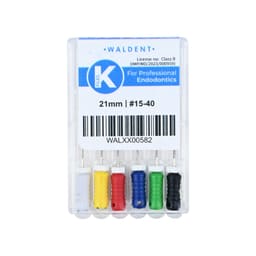

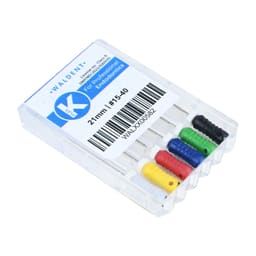
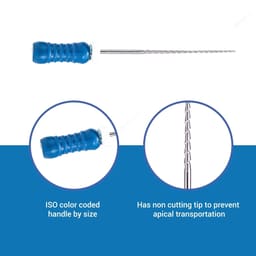

Durable stainless steel hand file with sharp edges, tight spiral, and strong tensile strength for safe canal preparation
₹ 140₹ 501
72.06% Off
 5
5View Similar Products

★ 4.8
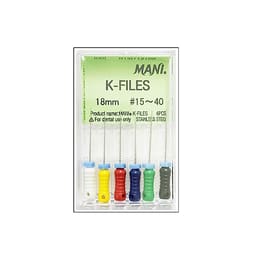
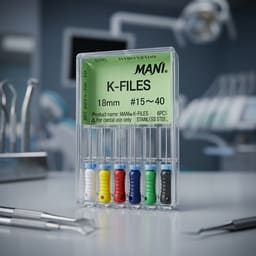
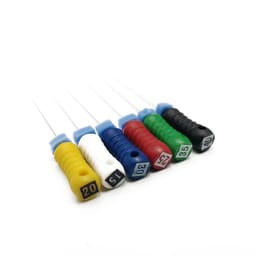
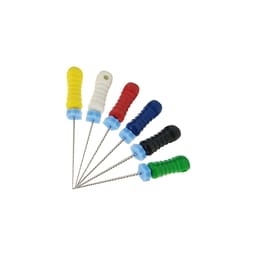
(8)Efficient dental instrument mani K-File, sharp, stainless steel for root canal treatmet
₹ 189₹ 285
33.68% Off
2View Similar Products
Filters
Sort By
RecommendedEndodontic K-Files
Twisted from a square or triangular steel blank, this instrument carries cutting edges that spiral along the shaft. It is worked by hand in short back-and-forth arcs rather than driven by a motor.
That manual control is the point. Nothing else in the endodontic tray tells you as much about what a canal is doing — where it narrows, where it turns, whether it has closed off — because the information arrives through your fingers rather than a torque display.
Lengths stocked
Each one is sold in more than one length, chosen from the options on the product page rather than as separate listings.
21 mm — the default
Suits most anterior, premolar and molar work, and it is the length to stock deepest. The Mani K-Files are supplied this way, with 25 mm and 31 mm selectable for long-rooted canines and unusually long canals.
18 mm — for tight openings
When a patient cannot open far enough for a standard shaft to clear the opposing arch, a shorter shaft is the only way to reach a second molar. The Mani K-File 18mm covers that case in #15–40.
Bulk stainless steel
For clinics that get through instruments quickly and discard small sizes after one canal, the Waldent Professional K-File is the volume option, in #15–40 and #45–80.
Where they come into a case
Before anything rotates, a hand instrument has already been down the canal.
- Finding the orifice and checking the canal is open along its length
- Confirming how deep the canal runs, against an apex locator reading
- Working through a canal that calcification has narrowed or closed
- Re-establishing a path after a blockage during retreatment
- Tidying the apical few millimetres once rotary shaping is finished
Choosing sizes and how many
- Buy small sizes in bulk. #08, #10 and #15 do the scouting and take the punishment; they are consumed several times faster than #20 and above.
- Treat the smallest as disposable. A #08 that has been through a calcified canal is work-hardened whether or not it looks it.
- Match length to access, not to the tooth. Inter-arch opening decides this more often than root length does.
- Keep a wider range than you think you need. A #45–80 pack sits unused for months, then saves an appointment.
A fuller breakdown of sizing, taper and technique is set out in choosing the right K-files for your endodontic practice.
Brands stocked
Two makers cover this category. Mani, from Japan, is the reference point for hand files — consistent twist geometry and edges that stay sharp through a canal. Waldent supplies the domestic alternative at a price that makes single-use practical on the small scouting sizes.
Buying for the tray
A hand file is a consumable that fails quietly — the edges dull and the shaft work-hardens well before anything looks wrong, and one that separates at working length turns a routine appointment into a referral.
Every pack here is genuine, batch-coded, and listed with its length and size range stated plainly so a restock order does not arrive in the wrong dimension. The rotary files that follow the glide path and the rest of the endodontics tray are stocked alongside.
Frequently Asked Questions (FAQs):
What is an endodontic K-file?
A K-file is a stainless-steel hand instrument twisted from a square or triangular blank, producing cutting edges that spiral along the shaft. Turned by hand in short arcs, it is used to locate a canal, confirm it runs through to the apex, negotiate calcification, and refine the apical portion once rotary shaping is complete.
What is the difference between a K-file and a rotary file?
Control and purpose. A K-file is turned by hand, which is slower but returns tactile information about the canal — narrowing, curvature, blockage. A rotary file is motor-driven nickel-titanium that shapes the canal quickly once a path already exists. The hand file goes first; the rotary file follows it.
Which K-file sizes should a practice stock?
Stock #08, #10 and #15 heavily, since scouting consumes them fastest and they are the sizes most often discarded after a single canal. Hold #20 to #40 in moderate quantity for apical refinement. A #45-80 pack is worth keeping for wide or immature canals even though it turns over slowly.
How is canal patency confirmed with a K-file?
A small file, usually #08 or #10, is advanced with a gentle watch-winding motion until it reaches the length indicated by an apex locator or radiograph. Keeping a file passing to that length between instruments stops debris packing at the terminus and closing the canal off as shaping progresses.
Can K-files be reused after autoclaving?
They can, but the working life is short. Cutting edges dull and the metal work-hardens with each cycle, and both happen invisibly. Many practices now treat the small scouting sizes as single-use for that reason, and reserve reuse for larger files that have not been through a calcified or sharply curved canal.