

Light Cure Unit Accessories
LED light cure probes are detachable optical fibre guide rods that channel polymerising blue light from a dental curing light unit to the restoration surface. Dentalkart stocks light cure probes, replacement guides, and protective hand shields from Woodpecker, DentGist, 3M ESPE, and Cotisen. Trusted by 50,000+ dentists across India, with COD and pan-India delivery on 110,000+ pincodes.
 Recommended
 Price- High to LowPrice- Low to High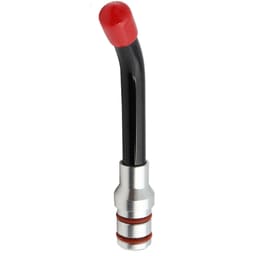
 11
11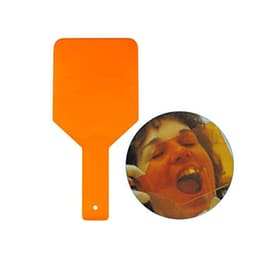
 3
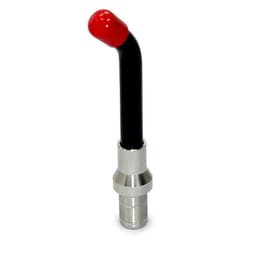
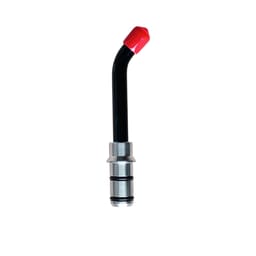
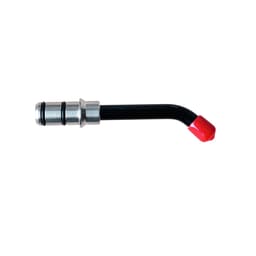
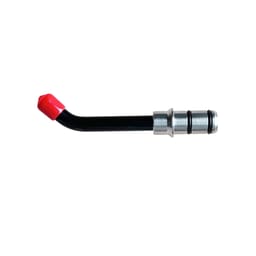
3LED light cure probes are detachable optical fibre guide rods used on dental LED curing light units to transmit blue light to the composite, adhesive, or sealant surface during polymerisation. The category covers straight and curved fibre-optic light guides sized 7 mm to 13 mm at the emitting tip, protective light hand shields, curing light power testers, and unit-specific replacement probes for Woodpecker, 3M ESPE Elipar, DentGist, and other LED curing systems. All LED light cure probes on Dentalkart are sourced from authorised distributors with original packaging.
Types of LED Light Cure Probes
Straight Optical Fibre Light Guides
Straight optical fibre light guides are the standard probe design used for anterior and most restorative composite curing, with the emitting tip parallel to the handpiece axis. Example: DentGist Light Cure Probe.
Curved Posterior Light Guides
Curved light guides are angled at the distal end to reach posterior molars and lingual surfaces where a straight tip cannot seat against the restoration. Example: 3M ESPE Light Guide for Elipar DeepCure-S.
Unit-Specific Replacement Probes
Unit-specific replacement probes are brand-matched fibre guides that fit only one curing light system, preserving the manufacturer-tuned light output and beam geometry. Example: Woodpecker LED D Light Probe.
Protective Light Hand Shields
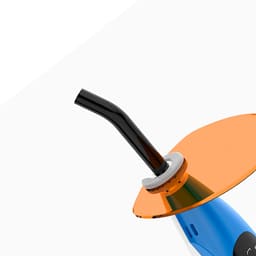
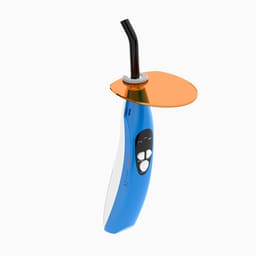
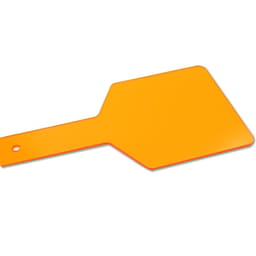
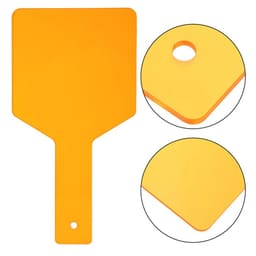
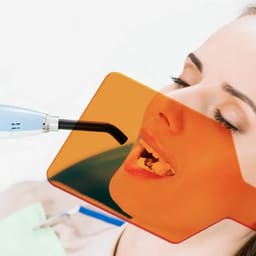
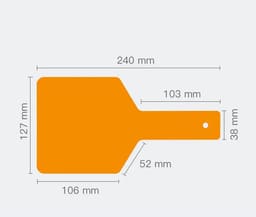
Protective light hand shields are orange acrylic discs that absorb wavelengths between 380 and 500 nm, protecting the operator's eyes from direct exposure to the polymerising beam. Example: Cotisen Protective Light Hand Shield.
Curing Light Power Testers
Curing light power testers (radiometers) measure the irradiance output of the curing light in mW/cm² so the clinician can confirm the unit is delivering enough energy to polymerise composite to its rated depth of cure.
When are LED light cure probes used?
LED light cure probes are used in restorative dentistry whenever a light-cured material needs to be polymerised in the mouth, transmitting the curing wavelength from the LED source to the restoration without scatter or beam misalignment.
- Direct composite restorations in anterior and posterior teeth
- Light-cured adhesive system curing before composite placement
- Sealant placement on occlusal pits and fissures
- Orthodontic bracket bonding with light-cured resin
- Light-curing of resin cements under indirect restorations
- Replacement when an existing probe is chipped, cracked, or has dropped output
How to choose the right LED light cure probe
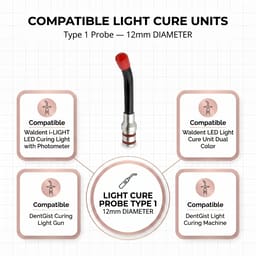
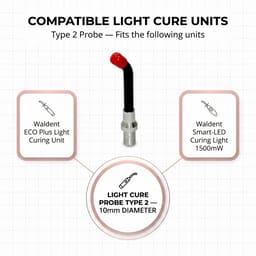
- Unit compatibility: confirm the probe matches your curing light brand and model; replacements from a different brand may not seat correctly or transmit full intensity.
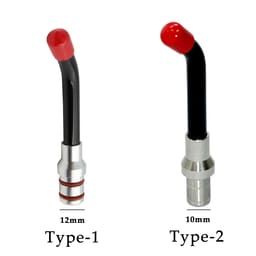
- Tip diameter: smaller tips (7 to 8 mm) concentrate energy for narrow access; larger tips (10 to 13 mm) cover a wider restoration area in one cure cycle.
- Tip geometry: choose straight for anterior or general work, and curved for posterior teeth where access is limited.
- Fibre quality and clarity: original-equipment fibre bundles deliver the rated irradiance; generic probes may lose up to 30% output.
- Autoclavability: verify the probe is rated for steam autoclave cycles at the temperature and pressure required for infection control.
- Power tester verification: pair a new probe with a radiometer reading at first use, so subsequent drops in output can be detected and the probe replaced.
LED light cure probe brands available on Dentalkart
Dentalkart stocks LED light cure probes, replacement fibre guides, hand shields, and radiometers from Woodpecker, DentGist, 3M ESPE, Cotisen, Eighteeth, Waldent, COXO, Apoza, Bonart, and Skydent. Each accessory is supplied through authorised distribution with original sealed packaging and manufacturer documentation.
Why buy LED light cure probes from Dentalkart
Dentalkart supplies 100% genuine LED light cure probes sourced from manufacturers and authorised distributors, with a 10-day replacement policy on eligible items. Pan-India delivery reaches 110,000+ pincodes with COD and EMI on qualifying orders. Restorative product specialists are available for unit-matching and tip-size queries, supported by clinical literature so practitioners can pair the right probe with their LED curing light before ordering.
Frequently Asked Questions (FAQs):
Frequently Asked Questions
What is an LED light cure probe used for?
An LED light cure probe is used to channel polymerising blue light from the curing light unit to the composite, adhesive, sealant, or resin cement at the restoration site. The fibre-optic bundle inside the probe transmits the wavelength range required for camphorquinone-initiated cure, typically 430 to 490 nm.
What is the difference between straight and curved LED light cure probes?
The difference between straight and curved LED light cure probes is the angle of the emitting tip. Straight probes keep the tip parallel to the handpiece axis and suit anterior and most posterior cases. Curved probes angle the tip at the distal end for access to second molars and lingual surfaces where a straight probe will not seat.
Which LED light cure probe tip size is best for posterior composite restorations?
For posterior composite restorations, a 10 to 13 mm tip diameter is generally best because it covers the entire occlusal surface of a molar in a single cure cycle. Smaller 7 to 8 mm tips suit anterior cavities and narrow access, but require multiple overlapping cure cycles to cover a posterior preparation.
How long does an LED light cure probe last?
An LED light cure probe lasts for several thousand autoclave cycles when used with care, but output drops gradually with fibre damage, chipping, or residual composite on the tip. A radiometer reading below 600 mW/cm² indicates the probe should be replaced, even if the surface appears intact.
Are LED light cure probes on Dentalkart genuine?
LED light cure probes on Dentalkart are genuine and procured from manufacturers and authorised distributors. Brands including Woodpecker, DentGist, 3M ESPE, and Cotisen are supplied in original sealed packaging with manufacturer documentation. Dentalkart offers a 10-day replacement policy on eligible items for quality or fulfilment issues.