



NewDiamond Bur Kits
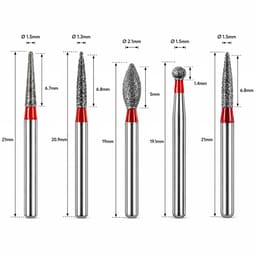
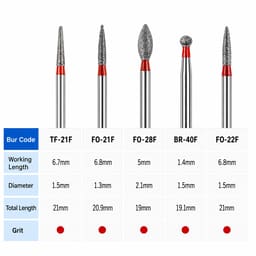
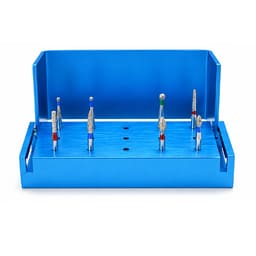
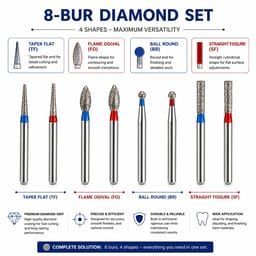
NewDiamond bur kits are procedure-specific sets of friction-grip diamond burs for high-speed airotors, each assembled around one job rather than sold as a loose assortment. The range covers zirconia cutting and finishing, crown and porcelain preparation, composite contouring, gingival bevelling and minimally invasive cavity preparation, with grit and shape already matched to the task.
 Recommended
 Price- High to LowPrice- Low to High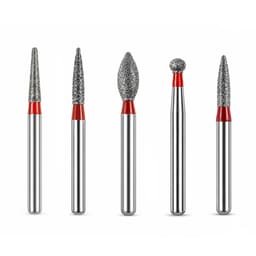
 22
22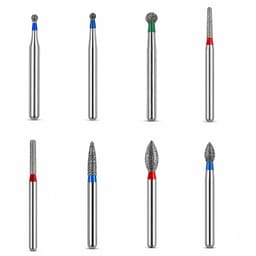
 22
22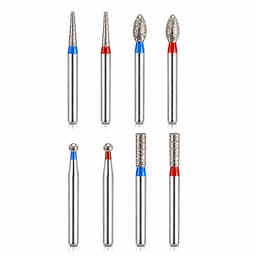
 22
22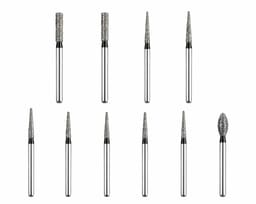 22
22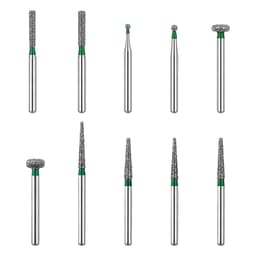
 11
11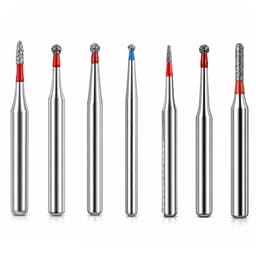 11
11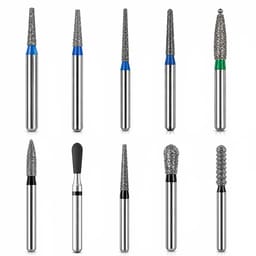 11
11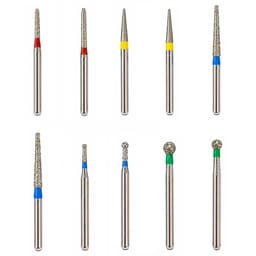 11
11NewDiamond Bur Kits
Buying diamond burs loose means guessing at shapes and grits, then finding mid-procedure that the one you need is not on the tray. Buying by procedure removes that: the shapes, grits and sequence for a given job arrive together, already matched.
Everything here is friction-grip for a high-speed airotor. What separates one set from the next is the material it is ground for — and that matters more than it sounds, because zirconia, porcelain, composite and enamel each need a different diamond.
Kits by material
Zirconia
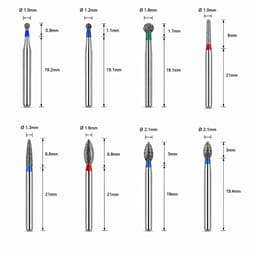
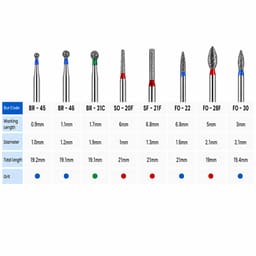
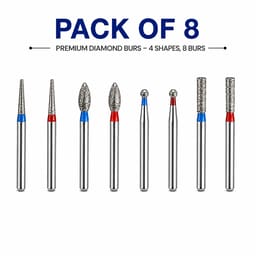
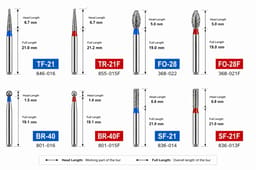
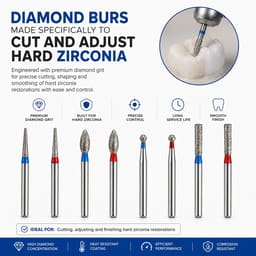
Monolithic zirconia is harder than anything else in the mouth and will destroy a standard diamond. It needs a coarse, aggressive diamond to cut and a graded sequence to finish without chipping the margin. The NewDiamond zirconia preparation and finishing kit covers both stages across eight burs, with dedicated cutting, finishing and contouring sets alongside.
Porcelain and ceramic
Crown preparation asks for controlled reduction and a clean margin, since anything left rough transfers straight into the impression. The porcelain crown preparation kit (FG-119) is built for that sequence, with separate sets for shouldered abutment polishing, ceramic restoration adjustment and porcelain repair.
Composite
Finishing composite is about contour and margin rather than bulk removal, so the grits run finer and the shapes are made for shaping anatomy and blending a margin into enamel. The composite resin kit (FG-114) handles contouring and refinement, and a repair set covers chairside patching.
Tooth preparation
For work on tooth structure itself the range splits by how much you intend to remove. The minimally invasive cavity preparation kit (FG-116) uses fine grits for conservative access, while coarse-sand, molar restoration, crown preparation and gingival bevel sets cover heavier reduction and margin work.
Why buy by procedure
- The full shape sequence for one procedure, in the order you use it
- Grit already matched to the material, so no cross-checking specifications
- A predictable restock — one reference to reorder rather than a dozen codes
- Consistent results between operators working from the same tray
Choosing between them
- Start from the material. Zirconia, porcelain, composite and tooth structure each need a different diamond; one ground for the wrong material will underperform.
- Then the stage. Cutting and sectioning sets are coarse; finishing and polishing ones are fine. Several materials have both, and a full case wants both.
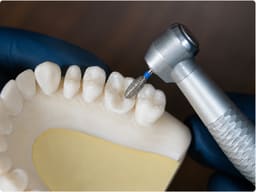
- Check the shank. These are friction grip for a high-speed handpiece, not latch-type for a contra-angle.
- Match to your case mix. A practice placing monolithic zirconia weekly needs the zirconia range; a restorative-led practice will reach for composite and cavity preparation far more often.
Replacing a worn set
Diamonds are consumables and they blunt gradually rather than suddenly, which is why worn burs stay on trays long past the point they should — cutting slower, generating more heat and asking more pressure of the operator.
Each listing carries its code and contents, so replacing a used set is a matter of reordering the same reference. The wider bur range sits in burs, and the handpieces these run in are stocked under airotor.
Frequently Asked Questions (FAQs):
What is a NewDiamond bur kit?
It is a set of friction-grip diamond burs assembled for one procedure rather than sold as a general assortment. Each kit contains the shapes and grits that a given job needs — zirconia finishing, crown preparation, composite contouring — so the sequence is complete on the tray before the procedure starts.
Which bur kit should be used on zirconia?
Use a kit ground specifically for zirconia. Monolithic zirconia is substantially harder than enamel or porcelain, and a standard diamond dulls quickly against it. Zirconia kits pair a coarse, aggressive diamond for cutting and sectioning with finer grits for contouring and finishing the margin without chipping.
Do these kits fit any handpiece?
They fit high-speed airotors, since every kit in this range uses the friction-grip shank. A contra-angle takes the shorter latch-type bur and a straight handpiece takes the longer HP shank, so neither will hold these. Check that your handpiece is a friction-grip high-speed head before ordering.
What is the difference between a cutting kit and a finishing kit?
Grit and purpose. Cutting kits use coarse diamonds to remove bulk material quickly — sectioning a crown, reducing a tooth. Finishing kits use finer grits to refine contour, smooth a margin and prepare a surface for polishing. A full restorative case usually needs both, in that order.
How often should diamond burs be replaced?
Replace them when cutting slows and you find yourself applying more pressure, which is the practical sign the diamond has worn. Diamonds blunt gradually rather than failing outright, so a worn bur stays in service long past its useful life — generating heat, cutting inefficiently and risking the pulp.