


Peeso Reamers
A Peeso reamer is a rigid rotary endodontic drill with a non-cutting safe tip, used to remove gutta-percha from the coronal canal and prepare the post space for a post-and-core. Peeso reamers come in graded sizes 1 to 6 of increasing diameter, and are run slowly in a handpiece to enlarge the canal in a straight, controlled line.
 Recommended
 Price- High to LowPrice- Low to High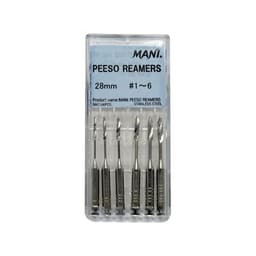
 2
2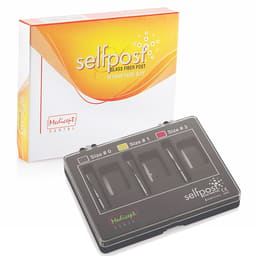

Only 4 Left
10Peeso Reamers
After a root canal is filled, a badly broken-down tooth often needs a post to retain the core that will support a crown. Cutting the channel for it is the job of the Peeso reamer — a rigid, parallel-sided drill that removes gutta-percha from the upper canal and widens it to a clean, round channel the post can seat in.
Its stiffness is deliberate. Where a flexible file follows the canal's curves, a Peeso reamer stays straight, cutting a direct path in the coronal and middle third where the retainer needs to sit rigidly. That same rigidity is why it is kept to the straighter, wider part of the canal and not pushed into curved apical anatomy.
The safe-tip design
The defining feature of a Peeso reamer is its non-cutting tip. The flutes cut on the sides, but the very end is rounded and inactive, so the instrument follows the existing canal rather than gouging a new path or perforating the wall.
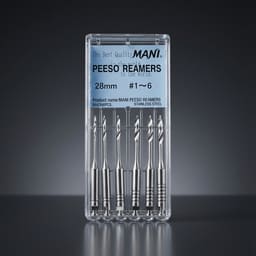
That safe tip is what lets a Peeso reamer be run confidently to a set depth for post-space preparation. A Mani Peeso reamer set supplies the full range in one pack so the space can be widened in graded steps.
The size system
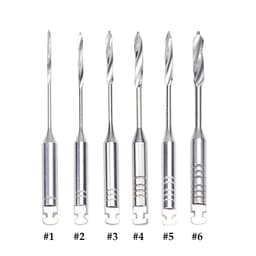
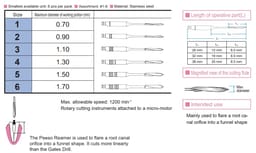
Peeso reamers are numbered 1 to 6, and the number is the diameter — each step up is wider than the last.
Working through the sizes
Post-space preparation runs through the sizes in order. A smaller reamer opens and follows the canal first; larger ones then widen it to the diameter the chosen post needs, one controlled increment at a time. Skipping sizes risks the instrument grabbing and the canal being over-cut.
Matching to the post
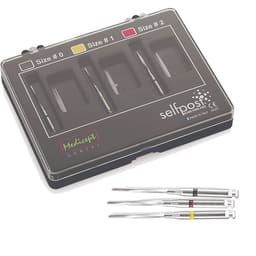
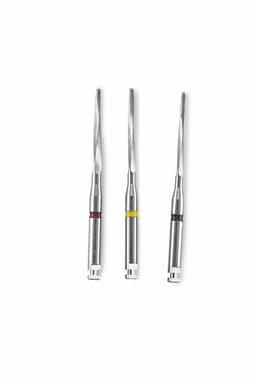
The final size is chosen to match the retainer that will be cemented. Prefabricated systems are supplied with a matching drill or state the Peeso size that prepares their space, so the channel and the retainer fit precisely — a Medicept self post is one of the posts that seats into a Peeso-prepared space.
Peeso reamer versus Gates-Glidden
Both are rigid coronal-flaring drills, and they are easy to confuse. A Gates-Glidden has a short, flame-shaped cutting head on a long thin shaft, used mainly to flare the canal orifice. A Peeso reamer has a longer, parallel cutting portion, which makes it the instrument for cutting a deeper, straight-walled channel rather than just flaring the entrance.
Most endodontic trays carry both, and the wider set of canal-shaping instruments sits in rotary files.
Using and buying Peeso reamers
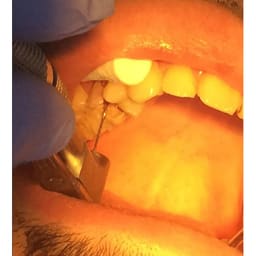
This instrument is run at low speed in a handpiece, to a controlled depth, staying within the straight portion of the canal. Used beyond that — into curvature or too deep — it risks perforation, which is why depth control matters more than speed.
Buy the set rather than single sizes, since preparation steps through several, and keep the whole endodontic sequence together. The files, sealers and obturation materials that precede and follow this step are in endodontics.
Frequently Asked Questions (FAQs):
What is a Peeso reamer used for?
A Peeso reamer is a rigid rotary drill used to remove gutta-percha from the coronal canal and prepare the post space after root canal treatment. Its parallel cutting sides and non-cutting safe tip let it widen the upper part of the canal into a clean, straight channel that a post can seat in to retain a core.
What do the Peeso reamer size numbers mean?
The numbers 1 to 6 indicate increasing diameter — size 1 is the narrowest, size 6 the widest. Post-space preparation works up through the sizes in order, a smaller reamer opening the canal first and larger ones widening it to the diameter the post needs, one controlled step at a time rather than skipping sizes.
What is the difference between a Peeso reamer and a Gates-Glidden drill?
Both are rigid coronal drills, but they differ in shape and use. A Gates-Glidden has a short flame-shaped head for flaring the canal orifice. A Peeso reamer has a longer parallel cutting portion, making it the instrument for cutting a deeper, straight-walled post space. A tray often carries both for different stages of coronal preparation.
Why does a Peeso reamer have a non-cutting tip?
The safe, rounded tip means the very end of the instrument does not cut. It follows the existing canal instead of gouging a new path or perforating the wall, which lets the reamer be advanced to a set depth with control. Cutting happens on the sides, widening the canal without the tip creating a false channel.
Can Peeso reamers be used in curved canals?
They are not intended for curved anatomy. A Peeso reamer is rigid and cuts a straight path, so it is confined to the straighter coronal and middle third of the canal. Forcing it into curvature risks perforation or ledging. Curved apical shaping is done with flexible nickel-titanium files, not rigid reamers.