

Stainless Steel Crowns
4.7
Stainless steel crowns are preformed metal caps that fit over a decayed or pulp-treated molar and are cemented for full-coverage protection. 3M ESPE, Oro and SuperEndo make SSC kits for primary first and second molars, alongside permanent molar sets. Each crown is numbered by tooth and size, supplied in graded assorted kits and single-size refills.
Sort by - Recommended
 Recommended
 Price- High to LowPrice- Low to High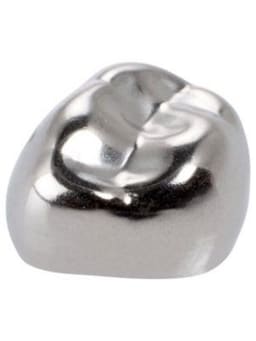
★ 4.5
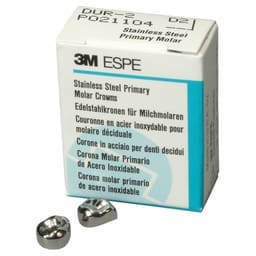
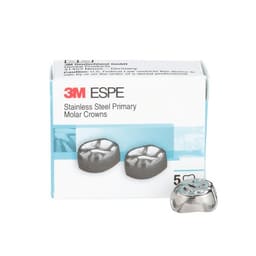
(2)Stainless Steel Primary Molar Crowns for Longevity, and natural anatomy replication for pediatric molars.
Starting at₹ 638
View Similar Products
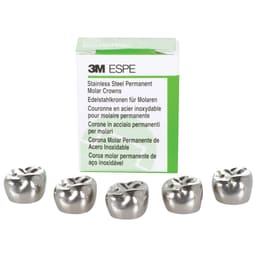
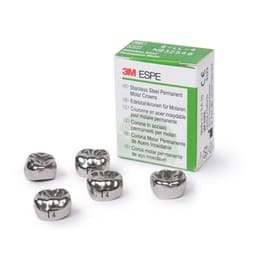
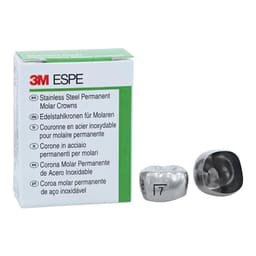
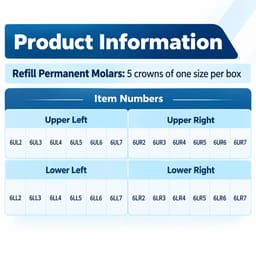
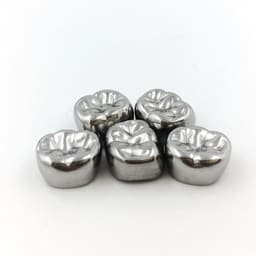
Permanent 1st molar stainless steel crowns for long-term coverage of permanent molar teeth
Starting at₹ 1757
View Similar Products
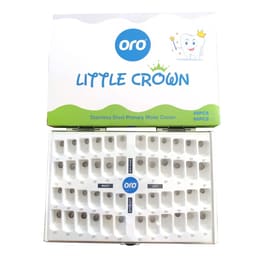
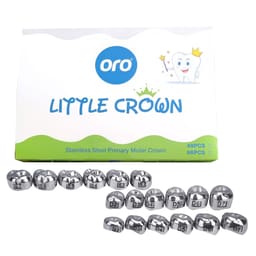
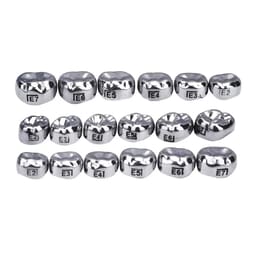
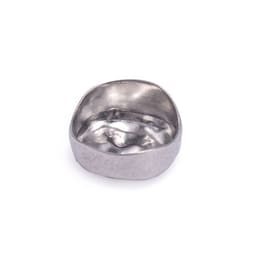
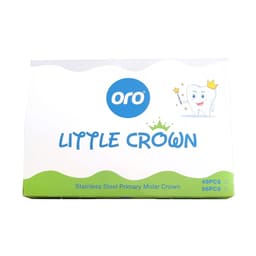
Primary Molar Stainless Steel Crowns for long-term coverage of primary molar teeth
Starting at₹ 7095
View Similar Products
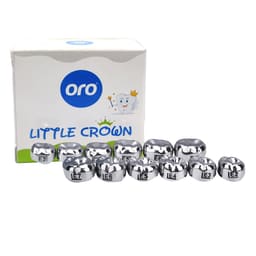
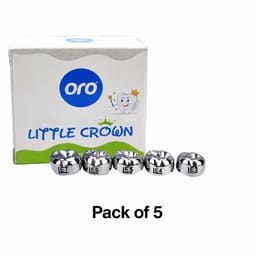

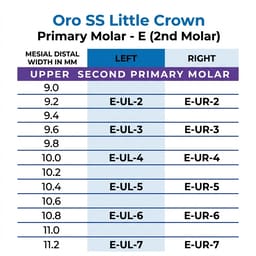
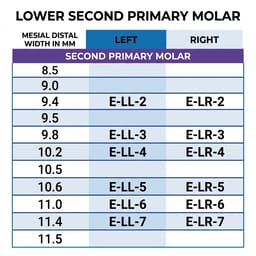
Primary 2nd Molar Stainless Steel Crowns for long-term coverage of primary molar teeth
Starting at₹ 625
View Similar Products
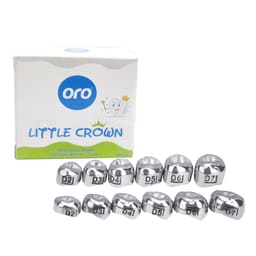

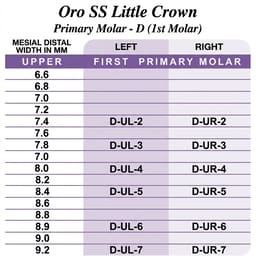
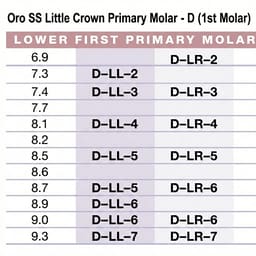
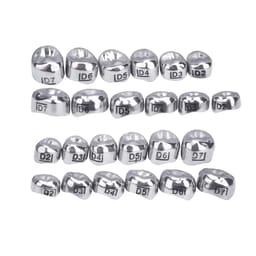
Primary First Molar Stainless Steel Crowns for long-term coverage of primary molar teeth
Starting at₹ 625
View Similar Products
★ 4.5
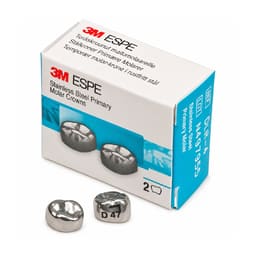
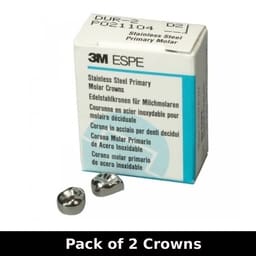
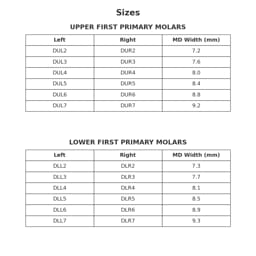
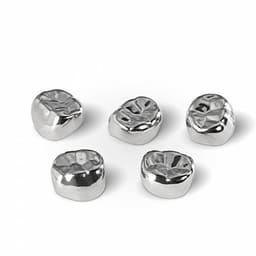
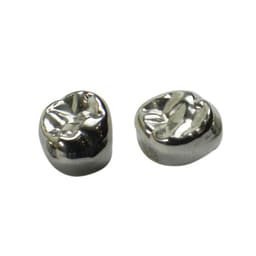
(2)Primary First Molar Stainless Steel Crowns for long-term coverage of primary molar teeth
Starting at₹ 638
View Similar Products
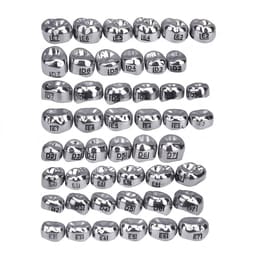

★ 5.0
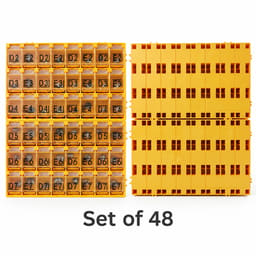
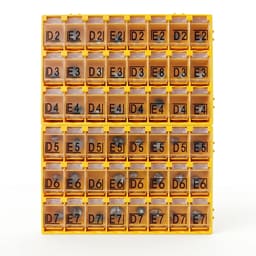
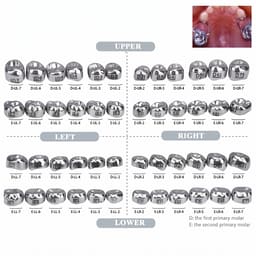
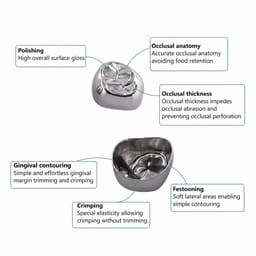
(2)Complete 48-piece stainless steel crown kit covering all primary molar sizes for upper and lower arches
₹ 3140₹ 6900
54.49% Off
 155
155View Similar Products
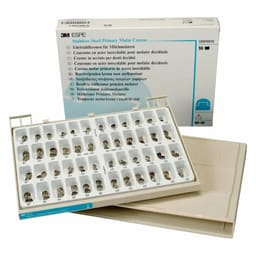
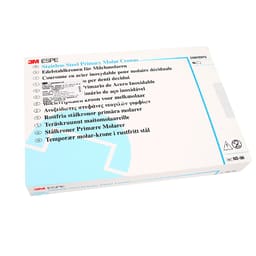
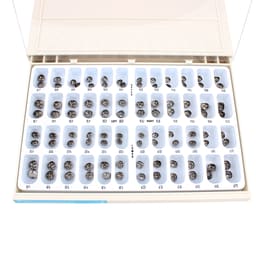
Only 1 Left
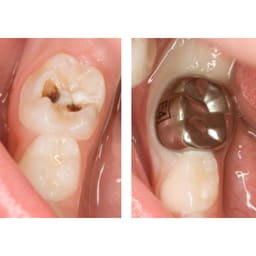
Stainless Steel Crowns provide easy and durable restoration for primary molars.
₹ 26647₹ 46420
42.60% Off
266View Similar Products
Filters
Sort By
RecommendedStainless Steel Crowns
Stainless steel crowns are prefabricated nickel-chromium caps that fit over a whole molar. They restore a tooth when decay, fracture, or pulp therapy leaves too little of it for a filling. The clinician picks a crown numbered to the tooth and reduces the tooth to make room. The crown margin is then trimmed and crimped to hug the neck of the tooth, and cemented, usually with glass ionomer. Because the metal wraps every surface, the crown takes full chewing load. It resists the margin breakdown that shortens the life of large multi-surface fillings. That durability makes it the go-to restoration for badly broken-down primary molars, teeth capped after a pulpotomy, and high-caries-risk children whose fillings keep failing. It also suits first permanent molars needing a strong full crown, and can be placed by the Hall technique with no drilling at all.
Types of stainless steel crowns
- Primary first molar (D) crowns — sized for the lower and upper first primary molars, the trickier shape to fit, part of the wider pedo crowns range.
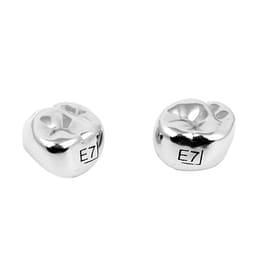
- Primary second molar (E) crowns — larger forms for the second primary molars, the most frequently crowned posterior baby teeth.
- Permanent molar crowns — heavier crowns (such as the 3M ESPE permanent molar set) for first permanent molars needing full coverage.
- Assorted intro kits — a numbered range of D and E molar sizes for both arches, held on a labelled card so the right crown is found fast chairside.
- Single-size refills — packs of one tooth-and-size to restock the crowns a clinic fits most.
When are stainless steel crowns used?
Stainless steel crowns are used in paediatric dentistry to restore molars where a filling would not survive the chewing load. The metal wraps the whole crown, so it holds until the primary tooth is shed. That is why it is favoured for pulp-treated and heavily carious molars. Common situations:
- After a pulpotomy or pulp therapy on a primary molar
- Extensive or multi-surface caries on a primary molar
- High-caries-risk children where fillings repeatedly fail
- Fractured or hypoplastic molars needing full protection
- Placement by the Hall technique without tooth preparation
- Interim full coverage on a compromised permanent molar
How to choose the right stainless steel crown
- Tooth and arch — crowns are numbered by tooth (D for first, E for second primary molar) and by upper or lower arch; match the crown to the exact tooth being restored.
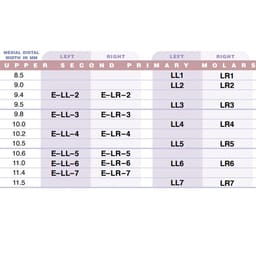
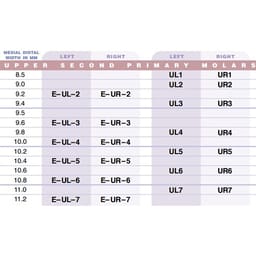
- Size number — each tooth position runs through several size numbers; the ideal crown is the least oversized one that still drops to the margin and grips the tooth neck without rocking.
- Primary or permanent — lighter primary-molar crowns for baby teeth, heavier permanent-molar crowns for first permanent molars.
- Pre-crimped or trimmable — pre-contoured, pre-crimped crowns seat faster, while trimmable crowns give more control over margin fit.
- Kit or refill — an assorted intro kit for a full size range, single-size refills to top up the tooth positions used most.
- Cementation and compatibility — the crown is luted with glass ionomer, so keep a compatible cement and, for anterior cases, the strip crowns range on hand for front teeth.
Stainless steel crown brands and formats
The SSC brands here include 3M ESPE, Oro Little Crown, SuperEndo, and U-Ortho. Between them they cover primary first- and second-molar sizes and permanent molar sets. Every crown is numbered by tooth and arch, and sold either as a graded intro kit or a single-size refill. That keeps a full size range easy to stock and the busiest positions quick to replenish. As a durable metal option for the back of the mouth, they pair well with the tooth-coloured anterior choices and the everyday composite used for direct fillings.
Frequently Asked Questions (FAQs):
What are stainless steel crowns used for?
Stainless steel crowns are used to restore molars that decay, fracture, or pulp therapy has left too weak for a filling. The preformed metal cap covers the whole tooth and takes full chewing load, so it outlasts a large multi-surface filling. In children they are the standard restoration for badly broken-down primary molars and for teeth capped after a pulpotomy, staying in place until the tooth is naturally shed.
How is a stainless steel crown fitted?
Fitting a stainless steel crown begins with choosing the crown numbered to the tooth and reducing the tooth to make room. The margin is trimmed and crimped to grip the neck of the tooth for a snug fit. The crown is then cemented, usually with glass ionomer, and the bite is checked. In the Hall technique, a crown is instead pushed over an unprepared primary molar and held by cement alone.
What is the difference between a stainless steel crown and a strip crown?
The two differ in material, tooth, and goal. A metal cap on a molar delivers chewing durability, while a strip crown uses a clear form and composite to rebuild a front tooth for appearance. The metal option handles posterior load on molars; the composite option gives a tooth-coloured result on incisors. Choose the metal crown for strength at the back and the strip crown for aesthetics at the front.
Which sizes and brands of stainless steel crowns are available?
Stainless steel crowns are sold by tooth and size — first primary molar (D), second primary molar (E), and permanent molar — in upper and lower arch forms. Common brands include 3M ESPE, Oro Little Crown, SuperEndo, and U-Ortho, supplied as assorted intro kits and single-size refills. A kit gives a full graded size range, and refills top up the positions a clinic fits most often.
What is the Hall technique for stainless steel crowns?
The Hall technique is a way of placing a stainless steel crown without drilling or local anaesthetic. The crown is filled with glass ionomer cement and seated directly over an unprepared, carious primary molar, sealing the decay beneath it. It suits young or anxious children where conventional preparation is difficult. Retention comes from the crown's snug fit and the cement seal.