

Wedges
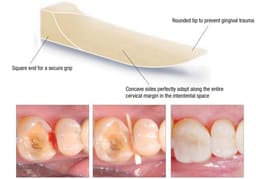
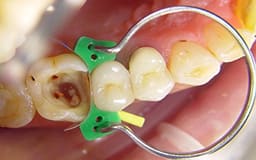
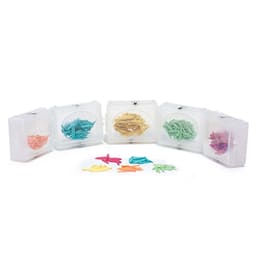
Dental wedges are small triangular or anatomical inserts placed between adjacent teeth during Class II restorations to separate the teeth, adapt the matrix band against the gingival margin, prevent overhangs and rebuild a tight interproximal contact. Dentalkart stocks wooden, silicone, active and diamond wedges from Garrison, Polydentia, Dentsply Palodent, TOR-VM and ET.
 Recommended
 Price- High to LowPrice- Low to High


 60
 15

Dental Wedges
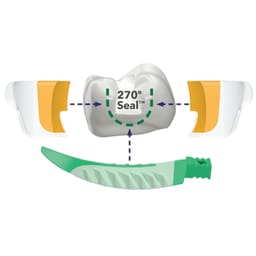
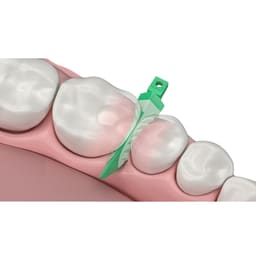
Dental wedges are small triangular or anatomically shaped inserts placed between adjacent teeth during posterior composite and amalgam restorations to separate the teeth, adapt the matrix band tightly against the gingival margin, prevent overhang formation and re-establish a proper interproximal contact point. Dentalkart stocks wooden, silicone, anatomical, active and diamond-coated wedges from Garrison, Polydentia, Dentsply Palodent, TOR-VM, Bioclear, DualForce and ET, trusted by 50,000+ dentists across 110000+ Indian pincodes.
Types of Dental Wedges
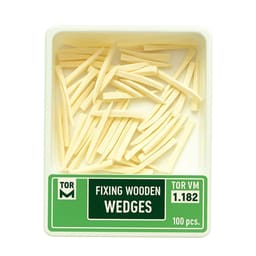
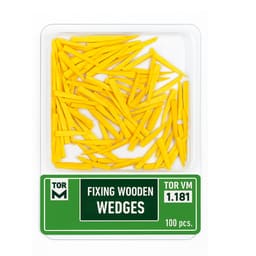
Wooden Interdental Wedges
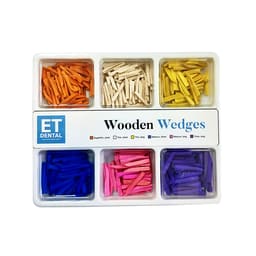
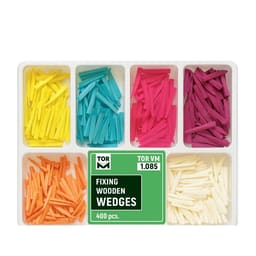
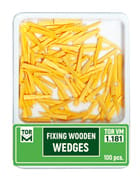
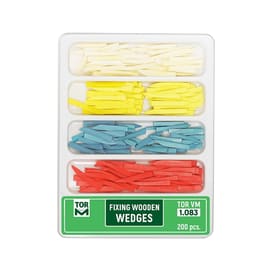
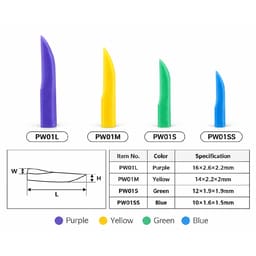
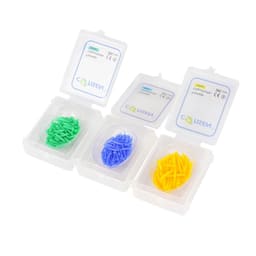
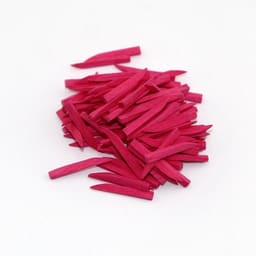
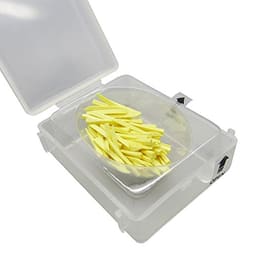
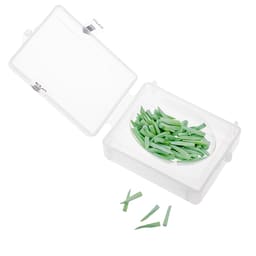
Traditional birch or maple wooden wedges absorb saliva to swell slightly in situ, improving the matrix-margin seal during Class II composite placement. Polydentia interdental maple wood wedges (assorted) are supplied in colour-coded sizes for varying interproximal widths.
Silicone & Anatomical Wedges
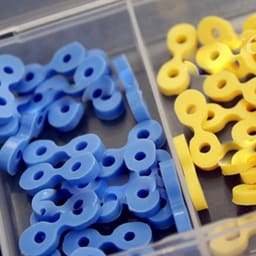
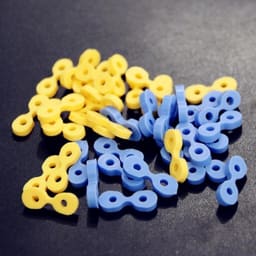
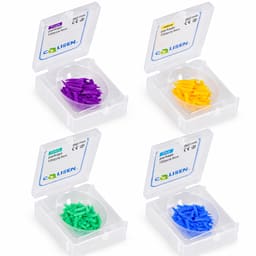
Soft silicone and anatomically shaped wedges such as the Polydentia MyWedge interproximal wedge adapt to the contour of the gingival col, seal sub-gingival margins more reliably than rigid wooden wedges and avoid trauma to the papilla during placement.
Active & Elastic Wedges
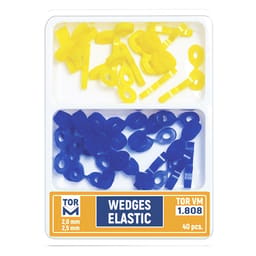
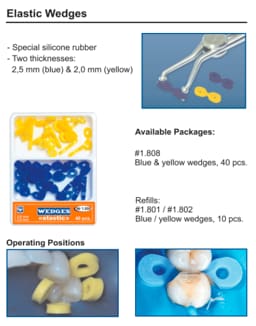
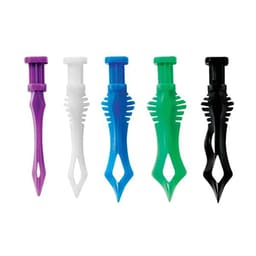
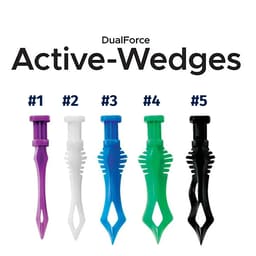
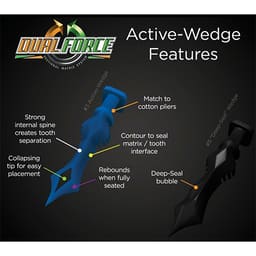
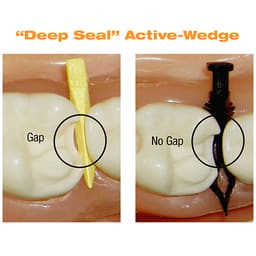
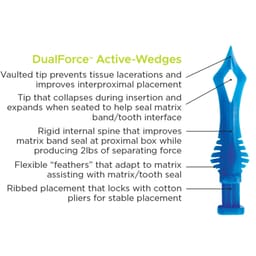
Active wedges such as DualForce compress on insertion and then expand to apply continuous tooth-separation force, generating tighter post-restoration interproximal contacts than passive wooden or silicone wedges.
Wedge Guards for Adjacent-Tooth Protection
Wedge guards combine a traditional wedge with a thin metal shield that protects the adjacent tooth from iatrogenic damage during proximal-box preparation with a diamond bur.
Diamond & Sectional Matrix Fixing Wedges
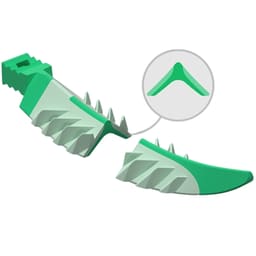
Diamond-coated wedges and ring-fixing wedges from TOR-VM Delta kits and Bioclear refill kits are designed to lock into sectional matrix systems for predictable Class II contact and contour reproduction.
When Are Dental Wedges Used?
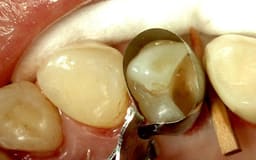
Dental wedges are used during every Class II composite, amalgam and glass-ionomer restoration involving an interproximal box, during sectional-matrix placement for posterior contact creation, and during proximal-box preparation when an adjacent tooth needs to be shielded from the bur. Products like the Dentsply Palodent V3 Wedge Guards (50-pack) are placed before bur access to prevent iatrogenic damage to the neighbouring tooth.
How to Choose the Right Dental Wedge
Match wedge type to the clinical task: wooden wedges for routine Class II composites where moisture-driven expansion improves the matrix seal; silicone anatomical wedges for sub-gingival margins or papilla-friendly cases; active elastic wedges for cases needing maximum tooth separation and tight post-restoration contacts; wedge guards before bur access in proximal-box prep; and ring-compatible fixing wedges when working with sectional matrix systems. Pick the correct colour-coded size for the interproximal width.
Brands of Dental Wedges at Dentalkart
The catalogue features Garrison Strata-G wedges and the DME-01 deep-margin elevation kit, the Polydentia range including MyWedge, The Wedge and interdental maple wood wedges, Dentsply Palodent V3 wedge-guard refills, the Russia TOR-VM Delta fixing-kit series with add-on wedges, Bioclear diamond wedge refills, DualForce active wedge bulk packs, Cotisen and Oro wooden wedges, and ET wooden-wedge kits and silicone wedges for full-protocol Class II restoration support.
Why Buy Dental Wedges from Dentalkart
Dentalkart sources wedges directly from authorised manufacturers including Garrison Dental, Polydentia, Dentsply Sirona, TOR-VM and Bioclear, with batch-coded packaging, cash-on-delivery, GST invoices and 110000+ pincode coverage across India. Practices can pair wedges with packable composite material from the same restorative catalogue for a complete Class II posterior workflow in one order.
Frequently Asked Questions (FAQs):
What are dental wedges used for?
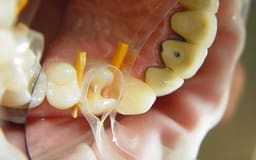
Dental wedges are used to separate adjacent teeth during Class II composite, amalgam and glass-ionomer restorations, to adapt the matrix band against the gingival margin, prevent overhang formation at the box floor and re-establish a tight interproximal contact point. They are inserted into the gingival embrasure before condensing or curing the restorative material.
What is the difference between wooden and silicone wedges?
The difference between wooden and silicone wedges is rigidity and adaptation: wooden wedges are stiff and absorb saliva to swell slightly in situ for a tighter matrix seal, while soft silicone anatomical wedges deform around the gingival col to seal sub-gingival margins more reliably and avoid trauma to the interproximal papilla during placement.
What are active wedges and when should I use them?
Active wedges are elastic wedges that compress on insertion and then expand to apply continuous tooth-separation force, generating tighter post-restoration interproximal contacts than passive wedges. Use them in Class II cases where a strong contact is critical and the adjacent tooth allows the controlled separation required during composite layering.
What is a wedge guard and when is it needed?
A wedge guard is a wedge combined with a thin metal shield that protects the adjacent tooth from iatrogenic damage during proximal-box preparation with a diamond or carbide bur. It is needed in every Class II preparation where a bur passes close to the adjacent tooth surface, especially during slot, tunnel or deep proximal-box cuts.
Which wedge size should I choose?
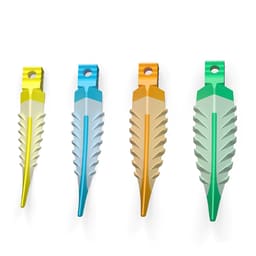
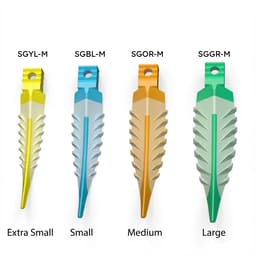
The wedge size you choose should match the interproximal width of the cavity preparation: small or extra-small for narrow anterior contacts and lower-incisor work, medium for routine premolar Class II preparations, and large for posterior molar boxes with wide embrasures. Most wedge kits are colour-coded by size to make chair-side selection straightforward.