Login
carousel image
carousel image

Equipments

4.4

Dental equipment is the powered machinery of a dental operatory — the chair and compressor it is built around, the handpieces, scalers, and endo motors, and the curing lights, RVG sensors, and scanners. Woodpecker, NSK, Waldent, Eighteeth, and Bestodent supply most of it. It ranges from a ₹2,000 curing light to a chair or scanner that anchors the room.

Equipments

Dental Equipment — Chairs, Handpieces, Scalers, Endo Motors and Imaging for the Operatory

Strip a dental surgery back to its machinery and this is what is left: the chair the patient reclines in, the compressor and suction that power the line, the handpieces that cut, the scaler that cleans, the motor that shapes a canal, the light that sets a filling, and the sensor and scanner that image the tooth. This is the powered, capital side of the practice — bought far less often than consumables but deciding how the day actually runs. It spans a small chairside curing light at one end to a full chair or an intraoral scanner at the other.

The operatory core — chair, delivery unit and compressor

Everything else plugs into the chair. A dental chair and its delivery unit position the patient and feed the air, water, and handpieces, with a compressor and suction behind them running the line. Fully automatic chairs add programmable positions and an operating light; portable chairs suit a camp or a second site. The Waldent Eezee Portable Dental Chair is a lightweight portable option.

Handpieces and micromotors

The cutting is done by the handpieces. An air-turbine airotor spins a bur past 300,000 rpm for fast enamel cutting, while an electric micromotor and contra-angle deliver controlled torque for crown prep, finishing, and lab work. The handpieces range covers the airotors, contra-angles, and straight handpieces across both drives.

Scaling and hygiene

For prophylaxis and periodontal work, a piezoelectric ultrasonic scaler shakes calculus and biofilm off the tooth through a swappable tip cooled by a water spray. The ultrasonic scalers range runs the units and the tips that go with them.

Endodontic equipment

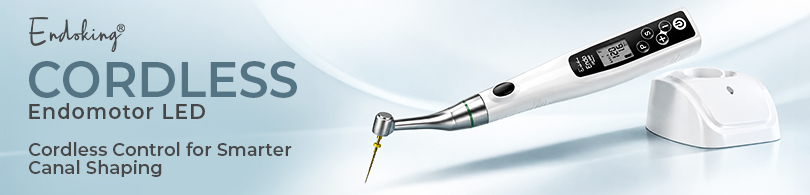
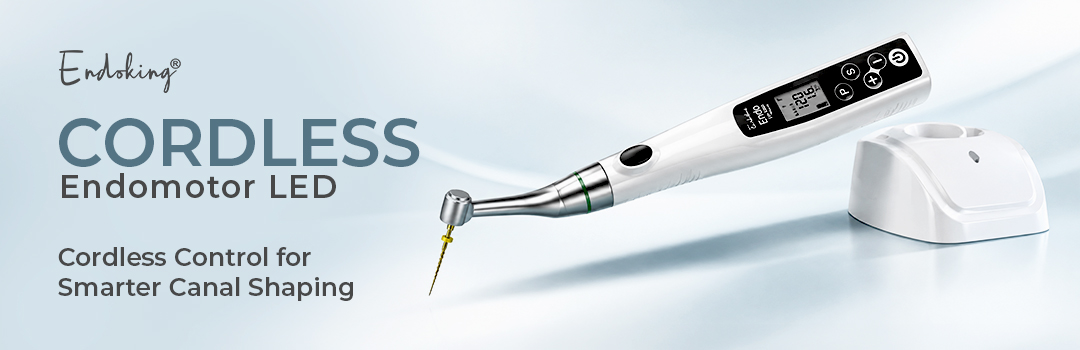
Endodontics has its own machines. An endo motor drives NiTi files at set torque and speed for predictable canal shaping, and an apex locator reads working length electronically so fewer radiographs are needed — often built into the same unit. The endo-motor range covers those.

Imaging — RVG, X-ray and scanners

Diagnosis has gone digital. An RVG sensor takes an instant intraoral X-ray at a fraction of film's dose, an intraoral scanner replaces the impression with a digital scan, and portable X-ray heads and OPG/CBCT machines cover the wider views. The RVG sensors range is the intraoral-imaging side of it.

Curing lights and soft-tissue units

Finishing and minor surgery bring the smaller powered devices — an LED curing light to set composite, bonding, and sealants, and an electrocautery or radiosurgery unit to trough gingiva and control a bleed. The Waldent Maxcure 1 Light Cure Unit is a compact curing light.

When the equipment is used

Something in this category is running at nearly every point of an appointment:

  • Positioning the patient and running the line from the chair at every visit
  • Cutting a cavity or a crown prep with an airotor and finishing with a micromotors contra-angle
  • Scaling and root-planing with an ultrasonic unit before restorative work
  • Shaping a canal with an endo motor and confirming length on a Woodpecker Ai-Pex Apex Locator with Pulp Tester
  • Curing each composite increment under an LED light
  • Taking an RVG radiograph or a digital scan for diagnosis and lab work
  • Troughing tissue with electrocautery before a crown impression

How to choose the right equipment

  1. Match the spend to the caseload — a portable chair and an airotor start a small setup; the chair, scanner, and endo motor scale with the work.
  2. Airotor and electric, not either — an air turbine for fast cutting and an electric micromotor for torque-controlled endo and finishing cover the full scope.
  3. Check the after-sales network — with capital equipment, local service and spare-parts availability decide the real cost over the years, not the sticker.
  4. Confirm the consumable fit — scaler tips, handpiece cartridges, and sensor sizes must match the unit, so check compatibility before buying refills.
  5. Digital where the volume justifies it — an RVG sensor and an intraoral scanner pay back fastest in a busy practice; a small clinic can stage into them.

Brands on Dentalkart

Woodpecker, NSK, and Waldent run right through the everyday equipment — handpieces, scalers, endo motors, and curing lights — at every price point.

Eighteeth, Dentsply, and Marathon add the specialist endo and micromotor units; Carestream, Vatech, Medit, and 3Shape the imaging and scanners; and Bestodent and Confident the chairs and operatory hardware.

Why buy from Dentalkart

Equipment is the part of the practice bought rarely and lived with for years, so the decision is less about the day's price than the decade's — the reliability of the unit, what the warranty covers, and whether it can be serviced locally when it fails mid-list. Kitting out or upgrading an operatory from one catalogue lets a clinic weigh those factors across a chair, a handpiece, and a scanner at once, spread a large purchase over EMI, and keep the tips, cartridges, and sensors the machines eat coming without a separate hunt.


Filters
Sort By
Recommended

Dental Equipment — Chairs, Handpieces, Scalers, Endo Motors and Imaging for the Operatory

Strip a dental surgery back to its machinery and this is what is left: the chair the patient reclines in, the compressor and suction that power the line, the handpieces that cut, the scaler that cleans, the motor that shapes a canal, the light that sets a filling, and the sensor and scanner that image the tooth. This is the powered, capital side of the practice — bought far less often than consumables but deciding how the day actually runs. It spans a small chairside curing light at one end to a full chair or an intraoral scanner at the other.

The operatory core — chair, delivery unit and compressor

Everything else plugs into the chair. A dental chair and its delivery unit position the patient and feed the air, water, and handpieces, with a compressor and suction behind them running the line. Fully automatic chairs add programmable positions and an operating light; portable chairs suit a camp or a second site. The Waldent Eezee Portable Dental Chair is a lightweight portable option.

Handpieces and micromotors

The cutting is done by the handpieces. An air-turbine airotor spins a bur past 300,000 rpm for fast enamel cutting, while an electric micromotor and contra-angle deliver controlled torque for crown prep, finishing, and lab work. The handpieces range covers the airotors, contra-angles, and straight handpieces across both drives.

Scaling and hygiene

For prophylaxis and periodontal work, a piezoelectric ultrasonic scaler shakes calculus and biofilm off the tooth through a swappable tip cooled by a water spray. The ultrasonic scalers range runs the units and the tips that go with them.

Endodontic equipment

Endodontics has its own machines. An endo motor drives NiTi files at set torque and speed for predictable canal shaping, and an apex locator reads working length electronically so fewer radiographs are needed — often built into the same unit. The endo-motor range covers those.

Imaging — RVG, X-ray and scanners

Diagnosis has gone digital. An RVG sensor takes an instant intraoral X-ray at a fraction of film's dose, an intraoral scanner replaces the impression with a digital scan, and portable X-ray heads and OPG/CBCT machines cover the wider views. The RVG sensors range is the intraoral-imaging side of it.

Curing lights and soft-tissue units

Finishing and minor surgery bring the smaller powered devices — an LED curing light to set composite, bonding, and sealants, and an electrocautery or radiosurgery unit to trough gingiva and control a bleed. The Waldent Maxcure 1 Light Cure Unit is a compact curing light.

When the equipment is used

Something in this category is running at nearly every point of an appointment:

  • Positioning the patient and running the line from the chair at every visit
  • Cutting a cavity or a crown prep with an airotor and finishing with a micromotors contra-angle
  • Scaling and root-planing with an ultrasonic unit before restorative work
  • Shaping a canal with an endo motor and confirming length on a Woodpecker Ai-Pex Apex Locator with Pulp Tester
  • Curing each composite increment under an LED light
  • Taking an RVG radiograph or a digital scan for diagnosis and lab work
  • Troughing tissue with electrocautery before a crown impression

How to choose the right equipment

  1. Match the spend to the caseload — a portable chair and an airotor start a small setup; the chair, scanner, and endo motor scale with the work.
  2. Airotor and electric, not either — an air turbine for fast cutting and an electric micromotor for torque-controlled endo and finishing cover the full scope.
  3. Check the after-sales network — with capital equipment, local service and spare-parts availability decide the real cost over the years, not the sticker.
  4. Confirm the consumable fit — scaler tips, handpiece cartridges, and sensor sizes must match the unit, so check compatibility before buying refills.
  5. Digital where the volume justifies it — an RVG sensor and an intraoral scanner pay back fastest in a busy practice; a small clinic can stage into them.

Brands on Dentalkart

Woodpecker, NSK, and Waldent run right through the everyday equipment — handpieces, scalers, endo motors, and curing lights — at every price point.

Eighteeth, Dentsply, and Marathon add the specialist endo and micromotor units; Carestream, Vatech, Medit, and 3Shape the imaging and scanners; and Bestodent and Confident the chairs and operatory hardware.

Why buy from Dentalkart

Equipment is the part of the practice bought rarely and lived with for years, so the decision is less about the day's price than the decade's — the reliability of the unit, what the warranty covers, and whether it can be serviced locally when it fails mid-list. Kitting out or upgrading an operatory from one catalogue lets a clinic weigh those factors across a chair, a handpiece, and a scanner at once, spread a large purchase over EMI, and keep the tips, cartridges, and sensors the machines eat coming without a separate hunt.

Frequently Asked Questions (FAQs):

What equipment does a new general practice need?

The core kit is a dental chair with its delivery unit and a compressor and suction to run it, an airotor and a micromotor handpiece for cutting and finishing, an ultrasonic scaler for cleaning, an LED curing light for composites, an RVG sensor for radiographs, and an endo motor with an apex locator for root canals. An intraoral camera and, later, a scanner round it out.

Should I buy an air-turbine or an electric handpiece?

Ideally both, for different jobs. An air-turbine airotor spins very fast and cuts enamel and crown preps quickly, which is what most operative work needs. An electric micromotor turns slower but with steady, controlled torque, which suits driving endo files, finishing composite, and lab adjustments. A practice that does much endodontics or fine finishing benefits from having the electric alongside the airotor.

What does an apex locator add to root canal treatment?

It measures working length electronically. As the file nears the apical foramen the electrical resistance changes, and the locator reads that to show how far the file is from the root end — a live measurement that saves taking a length radiograph. Modern units hold accuracy through blood and irrigant, and many are built into the endo motor so the two work together.

Is a digital RVG sensor worth it over film?

For most practices, yes. An RVG sensor gives the image instantly on screen at a much lower radiation dose than film, with nothing to process and no darkroom, and the image can be enhanced, stored, and shared. The sensor costs more upfront, but once the film, chemicals, and processing time are removed, it usually works out cheaper for a clinic seeing steady radiograph volume.

What should I check before buying capital equipment?

Look past the price to the running of it: whether there is a local service engineer and stocked spare parts, what the warranty actually covers, and whether the consumables it needs — tips, cartridges, sensor sizes — fit what you already run. For a large purchase, confirm the EMI or financing terms too. A cheaper unit that cannot be serviced in your city costs more over its life.

Stay Connected
15k+

Followers

ABOUT
Contact Us
About Us
Careers
CONTACT US
Investor Relations
Dealer Price Bulk Inquiry
Waldent Dealership
Sell on Dentalkart
HELP
Orders
Refunds
Payments
Rewards
POLICY
Return Policy
Terms of Use
Privacy
Sitemap
REGISTERED OFFICE ADDRESS

2016-2026, VASA DENTICITY LIMITED

Crafted with in India

Our Payment Partners
gpay
paytm
rupay
phonepe
visa
masterCard
like
4.5
Average online rating