Apex Locators
Apex locators are electronic meters that find working length in a root canal by reading impedance as a file nears the apical constriction. Woodpecker, Eighteeth, and J Morita supply Dentalkart's 5th-, 6th-, and 7th-generation units, wired and wireless. Multi-frequency models read to within ±0.5 mm through blood or hypochlorite, and their file clips and lip hooks autoclave at 134 °C.
 Recommended
 Price- High to LowPrice- Low to High
Apex Locators — 5th, 6th & 7th Generation Working-Length Meters for Endodontics
An apex locator is the small electronic meter that tells an endodontist exactly how deep a canal runs. It sends a faint current between a file in the canal and a clip on the patient's lip, then watches the impedance shift as the file tip reaches the apical constriction — the canal's narrowest point, just short of the foramen. A multi-frequency reading holds to roughly half a millimetre even when the canal is wet with blood or irrigant, which is why it has retired the string of working-length radiographs older protocols relied on. The same sensor is built into many endo motors, but a standalone locator is the more accurate, dedicated tool.
Types of apex locators
5th generation
Fifth-gen units read network impedance across several frequencies and stay accurate in dry or lightly moist canals — the version most Indian general practices run. The Woodpecker Apex Locator Woodpex III is a typical fifth-gen choice.
6th generation
Sixth-gen models weigh the impedance ratio between two frequencies, which keeps the reading steady even when the canal is full of blood, hypochlorite, or exudate — the reason colleges and specialists default to them. The J Morita Root ZX II Apex Locator (Dentaport ZX) is the benchmark here.
Wireless
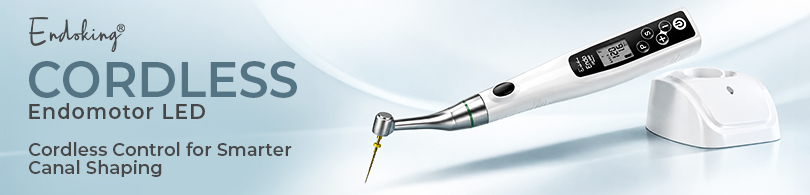
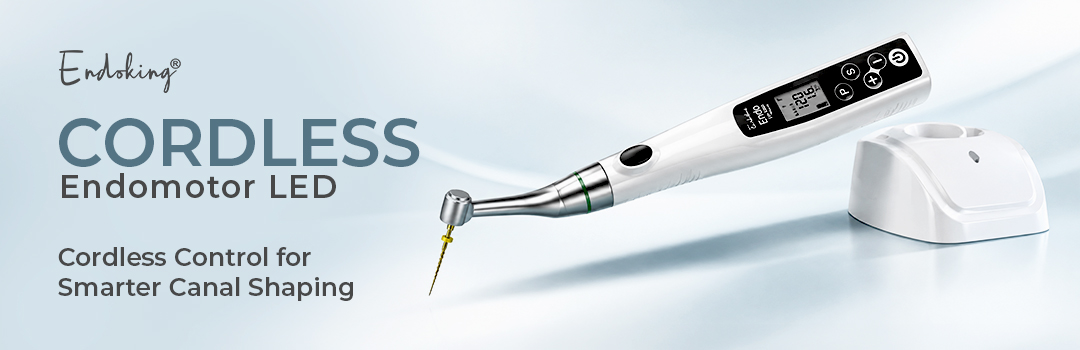
A wireless locator links the file holder to a small chairside receiver, clearing the cable from the working field at the cost of a charge and the odd re-pair. The Eighteeth Airpex Wireless Apex Locator is one such cordless unit.
Apex locator and pulp-tester combos
Seventh-gen combos fold pulp-vitality testing into the same handset, so a single device handles both the diagnosis and the working length — worthwhile for clinics doing plenty of vitality work. The Woodpecker Ai-Pex Apex Locator with Pulp Tester pairs the two.
Entry-level
Entry units are fifth-gen meters stripped of the colour screen and auto-calibration of the premium tier, sized for new graduates and low-volume clinics. The Waldent Micropex Apex Locator sits in this band.
When an apex locator is used
The locator comes out at every stage of a root canal where length matters — before shaping, after preparation, and once more before the canal is sealed — sparing the patient repeated radiographs. The points of use:
- Setting the initial working length before instrumentation
- Re-checking length after shaping with rotary files
- Confirming length again before obturation
- Tracing patency in calcified or sharply curved canals
- Flagging a perforation or root fracture during retreatment
- Measuring permanent teeth in paediatric endodontics
Choosing an apex locator
Match the device to your work first, then keep the readings honest with clean accessories and a dry field; Correcting Common Apex Locator Errors — A Clinical Troubleshooting Guide covers the fixes when they drift. The factors that decide the purchase:
- Generation — fifth for routine dry-canal work, sixth for retreatments and wet, curved molars, seventh if you also want pulp testing.
- Display — a colour screen with a moving bar shows the file's position at a glance, where an LED-only readout makes you guess.
- Sound — a distinct, volume-adjustable apex alarm is what stops you overshooting the constriction on the first pass.
- Cord or cordless — wired is cheaper and never needs charging; wireless clears the field but adds a battery to mind.
- Accessories — confirm the file clips and lip hooks autoclave and that replacements are stocked locally, not imported one at a time.
- Service and warranty — Indian-stocked brands carry a year with local service, while imports run two years but route repairs through distributors.
Apex locator brands on Dentalkart
Woodpecker and Eighteeth carry most clinics by volume, with J Morita and NSK holding the imported premium end that dental colleges and specialists fit as standard.
Waldent and Endoking anchor the entry tier for new graduates, while Dentsply, Kerr, Coltene Whaledent, and Micro-Mega round out the specialist choices.
Why buy an apex locator from Dentalkart
A locator earns its keep over thousands of canals, so what matters after the sale is genuine calibration and a steady supply of clips. Every unit here is authentic with its manufacturer warranty — a year on Indian brands, two on imports — and the file clips, lip hooks, and batteries that wear out are stocked on their own, so a frayed clip never stalls an RCT. Buy a spare clip set with the device and the locator stays in service rather than waiting on a part.
Apex Locators — 5th, 6th & 7th Generation Working-Length Meters for Endodontics
An apex locator is the small electronic meter that tells an endodontist exactly how deep a canal runs. It sends a faint current between a file in the canal and a clip on the patient's lip, then watches the impedance shift as the file tip reaches the apical constriction — the canal's narrowest point, just short of the foramen. A multi-frequency reading holds to roughly half a millimetre even when the canal is wet with blood or irrigant, which is why it has retired the string of working-length radiographs older protocols relied on. The same sensor is built into many endo motors, but a standalone locator is the more accurate, dedicated tool.
Types of apex locators
5th generation
Fifth-gen units read network impedance across several frequencies and stay accurate in dry or lightly moist canals — the version most Indian general practices run. The Woodpecker Apex Locator Woodpex III is a typical fifth-gen choice.
6th generation
Sixth-gen models weigh the impedance ratio between two frequencies, which keeps the reading steady even when the canal is full of blood, hypochlorite, or exudate — the reason colleges and specialists default to them. The J Morita Root ZX II Apex Locator (Dentaport ZX) is the benchmark here.
Wireless
A wireless locator links the file holder to a small chairside receiver, clearing the cable from the working field at the cost of a charge and the odd re-pair. The Eighteeth Airpex Wireless Apex Locator is one such cordless unit.
Apex locator and pulp-tester combos
Seventh-gen combos fold pulp-vitality testing into the same handset, so a single device handles both the diagnosis and the working length — worthwhile for clinics doing plenty of vitality work. The Woodpecker Ai-Pex Apex Locator with Pulp Tester pairs the two.
Entry-level
Entry units are fifth-gen meters stripped of the colour screen and auto-calibration of the premium tier, sized for new graduates and low-volume clinics. The Waldent Micropex Apex Locator sits in this band.
When an apex locator is used
The locator comes out at every stage of a root canal where length matters — before shaping, after preparation, and once more before the canal is sealed — sparing the patient repeated radiographs. The points of use:
- Setting the initial working length before instrumentation
- Re-checking length after shaping with rotary files
- Confirming length again before obturation
- Tracing patency in calcified or sharply curved canals
- Flagging a perforation or root fracture during retreatment
- Measuring permanent teeth in paediatric endodontics
Choosing an apex locator
Match the device to your work first, then keep the readings honest with clean accessories and a dry field; Correcting Common Apex Locator Errors — A Clinical Troubleshooting Guide covers the fixes when they drift. The factors that decide the purchase:
- Generation — fifth for routine dry-canal work, sixth for retreatments and wet, curved molars, seventh if you also want pulp testing.
- Display — a colour screen with a moving bar shows the file's position at a glance, where an LED-only readout makes you guess.
- Sound — a distinct, volume-adjustable apex alarm is what stops you overshooting the constriction on the first pass.
- Cord or cordless — wired is cheaper and never needs charging; wireless clears the field but adds a battery to mind.
- Accessories — confirm the file clips and lip hooks autoclave and that replacements are stocked locally, not imported one at a time.
- Service and warranty — Indian-stocked brands carry a year with local service, while imports run two years but route repairs through distributors.
Apex locator brands on Dentalkart
Woodpecker and Eighteeth carry most clinics by volume, with J Morita and NSK holding the imported premium end that dental colleges and specialists fit as standard.
Waldent and Endoking anchor the entry tier for new graduates, while Dentsply, Kerr, Coltene Whaledent, and Micro-Mega round out the specialist choices.
Why buy an apex locator from Dentalkart
A locator earns its keep over thousands of canals, so what matters after the sale is genuine calibration and a steady supply of clips. Every unit here is authentic with its manufacturer warranty — a year on Indian brands, two on imports — and the file clips, lip hooks, and batteries that wear out are stocked on their own, so a frayed clip never stalls an RCT. Buy a spare clip set with the device and the locator stays in service rather than waiting on a part.
Frequently Asked Questions (FAQs):
How does an apex locator find the canal end?
It works by electrical resistance, not imaging. The device passes a tiny current between a file in the canal and a lip clip, and the impedance changes in a predictable way as the file tip meets the apical constriction. A multi-frequency unit cross-checks two or more signals, so the reading holds even in a wet canal.
Do I still need an X-ray if I have an apex locator?
Less often, but not never. A modern locator measures working length to about half a millimetre and removes the routine length radiograph, yet an X-ray still documents canal anatomy, confirms the final fill, and serves as a medico-legal record. Most endodontists use the two together rather than dropping the film entirely.
Which apex locator generation should a general practice buy?
A fifth-generation unit covers the dry and lightly moist canals of everyday practice and is the sensible default for a general clinic. Move to a sixth-generation model if you take on retreatments or curved molars where blood and irrigant would throw a simpler meter, and to a seventh-gen combo only if you also test pulp vitality.
Why does a reading sometimes jump or read short?
Erratic readings usually come from the circuit, not the device. A flooded pulp chamber, contact with a metal restoration, a broken file clip, or a bone-dry canal can each distort the signal. Dry the access, keep the file off metal margins, check the clip and lead, and the reading settles.
Do apex locators need calibration, and how do I keep readings accurate?
Most modern units self-calibrate at start-up, so there is little manual adjustment to make. Day-to-day accuracy depends more on clean, intact accessories and a controlled field: replace a worn file clip, keep the lip hook seated in moist mucosa, and keep the battery charged. A reading that drifts is nearly always a clip or contamination issue, not lost calibration.