

In-Office Bleaching
In-office bleaching is professional teeth whitening carried out chairside by the dentist, using high-concentration hydrogen peroxide or carbamide peroxide gel. The gums are isolated with a barrier, the gel is applied to the teeth, and — sometimes with light activation — it lifts staining in a single visit. It works faster and stronger than take-home whitening because the concentration is higher.
 Recommended
 Price- High to LowPrice- Low to High
.jpg?w=256)
.jpg?w=256)
_1.jpg?w=256)

 75
75
 35
35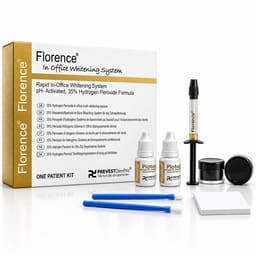
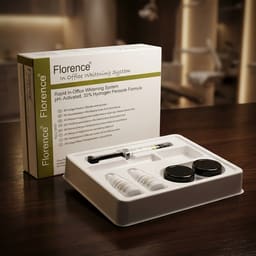
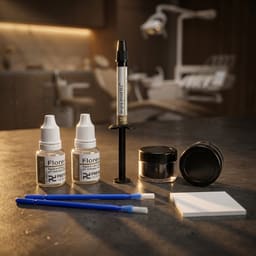
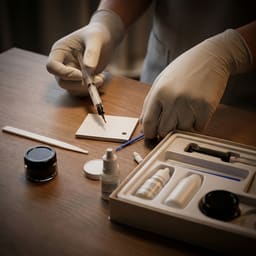
 11
11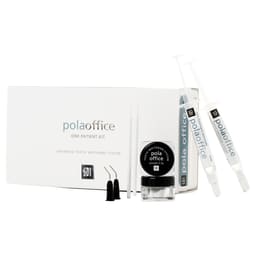
Only 2 Left
28
Only 2 Left
23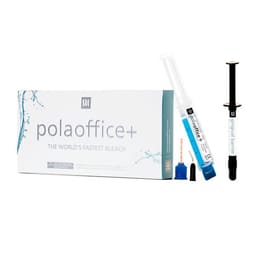 40
40In-Office Bleaching
When a patient wants a visibly whiter smile from one appointment rather than weeks of home trays, in-office bleaching is the route. The dentist applies a strong peroxide gel directly to the teeth under controlled conditions, protecting the soft tissue and lifting deep stain in a way a low-strength home product cannot match in the same time.
The trade-off for that speed is concentration and control. Because the gel is far stronger than anything sold for home use, it has to be applied by a professional who isolates the gums and monitors the process — which is exactly why these systems are sold to clinics rather than over the counter.
In-office versus take-home whitening
The two approaches share a goal but differ in strength, speed and who applies them.
Take-home whitening uses a lower-concentration gel in a custom tray worn over several days at home, giving a gradual result the patient controls. In-office whitening uses a much higher concentration applied by the dentist in a protected field, giving a bigger change in one sitting. The complete range of both types sits in the wider bleaching products category.
The active agent: hydrogen and carbamide peroxide
What does the whitening is peroxide, and the two forms behave differently.
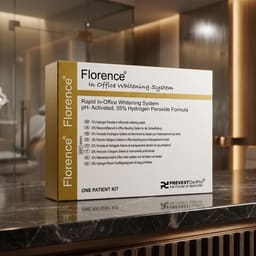
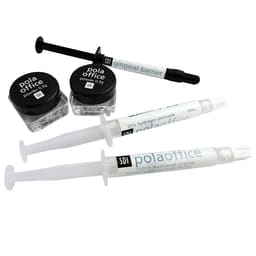
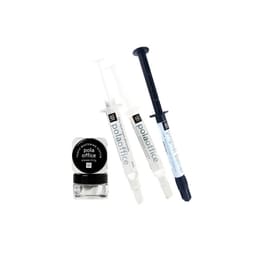
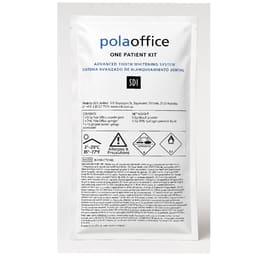
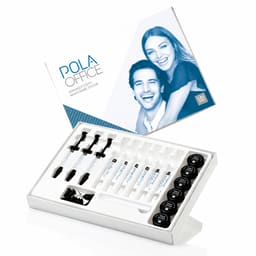
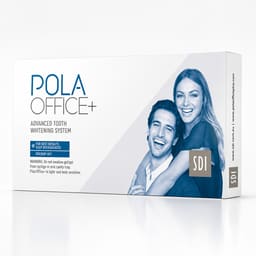
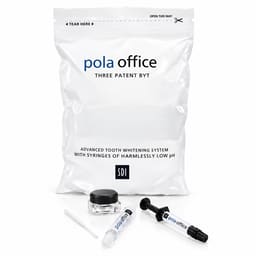
Hydrogen peroxide acts fast and is used at high strength for in-office work, releasing whitening oxygen quickly. Carbamide peroxide breaks down into hydrogen peroxide more slowly, so an equivalent carbamide concentration is milder and longer-acting. In-office kits lean on high-percentage hydrogen peroxide for speed. An SDI Pola Office+ kit is a high-concentration hydrogen peroxide system built for the chairside procedure.
Activation: light-activated and chemical
In-office gels reach their effect in one of two ways, and kits are built for one or the other.
Chemically activated kits
Many modern systems are chemically activated — the gel whitens on its own once mixed and applied, needing no lamp. A FGM Whiteness HP Maxx kit is a chemically activated hydrogen peroxide system that works without a curing light.
Light-activated kits
Other kits are designed to be used with a whitening lamp or curing light, where the light is intended to speed the reaction. These come as single-syringe or single-patient packs; a Mani Bleach-n-Shine syringe is one such office-bleach option supplied by the syringe.
Isolation and safety
Because the gel is strong, protecting everything that is not enamel is central to the procedure.
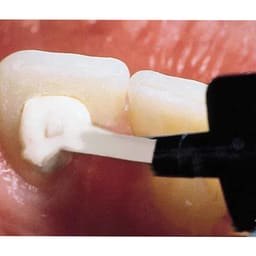
A gingival barrier — a light-cured resin dam — is painted along the gumline to shield the soft tissue from the peroxide before the gel goes on. Cheek retractors, a bib and careful timing complete the isolation. Handled this way, in-office bleaching is a controlled procedure; skipping the barrier is what causes the chemical burns associated with misuse, which is why these kits are for professional use only.
Choosing an in-office bleaching kit
Match the kit to the workflow. If the practice has no whitening lamp, a chemically activated hydrogen peroxide kit is the simplest choice; if a lamp is already in use, a light-activated system fits. Decide between a full multi-patient kit and single-patient or single-syringe packs based on case volume.
Whichever is chosen, keep the gingival barrier and isolation supplies on hand — the retractors and chairside accessories that support the procedure sit alongside the wider endodontics range this category is filed under.
Frequently Asked Questions (FAQs):
What is in-office bleaching?
In-office bleaching is professional teeth whitening done chairside by the dentist, using a high-concentration hydrogen peroxide or carbamide peroxide gel applied to the teeth under gum isolation. It lifts staining in a single visit, working faster and more strongly than take-home whitening because the gel is far more concentrated and applied in a controlled clinical setting.
How is in-office bleaching different from take-home whitening?
Strength, speed and who applies it. Take-home whitening uses a lower-concentration gel in a custom tray worn over several days by the patient. In-office whitening uses a much higher concentration applied by the dentist in a protected field, producing a larger change in one appointment. In-office is faster; take-home is gradual and patient-controlled.
Do in-office bleaching kits need a light to work?
It depends on the kit. Chemically activated systems whiten on their own once the gel is mixed and applied, needing no lamp. Light-activated kits are designed to be used with a whitening lamp or curing light to speed the reaction. Choose a chemical kit if the clinic has no lamp, or a light-activated one if a lamp is already in use.
What is the difference between hydrogen peroxide and carbamide peroxide?
Speed and strength. Hydrogen peroxide releases whitening oxygen quickly and is used at high strength for fast in-office results. Carbamide peroxide breaks down into hydrogen peroxide more slowly, so it is milder and longer-acting at an equivalent concentration, making it more common in take-home gels. In-office kits favour high-percentage hydrogen peroxide.
Why is a gingival barrier used during in-office bleaching?
Because the gel is strong enough to burn soft tissue. A gingival barrier is a light-cured resin dam painted along the gumline to shield the gums from the peroxide before the gel is applied. Together with cheek retractors and careful timing, it keeps the procedure safe. Skipping this step is what causes the chemical burns linked to misuse.