





Paper Points
Paper points are the absorbent, tapered cones a dentist inserts into a shaped root canal to blot it dry before the filling goes in. They come in 2% ISO sizes, 4% and 6% rotary tapers, and ProTaper-matched cones, length-marked and gamma-sterilised. Waldent, Diadent, Dentsply, and Meta cones are colour-coded and matched to the last file used.
 Recommended
 Price- High to LowPrice- Low to High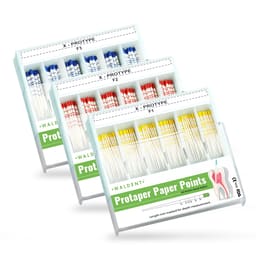


 10
10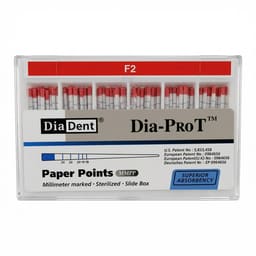
 4
4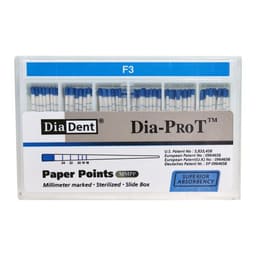
 4
4
 2
2Paper Points — Absorbent 2% ISO, Greater-Taper and ProTaper-Matched Cones for Canal Drying
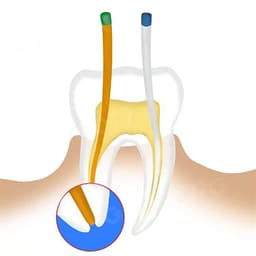
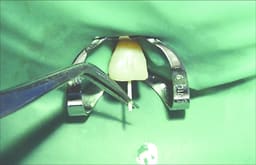
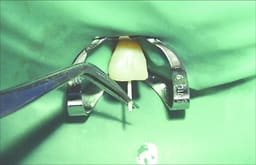
Before a root canal is filled it has to be bone dry, and that final drying is what paper points do. A paper point is a tightly rolled, highly absorbent cone of paper, tapered to match the canal a file has just shaped, that is carried to the apex with tweezers and held a moment to wick up the irrigant, blood, and tissue fluid left after cleaning. A few in succession take the canal from wet to dry, which is what lets the sealer bond to the wall and the gutta-percha seat cleanly at obturation. The cones are gamma-sterilised, length-marked, and graded to ISO size and taper so they follow the file sequence exactly.
Types of paper points
2% ISO-taper points
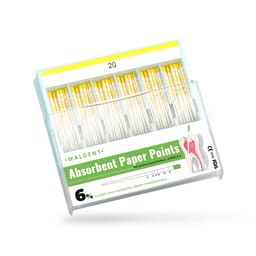
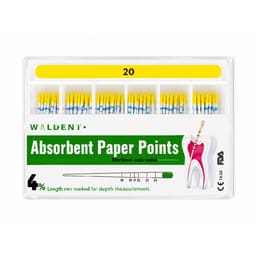
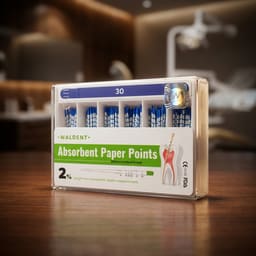
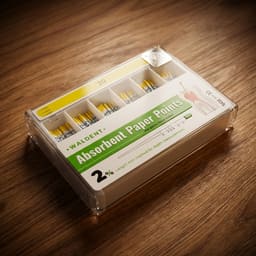
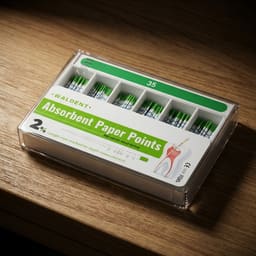
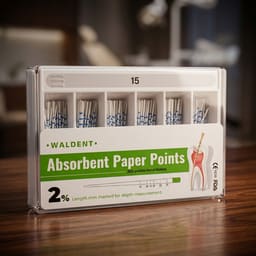
A 2% point matches a canal shaped by hand K-files on the ISO scale, and its slow, even taper suits routine hand instrumentation. The Waldent Paper Points 2% (Length Marked) run the full 15–40 size range with millimetre markings.
Greater-taper 4% and 6% points
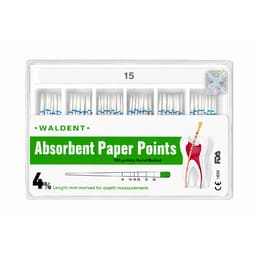
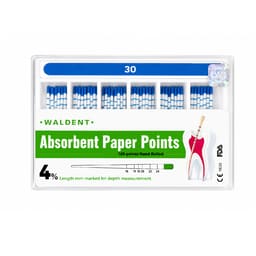
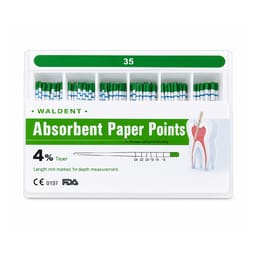
Rotary preparation leaves a wider, more even canal, and a greater-taper 4% or 6% point fills that shape closely — its broader body touches more of the wall, so it wicks moisture along the whole length and dries the canal in fewer passes than a thin point would. These become the default once a practice moves off hand files.
ProTaper and system-matched points
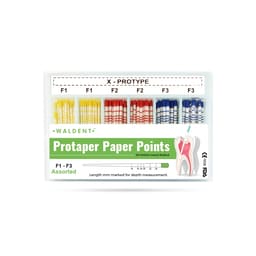
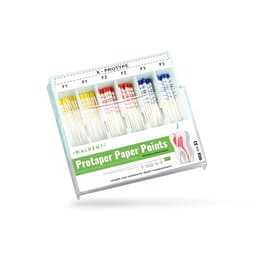
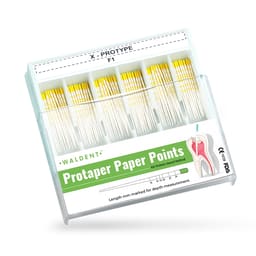
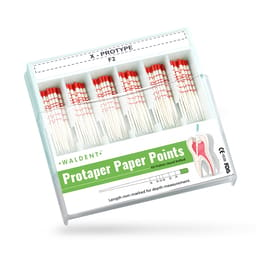
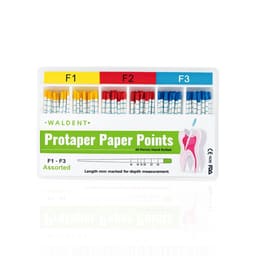
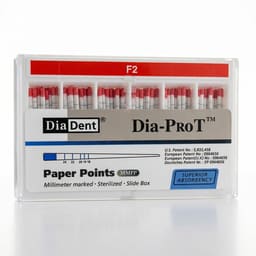
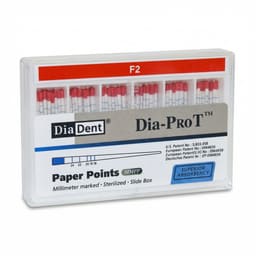
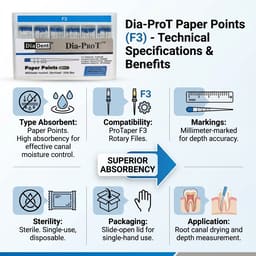
A point can also be made to a named system rather than a plain percentage — ProTaper F1, F2, F3 — so it mirrors the exact shape those files cut and reaches the apex snugly for a clean, complete dry. The Diadent Pro T Paper Points (Pack of 100) are the ProTaper-matched set.
Colour-coded, length-marked cones
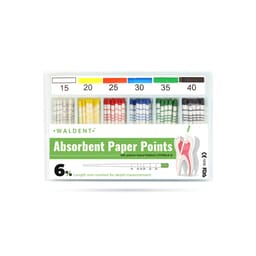
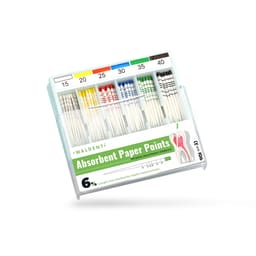
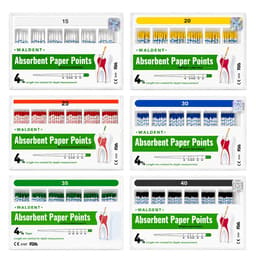
Across all tapers, colour coding by ISO size and a millimetre mark near the tip let the operator pick the right cone by eye and read the working length as it goes in, which speeds up a multi-canal molar and cuts the risk of over-extension.
When paper points are used
Paper points come out in the last steps before the canal is filled, and in a few adjuncts around it:
- Blotting the canal dry once the last rinse is done, ahead of filling
- Checking that no blood or fluid wells back before the sealer goes in
- Delivering a calcium-hydroxide dressing carried on the point between visits
- Lifting a sample from the canal for culture in a re-treatment workup
- Reading working length in a dried canal with an apex locator
- Prepping the canal for the gutta percha points and sealer that follow
How to choose paper points
- Follow the shaping — a 2% point after hand K-files, a 4% or 6% point after rotary, a ProTaper point after a ProTaper preparation, so the cone fills the canal it has to dry.
- Tip size — pick the tip to the final file size so the point slides to the apex; too fat and it stops short of the fluid that most needs clearing.
- Length marking — millimetre-marked points confirm working length and reduce the risk of pushing fluid or a point past the foramen.
- Absorbency and cleanliness — a well-rolled, gamma-sterilised point wicks fast and does not shed fibres into the canal.
- Pack and size spread — assorted boxes cover a full sequence; single sizes top up the ones a busy practice runs through.
Paper point brands on Dentalkart
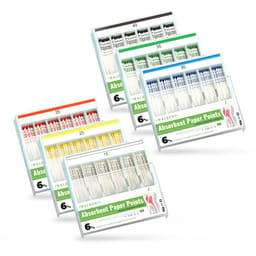
Waldent and Diadent are the two you will see most — 2% ISO points and ProTaper-matched cones, colour-coded, length-marked, and gamma-sterilised.
Dentsply, Sure Endo, and Meta round it out with their own tapers and assorted packs, so the point can be matched to whichever file system a canal was shaped with.
Why buy paper points from Dentalkart
A paper point has one job — to come out dry without leaving a fibre behind — and a poorly rolled cone fails at both, shedding lint in the canal or wicking too slowly to dry it in a couple of passes. What is stocked here is gamma-sterilised, tightly rolled for absorbency, and length-marked so the tip reads to working length, in the ISO and rotary tapers that follow the files already in the tray. They sit next to the root canal sealers and gutta-percha the fill needs, so the drying step and the obturation after it are stocked together.
Frequently Asked Questions (FAQs):
What do paper points do in a root canal?
Paper points dry the canal in the final step before it is filled. After the canal is cleaned and irrigated, absorbent points are taken to the apex one after another to wick up the leftover fluid, so the sealer can bond to the dry wall and the gutta-percha seats without moisture trapped behind it. A dry canal is what a lasting seal depends on.
Which taper and size should match my canal?
Read it off the last file you used. Hand K-files on the ISO scale call for a 2% point; a rotary system calls for a point of the same 4% or 6% taper; a ProTaper canal takes an F1–F3 point. The point should copy the shape the file left so it dries the whole length, not just the opening.
Why does the canal have to be dry before filling?
Because moisture ruins the seal. A film of irrigant or tissue fluid on the wall stops the sealer bonding and leaves a pathway for bacteria to re-enter, which is a common cause of failure. Paper points remove that last film after the fluids an air syringe cannot reach at depth, so the fill sets against clean, dry dentine.
Are paper points reusable?
No — they are single-use. A point absorbs fluid and is contaminated the moment it enters the canal, so it is discarded after that pass and a fresh one used. They are supplied sterile in sealed packs; an opened pack is kept closed and dry, and points are not re-sterilised for reuse.
Why use paper points instead of just an air syringe?
An air syringe clears the coronal part of the canal, but it cannot reach and dry the apical few millimetres, and blowing air hard risks pushing an air bubble or debris past the apex. A paper point wicks the fluid out of that apical region gently and completely, which is why it is the standard final-drying step.