



Patient Education Models
Patient education models are the 3D tooth and jaw replicas a dentist uses to show a patient what is wrong and what a treatment involves — a cutaway of decay, an implant standing in a clear jaw, gums at each stage of disease. The same category holds the typodonts and practice jaws that students rehearse on. iDENTical and API make most of them.
 Recommended
 Price- High to LowPrice- Low to High
 120
120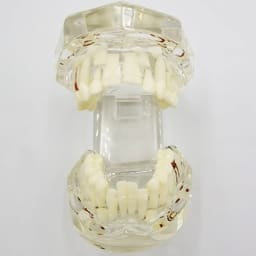
Only 5 Left
270
 405
405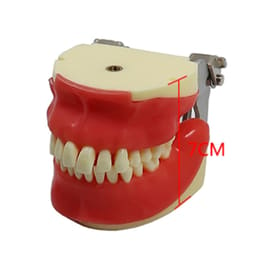
 270
270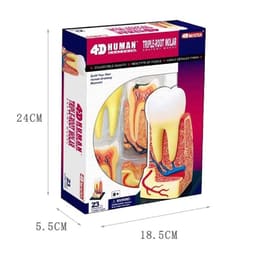
Only 2 Left
235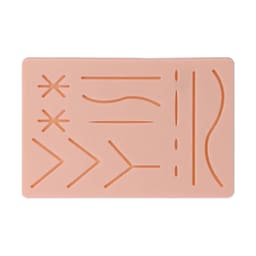

Only 3 Left
30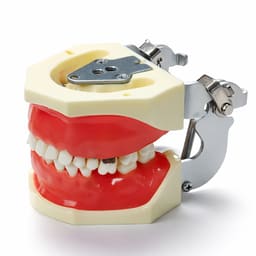
 340
340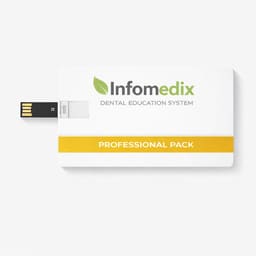

 198
198Patient Education Models — Showing Patients What Words Cannot
A patient cannot see inside their own tooth, and a description of a root canal or an implant rarely lands the way a physical model does. Hand someone a cutaway molar with decay reaching the nerve, or a clear jaw with an implant seated in it, and the treatment explains itself — which is what turns a hesitant patient into one who understands and agrees. The same replicas do a second job away from the chair: students and clinicians rehearse cavity cuts, canals, sutures and implant placement on them before ever working on a person. This category covers both.
Two jobs: explaining and rehearsing
Showing decay and disease
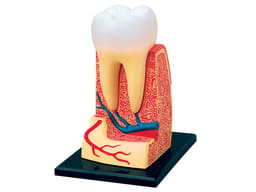
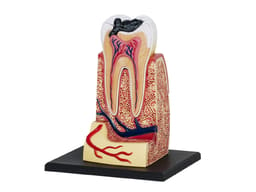
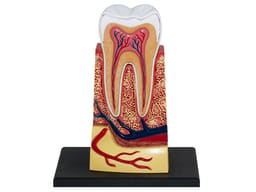
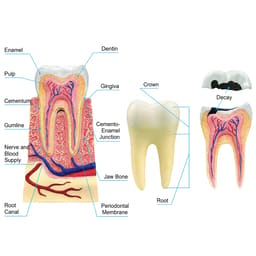
The most persuasive models are the ones that show consequences. An enlarged, cutaway tooth traces decay from a surface stain through to an exposed nerve, so a patient sees exactly why a small filling now beats a root canal later. The iDENTical Caries Development Tooth Model is a 4× model built for that across-the-desk conversation.
Explaining implants and treatment options
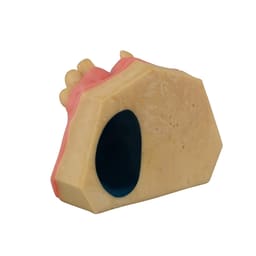
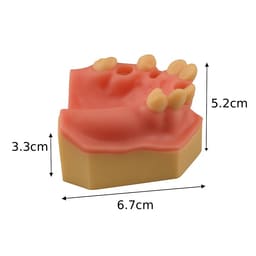
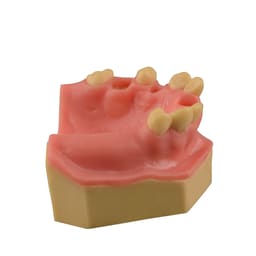
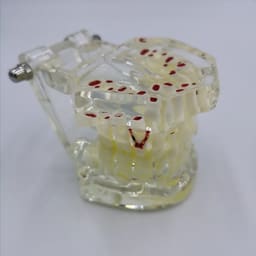
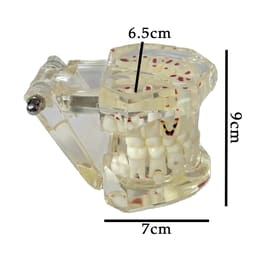
Some conversations cover several options at once — a filling here, a crown there, an implant to replace a missing tooth. A single mixed model showing caries, nerves and an implant side by side lets a dentist walk through the whole plan on one prop. The iDENTical Patient Education Model (Caries, Implant, Nerves) is made for that broad chairside talk.
Motivating better hygiene
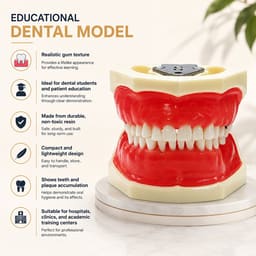
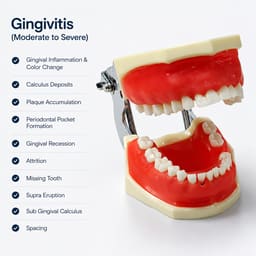
Gum disease is invisible to most patients until a tooth loosens, so a staged model does the convincing. Showing healthy gums beside inflamed, receding and bone-lost stages makes the cost of skipped cleaning concrete. The iDENTical Stages of Periodontitis Model lays those stages out in one piece.
Brushing and braces demonstrations
For children, parents and anyone with poor technique, an oversized jaw and a giant brush make a lesson stick better than instructions do. The Big Brushing Model with Tongue is the classic oral-hygiene teaching prop, and bracket demonstration models do the same for patients weighing up braces.
Practising before the patient
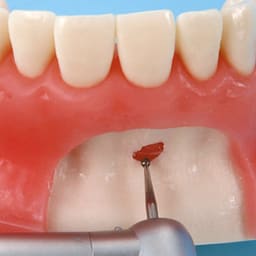
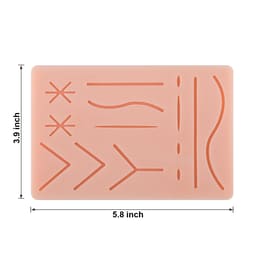
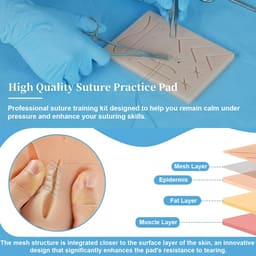
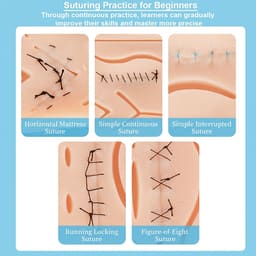
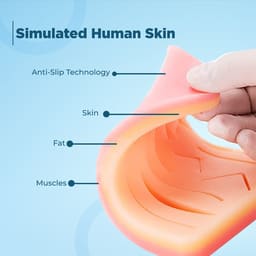
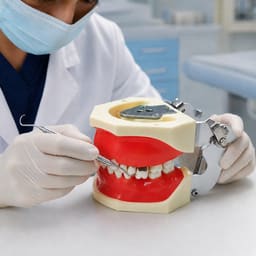
Away from the chair, the category turns into a training bench. A typodont jaw set with removable teeth lets a student rehearse cavity and crown preparation, endodontic access and impressions on lifelike anatomy. The iDENTical Nissin-Type Typodont Jaw Set is a standard pre-clinical practice jaw, and suture pads and implant-practice jaws extend the same idea to surgical skills.
Digital chairside decks
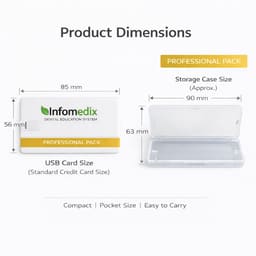
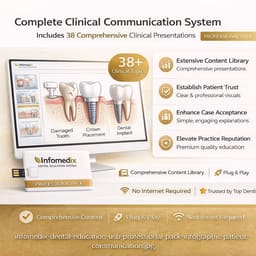
Not every explanation needs a physical model. A library of short, illustrated treatment presentations on a screen covers the topics a clinic discusses most, ready offline at the chair. The InfoMedix Patient Education Presentation Decks bundle those talks onto a USB drive.
Where a model earns its place
- Showing a caries model at an examination to explain why a cavity needs treating now
- Walking a patient through a root canal on a cross-sectioned tooth before the appointment
- Laying out implant and overdenture options at a treatment-planning consultation
- Demonstrating gum disease at a hygiene recall to motivate better cleaning
- Teaching brushing to a child and parent on an oversized jaw
- Showing bracket types to a patient considering orthodontic treatment
- Rehearsing cavity prep, canals and impressions on a typodont in the pre-clinical lab
- Practising suturing and implant placement before performing them on a patient
Matching the model to the conversation
- Explaining or practising — a chairside model is built for visual clarity and a wipe-clean surface; a practice model is built for mechanical realism, with resin that cuts and gum that sutures like the real thing.
- Size to the setting — a 4× magnified model reads across a room for group or desk-side talks; a life-size one suits a one-to-one chat the patient can hold.
- One model or many — an all-in-one jaw showing several conditions covers the widest range of conversations for a general practice, where separate single-topic models suit a focused specialty.
- Typodont system — Nissin, Frasaco and API teeth are not interchangeable, so match replacement teeth to the exact jaw set before ordering.
- Physical or digital — a handled model is the most tactile aid, while a presentation deck covers many topics on one screen and never wears out or gets misplaced.
Who makes the models
Almost the whole range carries a single name. iDENTical spans it end to end — cutaway caries teeth, mixed jaws showing implants and nerves, staged periodontal and orthodontic demonstrators, magnified anatomy, typodont jaw sets and suture pads. Around it, API supplies acrylic teeth and typodont jaws, Julldent a set of implant training models, and InfoMedix the digital presentation decks that do the explaining on a screen rather than in the hand.
Keeping models on the shelf
A good model pays for itself in a single accepted treatment plan, and it keeps working for years — the same caries tooth or implant jaw explains the same procedure to patient after patient. Holding the chairside communication models, the hygiene and orthodontic demonstrators, and the pre-clinical typodonts and suture pads in one place lets a practice or a college equip both sides of the work — persuading patients and training hands — without sourcing them separately.
Frequently Asked Questions (FAQs):
Why use a model instead of just explaining or showing an X-ray?
Because most patients cannot read a radiograph or picture what is happening inside a tooth from words alone. A physical model makes the problem visible and touchable — decay reaching a nerve, bone lost around a loose tooth, an implant standing where a tooth used to be. Seeing it turns an abstract recommendation into something the patient understands, which is what drives informed consent and treatment acceptance.
How does a patient education model differ from a practice model?
They are built for opposite priorities. A patient education model is made to be looked at — clear anatomy, realistic proportions, often enlarged, with a surface that wipes clean between patients. A practice model is made to be worked on — resin teeth with lifelike hardness, accurate canal dimensions, and silicone gum that responds to a blade and suture. iDENTical makes both, and the product codes separate the education series from the practice series.
Are typodont teeth interchangeable between different jaw sets?
No. Each typodont system — Nissin, Frasaco, API — uses its own tooth-retention geometry, so a tooth from one will not seat correctly in another brand’s jaw. Before ordering individual replacement teeth, confirm the exact jaw set model you are using and match the teeth to it, or they simply will not fit.
Do education models actually improve treatment acceptance?
They help considerably, because acceptance usually stalls at understanding rather than cost alone. A patient who can see why a tooth needs a crown, or what an untreated gum will become, is far more likely to agree to and follow through with treatment than one who only heard it described. The model does the persuading that words often cannot, especially for anxious or sceptical patients.
Which single model covers the most chairside conversations?
An all-in-one or mixed jaw model that shows several conditions at once — caries, exposed nerves, a crown, an implant — is the most versatile for a general practice. Rather than reaching for a different prop each time, a dentist can point to the relevant part of one model across most treatment discussions, which makes it the most cost-effective single purchase for mixed-treatment clinics.