





Rotary Files
Rotary files are nickel-titanium endodontic instruments spun by an endo motor to shape curved root canals during root canal treatment. Their heat-treated Blue and Gold alloys flex through sharp curves and resist cyclic fatigue, cutting a smooth, tapered preparation faster than stainless-steel hand files. Each file is laser-marked with its ISO tip size and taper, and most are single-patient-use.
 Recommended
 Price- High to LowPrice- Low to High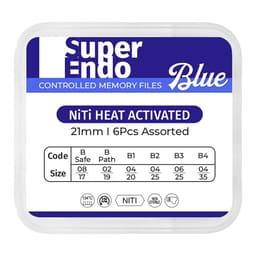



 40
40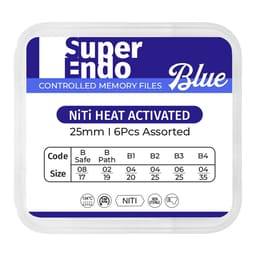

 40
40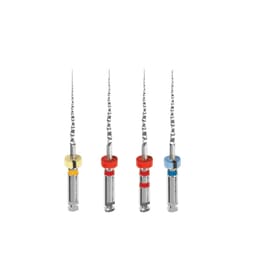

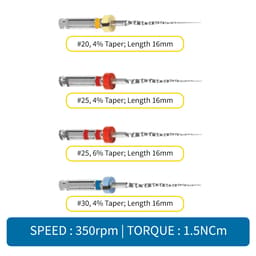
 35
35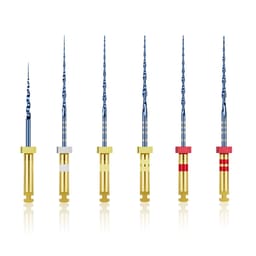
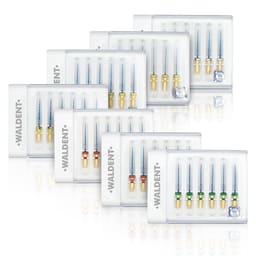

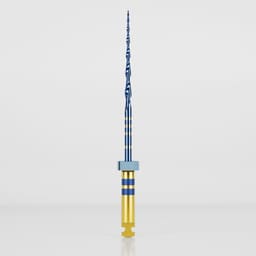
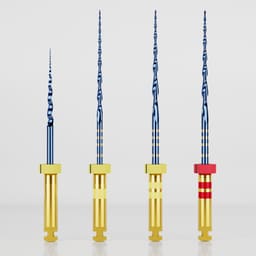
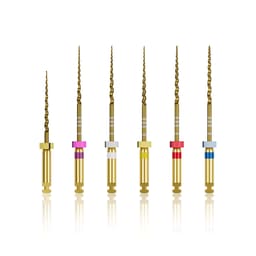

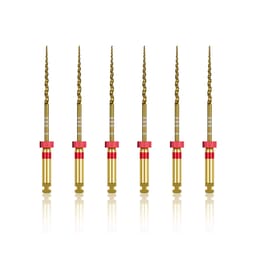
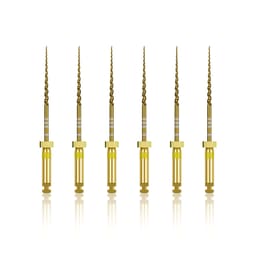
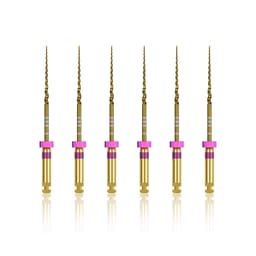

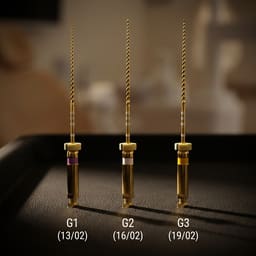
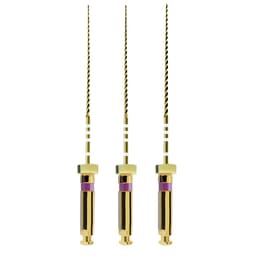
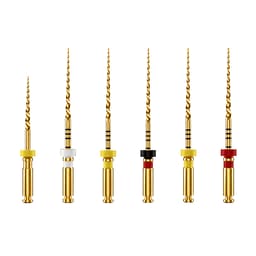
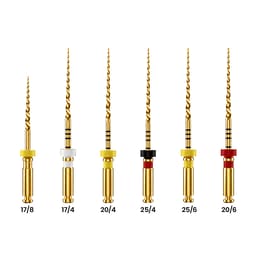
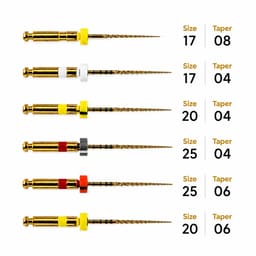

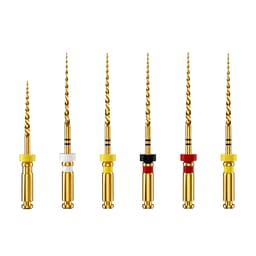
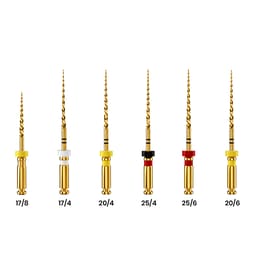
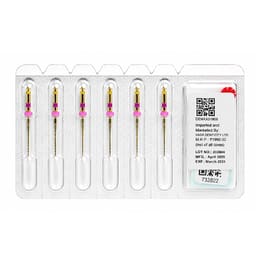
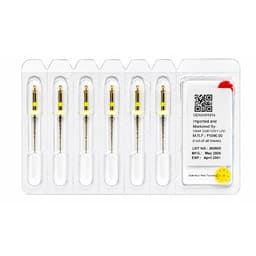
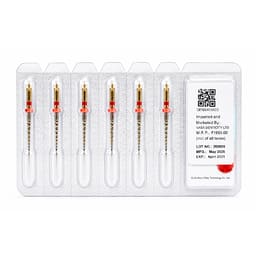
Endodontic Rotary Files
Rotary files are NiTi instruments held in an endo motor or contra-angle handpiece, cutting the canal wall in continuous rotation to leave a smooth, tapered preparation.
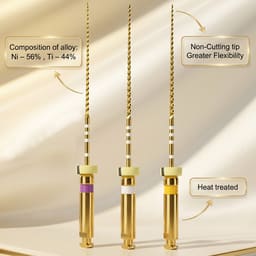
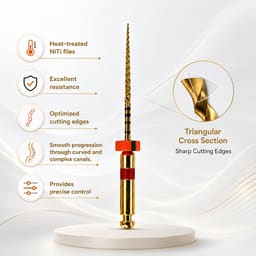
Heat-treated alloys — Blue, Gold and controlled-memory NiTi — bend into sharp curves and shrug off cyclic fatigue better than plain NiTi. Against stainless-steel hand files they cut quicker, hold their taper, and lower the risk of separating in a narrow, curved canal.
Rotary file variants stocked on Dentalkart
Glide-path files
Run straight after a hand-file glide path. Their low taper (around 2%) opens the route so the shaping files seat without binding in the curve — for example, the SuperEndo Pro Glide files.
Shaping files
Do the bulk of the enlargement, opening the coronal and middle thirds to the working taper in a few passes — for example, the NeoEndo Flex rotary files 25mm.
Finishing files
Set the final apical size and taper to match the master gutta-percha cone before obturation — for example, the SuperEndo Blue files 25mm assorted pack.
Retreatment files
Remove gutta-percha and old sealer from a reopened canal, then reshape it to the revised working length. Gold-wire files such as Waldent Premium Taper Gold cover this and difficult curved-canal work.
Where rotary files fit in the workflow
Rotary files take over once the canal is scouted with hand files and a reproducible glide path is set. Typical points of use:
- Coronal pre-flaring once a #15 K-file glide path is confirmed.
- Enlarging the middle and apical thirds to the working taper.
- Finishing to a defined apical size before obturation.
- Reopening and reshaping previously treated canals with retreatment files.
- High-volume molar endodontics, where a consistent taper saves time.
How to select rotary files
Match the system to the canal in front of you and to your motor settings.
- Alloy and heat treatment — Blue, Gold or M-Wire NiTi gives the flexibility and fatigue resistance that curved canals need.
- Sequence — a single-file system shapes most canals with one instrument; a graded multi-file sequence suits complex anatomy.
- Length — 21 mm for anterior and premolar access, 25 mm for most molars, 31 mm for long roots and retreatment.
- Apical size and taper — confirm they match your master cone and obturation method.
- Single-use — discard any heat-treated file at the first sign of unwinding or flute distortion, whatever the count.
Rotary file brands on Dentalkart
The SuperEndo range anchors the value end with Blue and Gold files and dedicated glide-path systems for everyday molar work.
For graded multi-file shaping, the Dentsply ProTaper lineage sits at the other end, with Waldent, NeoEndo and Coltene filling the gold-wire, flexible and controlled-memory options in between.
Why buy rotary files from Dentalkart
A separated instrument can derail a root canal, so what matters in a rotary file is that the alloy and heat treatment are exactly as specified and the packaging is sealed and in date.
Every file here states its ISO size, taper and length plainly, and sits alongside the rest of the cleaning and shaping range, so the whole canal-prep tray reorders in one place.
Frequently Asked Questions (FAQs):
Why are rotary files made of nickel-titanium instead of stainless steel?
Rotary files use nickel-titanium because NiTi is far more flexible and elastic than stainless steel, so the file follows a curved canal without permanently bending or ledging the wall. Heat treatment adds controlled memory and cyclic-fatigue resistance, which is why NiTi has largely replaced stainless-steel hand files for canal shaping.
Should I use a single-file or a multi-file rotary system?
It depends on canal complexity and your comfort with each technique. A single-file system shapes most canals with one instrument, which is faster and simpler. A graded multi-file sequence prepares the canal step by step and handles difficult anatomy more predictably. Match either to your endo motor's rpm and torque presets.
Which rotary files are best for curved molar canals?
Choose a heat-treated controlled-memory file in Blue or Gold NiTi, which flexes through the curve and resists cyclic fatigue better than conventional NiTi. Establish a glide path first, pick a 21 mm or 25 mm length to match access, and keep to the system's recommended rpm and torque.
How many times can a rotary file be reused before it should be discarded?
Most heat-treated rotary files are intended for single-patient use to limit cyclic-fatigue failure. Reuse limits vary by system and canal curvature. Discard any file immediately if a flute unwinds, distorts, or shows a shiny stress point, regardless of how many times it has been used.
Are the rotary files on Dentalkart genuine NiTi?
Yes. The rotary files on Dentalkart are genuine NiTi in original sealed packaging, with the ISO size, taper and length printed on each pack. This matters because under-spec alloy can separate in the canal. The range spans SuperEndo, NeoEndo, Dentsply, Waldent and Coltene across price points.