

Temporary Luting Cements
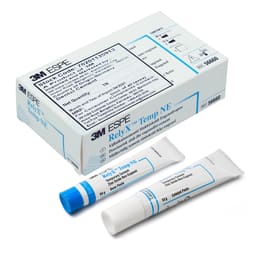
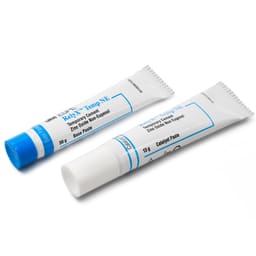
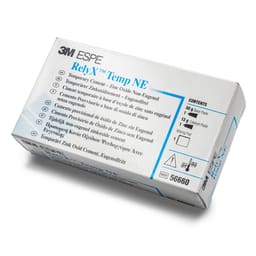
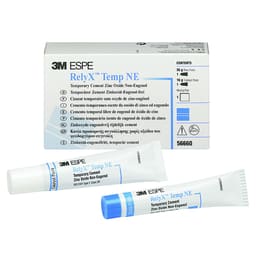
Choose non-eugenol temporary luting cement (3M RelyX Temp NE, GC Freegenol, MAARC T-Lute NE) when the final restoration uses resin cement, because eugenol inhibits resin polymerisation. Use zinc oxide eugenol soft cement for routine short-term provisionals, calcium hydroxide variants for sensitive preparations, and transparent cement for anterior aesthetic try-ins. Dentalkart stocks 3M, GC, Voco, Shofu and Detax.
 Recommended
 Price- High to LowPrice- Low to High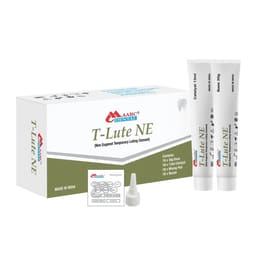

 8
8
 30
30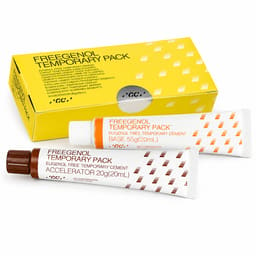
 6
6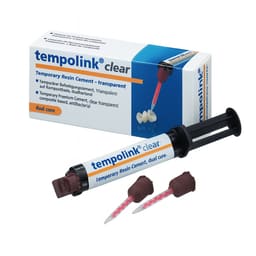
Only 4 Left
10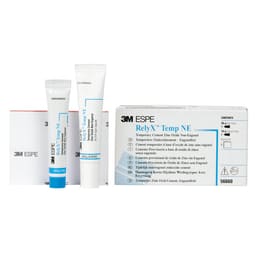
 21
21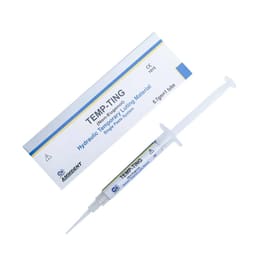

 4
4
 1
1What are Temporary Luting Cements?
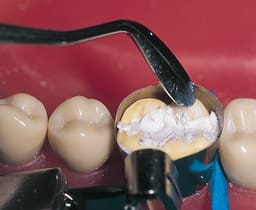
Temporary luting cements are short-term provisional cements used to bond temporary crowns, bridges, inlays and onlays during the interim period between tooth preparation and final restoration cementation, while leaving the underlying dentine clean for predictable removal and final delivery. They are formulated with deliberately weaker adhesion than permanent luting agents — zinc oxide eugenol, eugenol-free zinc oxide, calcium hydroxide and resin-based variants — so the provisional restoration lifts off cleanly at the next appointment without fracturing the tooth, the prepared margins or the lab-fabricated final prosthesis.
Types of Temporary Luting Cements
Non-Eugenol Temporary Luting Cements
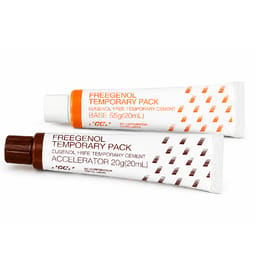
Eugenol-free zinc oxide formulations are the mandatory choice whenever the final restoration will be bonded with a resin cement, because residual eugenol inhibits resin polymerisation at the cement interface and weakens the final bond. 3M RelyX Temp NE, GC Freegenol, Meta NETC and MAARC T-Lute NE all sit in this segment for routine indirect-restoration provisionals.
Zinc Oxide Eugenol (ZOE) Soft Temporary Cements
Classical ZOE temporary cements deliver mild sedative action on the pulp through their eugenol content and remove cleanly because of their soft set. Shofu Hy-Bond Soft is the long-running reference in this class. Avoid these cements when the final cement is resin-based.
Calcium Hydroxide-Based Temporary Cements
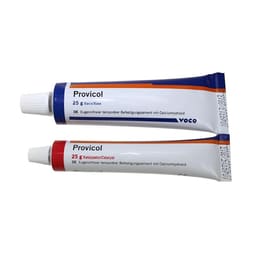
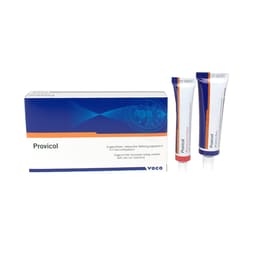
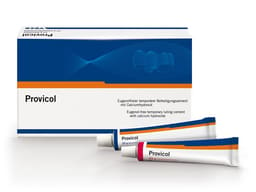
Calcium hydroxide temporary luting cements such as Voco Provicol are eugenol-free and pulp-protective — suited to deep preparations close to the pulp, hypersensitive teeth and cases where the provisional needs to remain seated for extended periods without sedative-but-resin-incompatible eugenol chemistry.
Transparent / Clear Temporary Cements
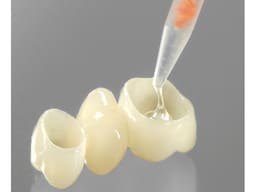
Detax Tempolink Clear and similar transparent temporary cements are designed for anterior aesthetic provisional try-ins where opaque white cement lines would show through the temporary at the cervical margin. The clear-set formulation lets the clinician evaluate shade and translucency on the provisional before the lab finalises the definitive restoration.
Economy & Indian-Brand Temporary Luting Cements
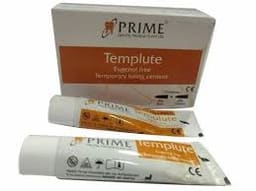
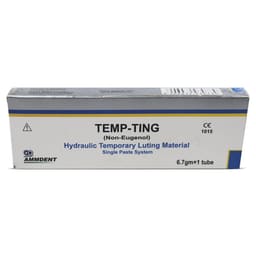
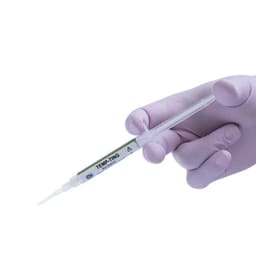
Ammdent Temp-Ting, Prime Dental Temp-Lute and MAARC value-tier formulations cover routine clinic-volume provisional cementation at lower cost. Useful for high-throughput practices doing predictable single-unit crown and bridge work where premium imported chemistry is not clinically necessary.
When Are Temporary Luting Cements Used?
Temporary luting cements are used to seat provisional crowns and bridges between the preparation visit and the final cementation appointment, to cement diagnostic try-in inlays and onlays during occlusal evaluation, to seat long-term provisionals during extended treatment planning or staged full-mouth rehabilitation, and to temporarily secure resin-bonded final restorations during clinical evaluation before definitive luting with the permanent resin cement.
How to Choose Temporary Luting Cement
Decide on eugenol chemistry first — if the final cement will be resin-based you must use non-eugenol, because eugenol residue inhibits resin polymerisation and compromises the final bond. Match provisional duration to formulation — soft zinc oxide eugenol for short-term sub-two-week provisionals, non-eugenol or calcium hydroxide for longer periods. Consider pulp condition — eugenol is mildly sedative for irritated pulps, calcium hydroxide is pulp-protective for deep preparations. Choose transparent set for anterior aesthetic try-ins. Match removal characteristics to operator preference — soft ZOE removes most easily.
Top Brands of Temporary Luting Cements at Dentalkart
Dentalkart stocks 3M ESPE RelyX Temp NE, GC Freegenol, Voco Provicol, Shofu Hy-Bond Soft, Meta NETC, Detax Tempolink Clear, MAARC T-Lute NE, Ammdent Temp-Ting and Prime Dental Temp-Lute — covering non-eugenol, zinc oxide eugenol, calcium hydroxide and transparent chemistries for every provisional cementation scenario from routine single-unit crowns to long-term full-mouth provisional rehabilitations.
Why Buy Temporary Luting Cements from Dentalkart?
Dentalkart supplies clinic-grade temporary luting cements at distributor pricing, trusted by 50,000+ dentists across 110000+ Indian pincodes. Authentic brand sourcing, GST invoicing, cold-chain handling where required, COD on eligible orders and fast pan-India shipping. Bundle your temporary luting cement with Temporary Crown Materials to complete the chair-side provisional workflow in a single order.
Frequently Asked Questions (FAQs):
What is temporary luting cement used for?
Temporary luting cement is used to bond provisional crowns, bridges, inlays and onlays to a prepared tooth during the working period between tooth preparation and final restoration cementation. It is deliberately weaker than permanent cement so the provisional can be removed cleanly at the next visit without damaging the prep margins or the lab-fabricated final restoration.
What is the difference between eugenol and non-eugenol temporary cement?
The difference between eugenol and non-eugenol temporary cement is the resin-cement compatibility — eugenol-based cements are mildly sedative for the pulp but leave eugenol residue that inhibits resin polymerisation, while non-eugenol cements remove cleanly and leave the dentine ready for definitive resin cementation without compromising the final adhesive bond.
Which temporary cement is best for resin-bonded final restorations?
Non-eugenol temporary luting cements are best for resin-bonded final restorations — examples include 3M ESPE RelyX Temp NE, GC Freegenol, Meta NETC and MAARC T-Lute NE. These eugenol-free formulations do not interfere with resin polymerisation at the cement interface, preserving the bond strength of the definitive adhesive luting cement.
How long does a temporary luting cement last?
A temporary luting cement typically lasts two to six weeks on a properly fitting provisional crown — long enough to bridge a single laboratory turnaround for crown and bridge work. For longer provisional periods such as staged full-mouth rehabilitation, choose a longer-lasting non-eugenol or calcium hydroxide formulation rather than soft zinc oxide eugenol.
Can temporary cement be used for permanent cementation?
Temporary cement cannot be used for permanent cementation because it is deliberately formulated with weak adhesion so the provisional restoration can be lifted off cleanly. Definitive cementation requires permanent luting agents such as resin cements, resin-modified glass ionomers or zinc phosphate, which provide the long-term retention required for a definitive crown or bridge.