




Bondable Lingual Sheaths
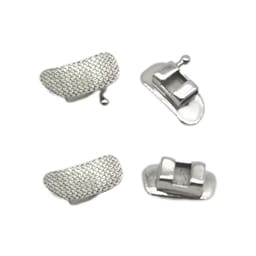
A bondable lingual sheath is a small orthodontic attachment bonded to the tongue-side surface of a molar, giving a horizontal slot that receives and locks the wire of a removable auxiliary — a transpalatal arch, lingual arch, Nance button or quad helix. Supplied plain or with a hook, it bonds directly to enamel without a molar band.
 Recommended
 Price- High to LowPrice- Low to High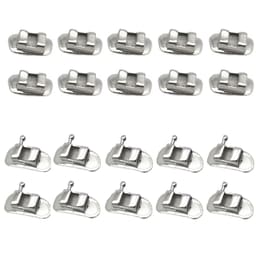
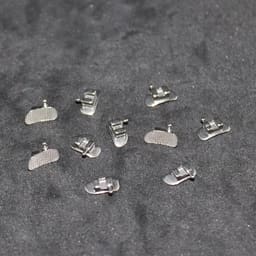
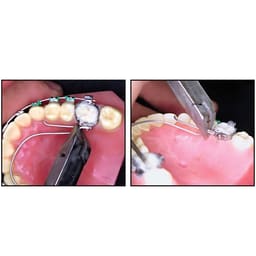
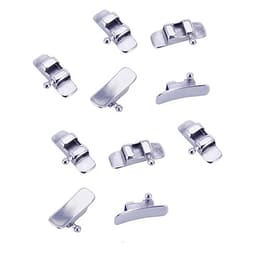
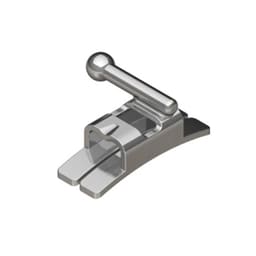

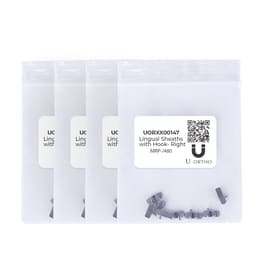
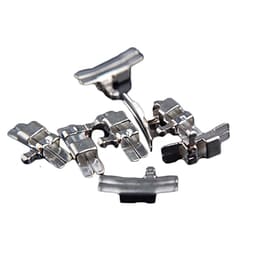
Bondable Lingual Sheaths — the Lingual Anchor for Removable Auxiliary Appliances
A lingual sheath is the quiet workhorse of anchorage: a tube-and-mesh attachment that sits out of sight on the palatal or lingual surface of a first molar and holds the arm of a removable appliance in place. The "bondable" part matters — its mesh base is bonded straight to etched enamel with composite, so there is no molar band to fit, no separators to place, and no extra appointment before the appliance goes in. Once bonded, the sheath's slot takes the wire of a transpalatal arch or lingual arch and holds it with a lock pin, ligature or flowable, and releases it again when the appliance needs adjusting.
What the sheath actually does
On its own a sheath is just an anchor point; its value is what it lets the clinician remove and refit. A soldered transpalatal arch or lingual arch can be lifted out for activation and reseated without cutting or re-soldering, a Nance holding arch can be checked and cleaned, and a quad helix can be re-expanded chairside — all because the working wire lives in a sheath rather than being fixed permanently to the tooth.
Plain or with a hook
Plain bondable sheaths
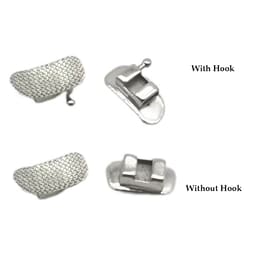
A plain sheath gives the horizontal slot and nothing else — the choice when the appliance simply needs a seat and a lock, as with a straightforward transpalatal or lingual arch. The OSL Bondable Lingual Sheaths (Pack of 10) come plain or hooked, in a ten-piece pack.
Sheaths with a hook
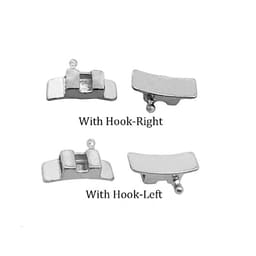
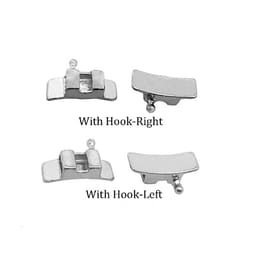
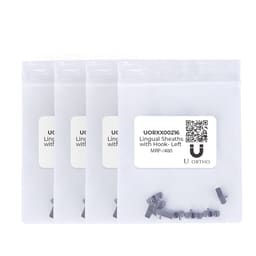
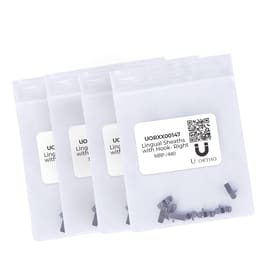
A hooked sheath adds a spur for a light elastic, a coil spring or a ligature tie-off, useful where the same molar has to double as an anchor for auxiliary force. The Koden Lingual Sheaths with Hook (Pack of 10) carry that hook as standard.
Bonded, not banded
The alternative to a bondable sheath is a weldable one, spot-welded to a molar band that is then cemented to the tooth. Banding is still the sturdier route for heavy or long-term anchorage, but it needs separators, a band fitting and cement; bonding a sheath skips all of that and suits shorter auxiliary phases and cases where a full band is not warranted. Where a banded set-up is preferred, the sheath welds to a molar band from the orthodontic bands range.
The appliances a sheath anchors
Lingual sheaths exist to serve the removable auxiliaries of fixed and interceptive treatment — transpalatal arches for anchorage and molar rotation, lingual arches and Nance buttons for space maintenance, and quad helices for slow maxillary expansion. Those appliances, along with the brackets, tubes and elastics of a full case, sit in the wider orthodontics range.
Bonding one in place
Placement is a short bonding sequence: isolate and clean the lingual surface, etch, apply bonding resin, and seat the sheath in composite at the height and angle the appliance's wire will follow, then light-cure. Getting the slot parallel to the arch path is what lets the auxiliary seat passively later — a sheath bonded off-axis fights the wire every time it is refitted.
Where it sits among orthodontic attachments
A lingual sheath is the palatal-side counterpart to the buccal tube that carries the main archwire on the cheek side of a molar. Both are bonded or welded molar attachments, and a practice usually stocks them together; the buccal tubes range covers the buccal side of the same tooth.
Why buy bondable lingual sheaths from Dentalkart
A sheath is a low-cost, high-consequence part — a few rupees of attachment holding an entire anchorage plan — so what matters is a clean mesh base that bonds reliably and a slot milled to a consistent size across the pack. The sheaths here ship in sealed ten-piece packs with the slot dimension and hook option stated, so a clinic can match them to the appliance wire and reorder the same spec, and they arrive alongside the bands, tubes and wires of the rest of an orthodontic order.
Frequently Asked Questions (FAQs):
What is a bondable lingual sheath used for?
A bondable lingual sheath is used to anchor a removable auxiliary appliance to a molar from the tongue side. Its slot receives and locks the wire of a transpalatal arch, lingual arch, Nance holding arch or quad helix, letting the clinician remove and refit the appliance for activation without soldering it permanently to the tooth.
Bondable or weldable lingual sheath — what is the difference?
The difference is how it attaches. A bondable sheath has a mesh base bonded directly to etched enamel with composite, needing no band. A weldable sheath is spot-welded to a molar band that is then cemented on. Bonding is quicker and skips separators and banding; welding to a band is sturdier for heavy or long-term anchorage.
Do I need a lingual sheath with a hook?
You need a hooked lingual sheath when the anchor molar also has to carry auxiliary force — a light elastic, a coil spring or a tie-off. The hook gives a fixed point for that. For a plain transpalatal or lingual arch that only needs seating and locking, a sheath without a hook is enough.
How is a bondable lingual sheath fitted, and is it reusable?
A bondable lingual sheath is fitted by isolating and etching the lingual enamel, applying bonding resin, seating the sheath in composite aligned to the appliance's wire path, and light-curing. It is a single-use attachment — once debonded it is discarded, not re-bonded — so sheaths are supplied in multi-piece packs for a course of cases.
What slot size do bondable lingual sheaths come in, and what fits them?
Bondable lingual sheaths come with a slot sized to the round or rectangular auxiliary wire they hold — commonly a 0.032-inch or 0.036-inch round slot for a transpalatal or lingual arch. Each listing states the slot dimension, so a clinician can match the sheath to the gauge of the appliance wire before ordering.