


Ca-OH Based Medicaments
A calcium hydroxide-based medicament is an endodontic material that uses Ca(OH)₂ as its active agent, placed inside the root canal or over exposed pulp as a high-pH, antibacterial dressing. Its strong alkalinity disinfects the canal and encourages hard-tissue repair. These medicaments are supplied as powder, premixed paste in a syringe, or light-cure formulations, for pulp capping, apexification and inter-visit canal dressing.
 Recommended
 Price- High to LowPrice- Low to High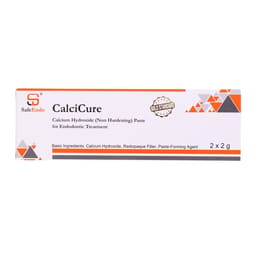


 11
11
 3
3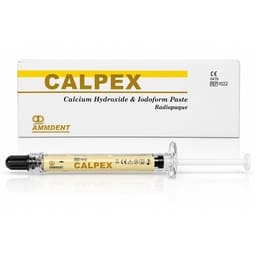
 7
7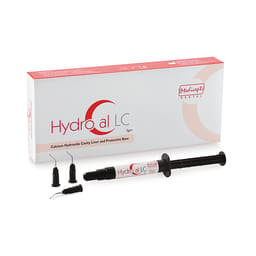
 11
11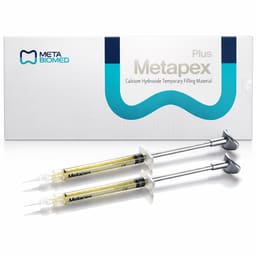
 14
14



 6
6Calcium Hydroxide-Based Medicaments
Between the appointment where a canal is cleaned and the one where it is filled, something has to keep bacteria in check. Calcium hydroxide is the material dentistry has relied on for that job for decades. Sealed inside the canal, it raises the local pH far above what most root-canal bacteria can survive, so the number of surviving organisms drops before obturation.
The chemistry is the whole point. Ca(OH)₂ dissociates into calcium and hydroxyl ions, and it is the hydroxyl ions — the high alkalinity — that disrupt bacterial membranes and neutralise the by-products of infection. The same alkaline environment also nudges nearby tissue toward laying down a hard-tissue barrier, which is why the material does more than just disinfect.
What these medicaments are used for
Calcium hydroxide earns its place across several endodontic situations, not one.
As an inter-visit dressing it sits in a cleaned canal to suppress bacteria before the permanent filling. In pulp capping it is placed over a nearly or newly exposed pulp to protect it and encourage a reparative dentine bridge. And in apexification it is used in an immature or open-apex tooth to promote a calcified barrier at the root end so the canal can later be sealed. Related dressings and irrigants for these steps sit in the wider intracanal medicaments range.
Formulations: powder, premixed and light-cure
The active ingredient is the same; how it is supplied changes how it is used.
Powder and premixed paste
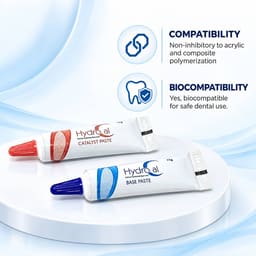
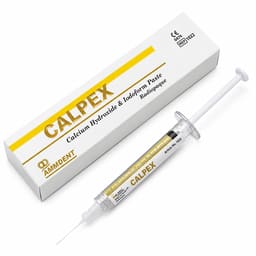
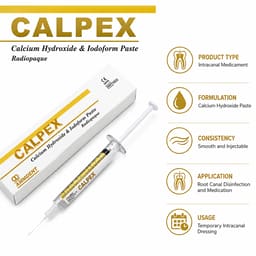
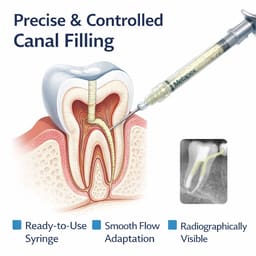
Traditional calcium hydroxide comes as a powder mixed with saline or another vehicle into a paste at the chairside, giving control over consistency. Premixed pastes remove the mixing step — supplied ready in a syringe with a fine tip that delivers the material straight to the canal, and a Prime Dental RC-Cal paste is a ready-to-use example of that.
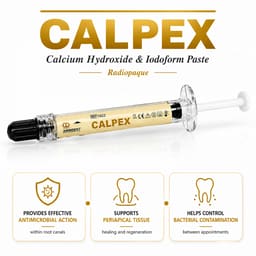
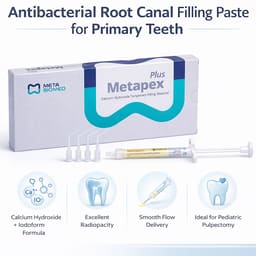
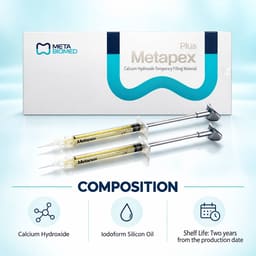
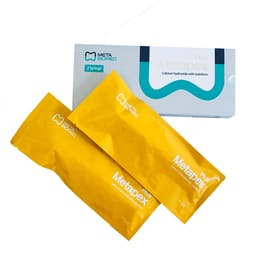
Some pastes also carry iodoform alongside the calcium hydroxide, giving both a broader antibacterial action and clear radiopacity for follow-up on radiographs. A Meta Metapex is a widely used paste of that combined type.
Light-cure liners
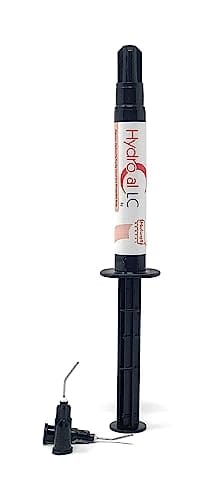
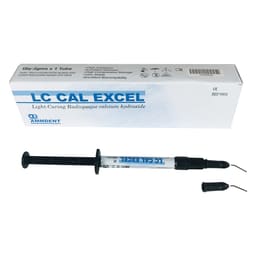
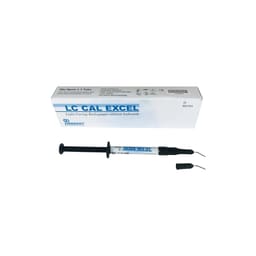
A separate group sets on command under the curing light rather than slowly in the canal. These light-cure calcium hydroxide liners are used under restorations as a protective base over deep dentine, setting hard in seconds. An Ammdent LC-Cal Excel is a light-cure liner of this type.
Radiopacity and resorbability
Two properties separate one product from another once the formulation is chosen.
Radiopacity — usually from added barium sulphate or iodoform — lets the placed material be seen on a radiograph, confirming it reached the working length and did not extrude. Resorbability matters for pastes left long term or extruded slightly beyond the apex: a resorbable dressing is gradually removed by the body, whereas a permanent base is meant to stay. Checking these against the intended use avoids surprises at the follow-up visit.
Choosing a Ca(OH)₂ medicament
Match the product to the task. For inter-visit disinfection, a premixed radiopaque paste is quick and visible on film; for a powder-and-mix workflow, a plain calcium hydroxide powder gives full control; for a cavity liner under a restoration, a light-cure version sets instantly.
Confirm radiopacity if follow-up radiographs matter, and check whether the paste is resorbable for the situation. The files, sealers and obturation materials used alongside these medicaments are in the endodontics range.
Frequently Asked Questions (FAQs):
What is a calcium hydroxide-based medicament used for?
A calcium hydroxide-based medicament is used in endodontics as a high-pH, antibacterial dressing. It disinfects a cleaned root canal between visits, protects and stimulates repair over an exposed pulp in pulp capping, and promotes a calcified barrier at an open root apex during apexification. Its strong alkalinity is what suppresses bacteria and encourages hard-tissue formation.
Why does calcium hydroxide work as a canal disinfectant?
Because of its high pH. Calcium hydroxide releases hydroxyl ions that create a strongly alkaline environment most root-canal bacteria cannot survive, disrupting their membranes and neutralising infection by-products. The same alkalinity encourages nearby tissue to lay down a hard-tissue barrier, which is why it is used both to disinfect and to support repair.
What is the difference between powder, premixed paste and light-cure calcium hydroxide?
Delivery and setting. Powder is mixed with a vehicle at the chairside for control over consistency. Premixed paste comes ready in a syringe with a fine tip for direct canal placement, saving a step. Light-cure versions are liners that set hard in seconds under the curing light, used as a base under restorations rather than as a canal dressing.
What does radiopacity mean in these medicaments, and why does it matter?
Radiopacity means the material shows up on a radiograph, usually through added barium sulphate or iodoform. It matters because it lets the dentist confirm the medicament reached the working length and did not extrude past the apex. A radiopaque premixed paste is convenient when follow-up radiographs are part of the treatment plan.
Is calcium hydroxide paste resorbable?
Some formulations are. Resorbable pastes are gradually removed by the body, which is useful when material is left long term or extruded slightly beyond the apex. Permanent liners, by contrast, are meant to stay in place under a restoration. The product listing indicates whether a paste is resorbable, so it can be matched to the clinical situation.