





Coil Springs
Threaded onto a fixed-appliance archwire between two brackets to deliver continuous space-opening or space-closing force, orthodontic coil springs are super-elastic NiTi springs supplied in compressed open-coil format for opening space and pre-stretched closed-coil format for closing extraction-site spaces and retracting canines. Dentalkart stocks JJ Ortho and OrthoMetric NiTi coil springs.
 Recommended
 Price- High to LowPrice- Low to High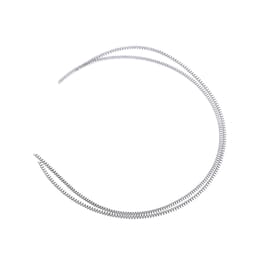

Only 5 Left
 5
5Orthodontic Coil Springs
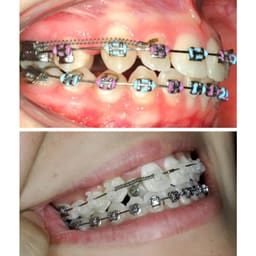
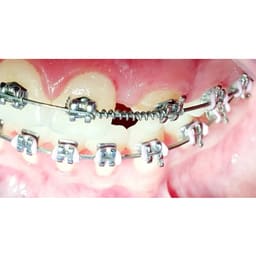
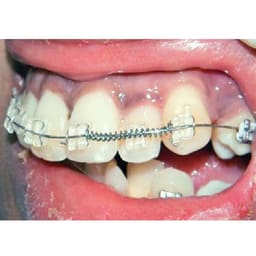
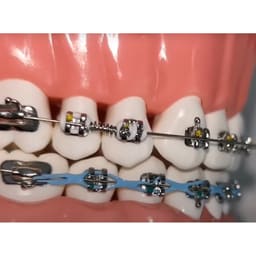
Orthodontic coil springs are super-elastic nickel-titanium springs threaded onto a fixed-appliance archwire between two brackets to deliver continuous space-opening or space-closure force during active orthodontic treatment. Open coil springs are compressed when engaged between brackets and exert a continuous pushing force to open space — typically to make room for impacted canines, palatally displaced laterals or premolars before bonding. Closed coil springs are stretched between brackets and exert a continuous pulling force to close space across extraction sites or to retract individual canines into a created space. Dentalkart stocks the JJ Ortho NiTi Open Coil Spring 180 mm (60.01.17) alongside the OrthoMetric Flexy NiTi Orthodontic Spring, trusted by 50,000+ dentists across 110000+ Indian pincodes.
Types of Orthodontic Coil Springs
NiTi Open Coil Springs
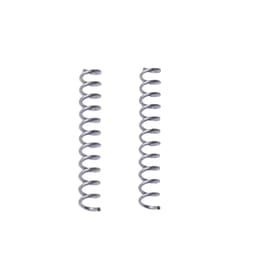
NiTi open coil springs such as the JJ Ortho NiTi Open Coil Spring 180 mm (60.01.17) are supplied as continuous-length compressed-coil tubing that the operator cuts to the segment length needed at chair-side. Once compressed between two adjacent brackets the spring delivers continuous super-elastic pushing force to open interproximal space for impacted canines, palatally displaced laterals or pre-restorative space recovery.
NiTi Closed Coil Springs
NiTi closed coil springs such as the OrthoMetric Flexy NiTi Orthodontic Spring arrive pre-stretched with attachment eyelets at each end, hooked between two distant brackets to deliver continuous pulling force for extraction-site space closure, canine retraction or en-masse anterior segment retraction during the working stage of orthodontic treatment.
Continuous-Length Cut-to-Size Spring Tubing
Continuous-length spring tubing supplied on a 180 mm length lets the operator cut multiple short coil segments from a single SKU — useful in busy practices where varied inter-bracket distances need different spring lengths and a single tubing roll covers the full size range.
When Are Coil Springs Used?
Open coil springs are used when space needs to be created between teeth — for impacted canine eruption, palatally displaced lateral incisors, pre-restorative space management before crown placement on a teen patient, and arch-expansion procedures at single inter-bracket sites. Closed coil springs are used during the working stage to close extraction-site spaces, retract canines distally and perform en-masse retraction of an anterior segment after extraction-stage space-closure with continuous force. They pair with NiTi archwires at the alignment-and-levelling stage and with stainless-steel working wires at the retraction stage.
How to Choose the Right Coil Spring
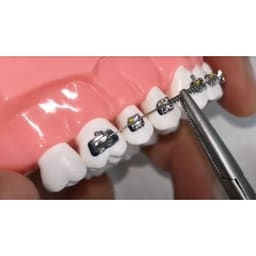
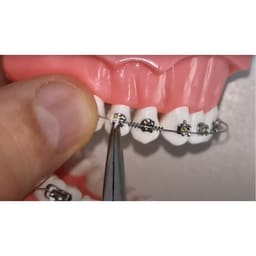
Pick an open coil spring when the clinical goal is opening space — measure the desired final inter-bracket distance and cut the spring to a length 2–3 mm longer than the current distance so the compressed spring delivers continuous opening force. Pick a closed coil spring with attachment eyelets when the goal is closing space or active retraction across an extraction site. Match the spring diameter to the archwire size in use and the case-stage force requirements — light-force springs for finishing and heavy-force springs for working-stage retraction.
Brands of Coil Springs at Dentalkart
The catalogue features the JJ Ortho NiTi Open Coil Spring in a 180 mm continuous-length format (catalogue code 60.01.17) for chair-side custom cutting, and the OrthoMetric Flexy NiTi Orthodontic Spring as a pre-stretched closed-coil retraction spring — covering both the space-opening and space-closing roles in fixed-appliance orthodontic treatment. Practices preferring elastomeric continuous force can substitute power chains from the orthodontic elastomerics range during the working-stage retraction phase.
Why Buy Coil Springs from Dentalkart
Dentalkart sources orthodontic coil springs directly from authorised manufacturers including JJ Ortho and OrthoMetric, with batch-coded packaging, cash-on-delivery, GST invoices and 110000+ pincode coverage across India. Practices can pair coil springs with the wider orthodontic wires and springs catalogue for complete archwire-and-active-force-element supply in one bulk order.
Frequently Asked Questions (FAQs):
What is an orthodontic coil spring?
An orthodontic coil spring is a super-elastic nickel-titanium spring threaded onto a fixed-appliance archwire between two brackets to deliver continuous space-opening or space-closure force during active orthodontic treatment. Open coil springs push adjacent teeth apart to create space, while closed coil springs pull distant brackets together to close space across extraction sites.
What is the difference between open and closed coil springs?
The difference between open and closed coil springs is force direction and clinical use: open coil springs are compressed when engaged between two brackets and exert continuous pushing force to open interproximal space (typically for impacted canines and pre-restorative space management), while closed coil springs are stretched between two distant brackets and exert continuous pulling force to close extraction-site spaces or retract canines.
When are open coil springs used?
Open coil springs are used when space needs to be created between adjacent teeth — for impacted canine eruption planning, palatally displaced lateral incisor space recovery, pre-restorative space management before crown placement on a teen patient and single inter-bracket space-opening during arch-expansion procedures. The compressed spring delivers continuous super-elastic opening force.
How long do coil springs deliver continuous force?
NiTi coil springs deliver continuous super-elastic force across a wide deflection range, typically maintaining 80–100% of their initial force over 6–8 weeks of active use before being replaced at the next adjustment appointment. Their super-elastic plateau means the force does not decay quickly the way elastomeric chains do, giving more predictable tooth movement over the appointment interval.
How are coil springs activated and placed?
Coil springs are activated and placed by cutting the spring to a length 2–3 mm longer than the current inter-bracket distance (for open coil springs, the compressed length), threading the spring onto the archwire before final wire-tightening and engaging it between the two target brackets. Closed coil springs use attachment eyelets hooked over the bracket wings at each end.