





Dental Stools
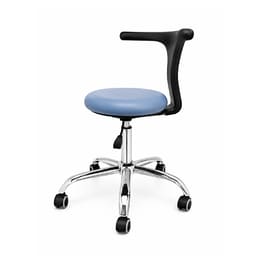
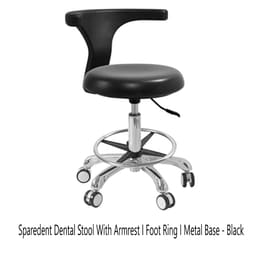
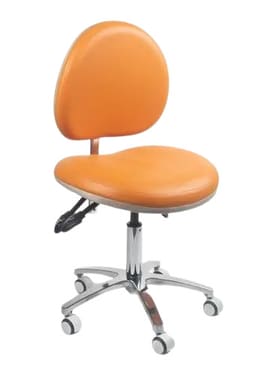
A dental doctor stool is a height-adjustable, wheeled seat the dentist works from at the chairside. A gas lift sets the seat height, castors let the operator roll around the patient, and a backrest or saddle seat supports the back through a long list. Sparedent and other makers stock standard and saddle stools with a metal base.
 Recommended
 Price- High to LowPrice- Low to High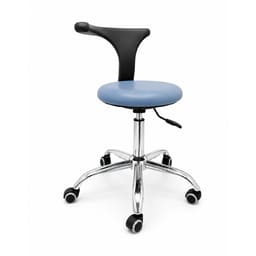
Only 1 Left
 225
225
Only 2 Left
325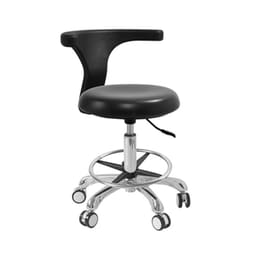
Only 5 Left
449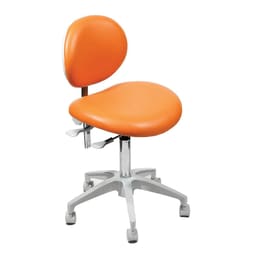
 780
780Dental Doctor Stool
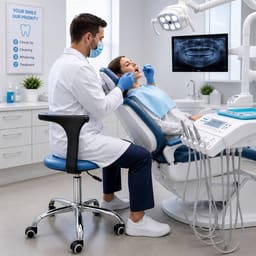
A dental doctor stool is the seat the operator uses through every procedure, so its height, mobility, and back support shape how comfortable a long day is. The gas lift adjusts the seat to the chair, the castors let the dentist move around the patient without standing, and the base keeps it stable. It pairs at the chairside with the dental chair the operator treats from.
What you can buy here
The range covers standard and saddle operator stools:
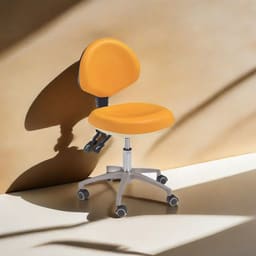
- Backrest stools — a padded seat with a lumbar backrest for upright support during seated work.
- Armrest stools — a seat with a supporting arm or body rest, useful for close, static procedures.
- Saddle stools — a saddle-shaped seat that opens the hip angle and encourages an upright spine.
Every stool here rolls on castors and adjusts by a gas lift; it sits alongside the wider operatory furniture such as the dental trolley.
Why a good stool is worth it
A stool is used for hours a day, so the right one protects the operator:
- Posture support — a backrest or saddle keeps the spine neutral instead of hunched over the patient.
- Mobility — smooth castors move the dentist around the head without breaking position.
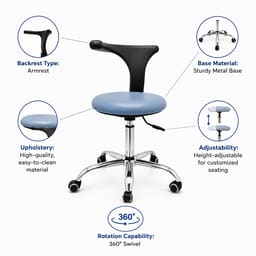
- Adjustability — a gas lift sets the exact height for the chair and the operator's leg length.
A basic four-leg stool works for occasional use, but a wheeled, height-adjustable stool is what a full-time clinic needs. Its castors and gas lift are the same wear parts found among dental chair spare parts.
How to pick one for your operatory
Match the stool to how you work and who uses it:
- Seat style — a backrest stool for general seated work, a saddle for those who prefer an open hip angle and upright posture.
- Support — an armrest or body rest for long, static procedures; a plain seat for maximum reach.
- Height range — check the gas-lift range suits both the chair height and the operator.
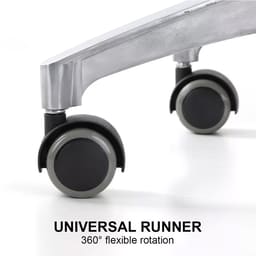
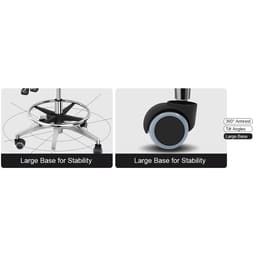
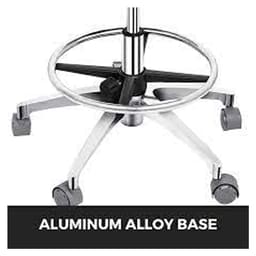
- Base and castors — a stable metal five-star base with smooth-rolling wheels for a hard operatory floor.
Set the height so thighs slope slightly down and feet rest flat, then the stool supports rather than strains the back.
Frequently Asked Questions (FAQs):
Why does the operator's stool matter for a dentist's back?
A dentist spends hours seated and leaning toward the patient, so a stool that fails to support the spine leads to slouching and back strain over time. A stool with a proper backrest or a saddle seat holds the pelvis and lumbar spine in a neutral position, which keeps posture upright and reduces the fatigue that builds across a full list.
Saddle or backrest seat — which suits an operator better?
A backrest stool pairs a flat seat with a lumbar rest that props up the lower back during normal seated work. A saddle stool uses a saddle-shaped seat and no back, dropping the thighs and opening the hip angle so the spine holds itself upright. Operators who lean in close tend to favour a saddle; those who want lumbar support pick the backrest.
How high should a dental stool be set?
Set the seat so the thighs slope slightly downward and the feet rest flat on the floor, with the hips a little higher than the knees. This keeps the lower back in its natural curve. Use the gas lift to match the stool to the patient chair height, so you are not reaching up or hunching down to work.
Does the stool need a backrest and armrest?
Not always. A backrest helps during seated procedures where the operator sits back between steps, and an armrest or body rest steadies the hands for close, static work like endodontics. Some dentists prefer a plain saddle for full freedom of movement. Choose the support that matches the procedures done most often.
What should I check in the base and wheels?
Look for a stable metal five-star base, which resists tipping better than a four-leg frame, and smooth castors suited to your floor. Hard-floor castors differ from carpet ones. A gas lift with a wide height range and a firm, wipeable seat cover complete a stool that lasts in daily clinic use.