





Glass Slab
4.6
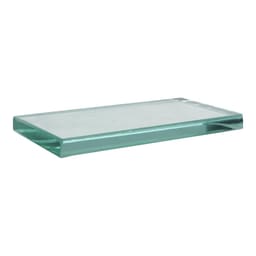
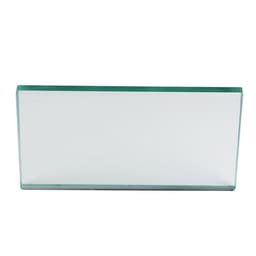
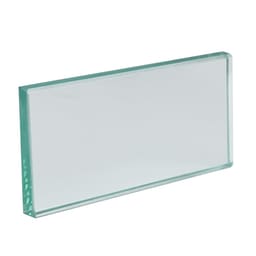
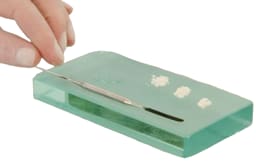
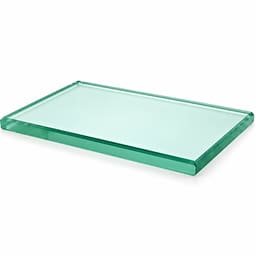
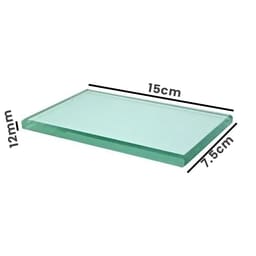
A dental glass slab is a thick, smooth plate of tempered glass used as a mixing surface for dental cements and materials. Its hard, non-absorbent face lets a material be spatulated to an even consistency, and because glass holds temperature, a cooled slab slows the setting reaction — giving the operator more working time for luting cements.
Sort by - Recommended
 Recommended
 Price- High to LowPrice- Low to High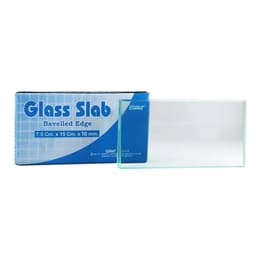

★ 4.6
(21)56.67% Off
 1
1View Similar Products
★ 4.7
(27)25.00% Off
1View Similar Products
Filters
Sort By
RecommendedDental Glass Slab
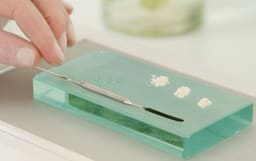
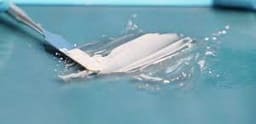
Mixing a dental cement well is as much about the surface as the spatula. A glass slab gives the flat, hard, non-absorbent face a cement needs to be worked to a uniform consistency, without the surface drawing liquid out of the mix or reacting with it the way a paper pad or an unsuitable surface can.
It is one of the oldest tools on the bench and still one of the most used, because the properties that make glass right for the job — smooth, inert, thermally stable — have never been improved on for hand-mixing.
Why glass, and why thick
Two properties matter. Glass is chemically inert, so it does not interfere with the setting chemistry of the cement mixed on it. And it is smooth and non-porous, so a material can be gathered and spatulated cleanly and then wiped off without residue.
Thickness matters for a second reason: heat. Thick glass holds temperature far more steadily than thin, which is what lets it be chilled and used to control a setting reaction rather than just contain it.
The role of a cooled slab
Some luting cements set through an exothermic reaction, and the warmer the mix, the faster it sets. A cool slab draws heat out of the mix as it is spatulated, slowing that reaction down.
That extra time is not a convenience but a clinical need: it lets more powder be incorporated for a stronger, less soluble cement, and gives the operator enough working time to seat a crown or bridge before the material stiffens. A thick, chilled plate is the classic way to achieve it.
Slab-cooling technique
The technique is simple: the plate is chilled below room temperature, and the powder is added to the liquid in increments across a wide area of the cool surface. This keeps the mix cool and maximises the powder-to-liquid ratio, which is what gives the set cement its strength.
When a room-temperature surface is enough
Not every material needs a cooled slab. Many mixes are worked at room temperature, and for those the slab simply provides a clean, flat, inert surface. Knowing which materials benefit from cooling and which do not is part of using the slab well.
Types of glass slab
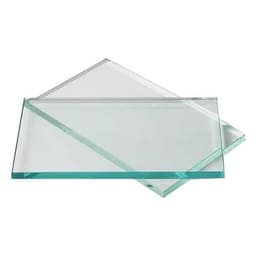
Glass slabs differ mainly in thickness and finish. A thicker one holds cold longer and is the choice where cooling matters; a thinner one is lighter and fine for room-temperature mixing. Both faces are usually ground smooth, and a good one has clean, finished edges so it is safe to handle and easy to sterilise.
Size is a matter of bench space and preference — a larger surface gives more room to spread a mix and cool it, while a compact plate suits a crowded tray.
Caring for a glass slab
A glass slab lasts for years if treated as the precision surface it is. Set cement should be cleaned off promptly before it hardens onto the face, since dried cement is hard to remove and scratches the surface when scraped. A scratched or chipped surface should be retired, because an uneven surface no longer mixes cleanly.
Because glass is inert and smooth, it withstands routine cleaning and sterilisation well, which is why it remains a fixture of the operatory bench long after disposable alternatives have come and gone. Kept clean and unscratched, a single one serves for years of daily mixing.
Frequently Asked Questions (FAQs):
What is a dental glass slab used for?
A dental glass slab is a mixing surface for dental cements and materials. Its hard, smooth, non-absorbent face lets a material be spatulated to an even consistency without the surface absorbing liquid or reacting with the mix. For some luting cements it is also chilled to slow the setting reaction and extend working time.
Why is a glass slab cooled before mixing cement?
Cooling slows the setting reaction of exothermic luting cements. A cold slab draws heat from the mix as it is spatulated, which extends working time and, crucially, lets more powder be incorporated. That higher powder-to-liquid ratio gives a stronger, less soluble set cement, which is why the cooled-slab technique is taught for these materials.
Why is glass used instead of a paper mixing pad?
Glass is inert, non-porous and thermally stable, so it does not absorb liquid from the mix or react with it, and it can be chilled to control setting. A paper pad is convenient and disposable but cannot be cooled and can draw liquid from the mix. Glass is chosen where mix quality and temperature control matter.
Does a thicker glass slab work better?
For temperature control, yes. A thicker slab holds cold far longer than a thin one, so it stays cool through the mixing of a cement — which is the whole point of chilling it. For room-temperature mixing, thickness matters less and a thinner slab is perfectly adequate as a clean, flat surface.
How should a glass slab be cleaned and maintained?
Clean set material off promptly, before it hardens onto the surface, since dried cement is difficult to remove and scraping it can scratch the glass. Glass tolerates routine cleaning and sterilisation well because it is inert. A slab that becomes scratched or chipped should be replaced, as an uneven surface no longer mixes cleanly.