

Healing Abutment
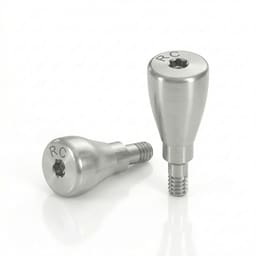
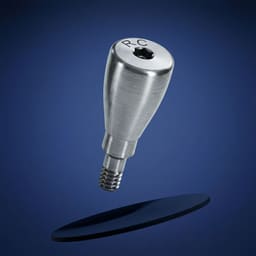
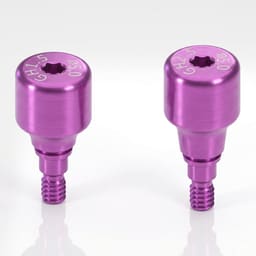
A healing abutment is a temporary titanium component screwed into a dental implant after placement. Also called a gingival former, it passes through the gum and shapes the soft tissue while it heals, forming the emergence profile the final crown will sit in. Healing abutments are platform-specific and are chosen by implant system, collar height and diameter.
 Recommended
 Price- High to LowPrice- Low to High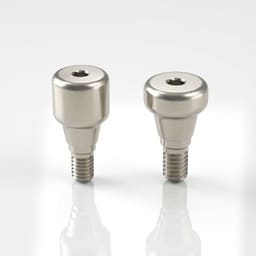
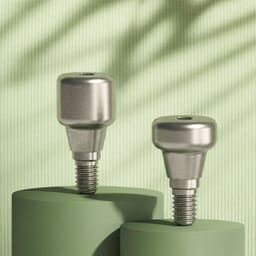
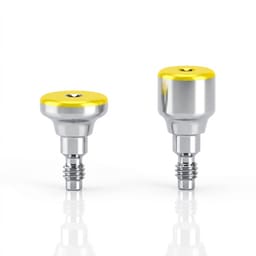
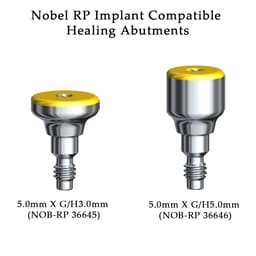
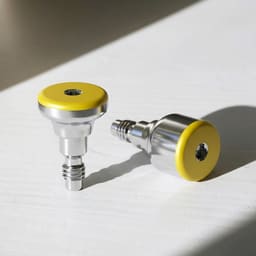
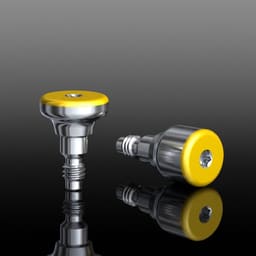
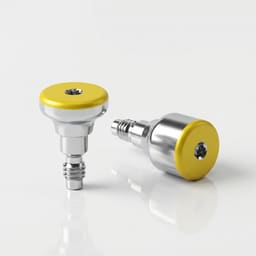
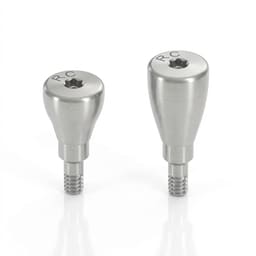
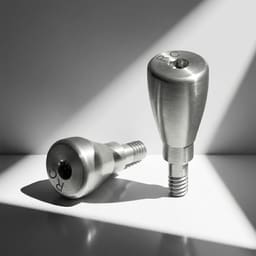
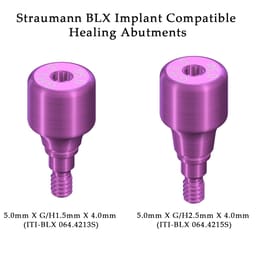
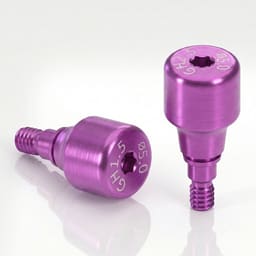
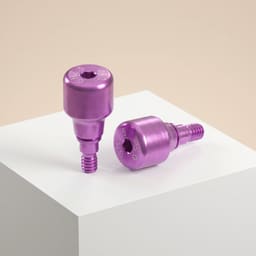
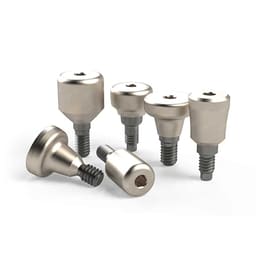
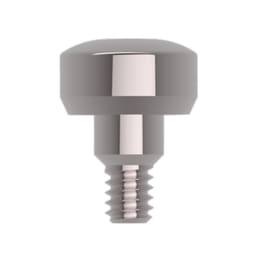
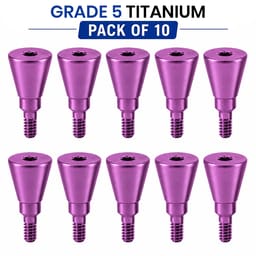
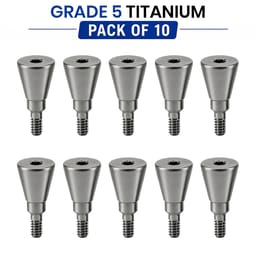
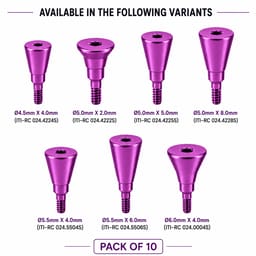
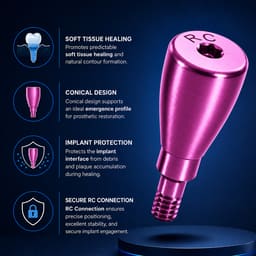
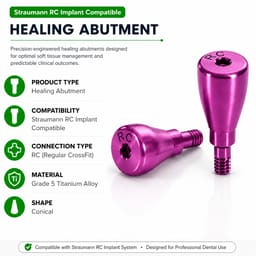
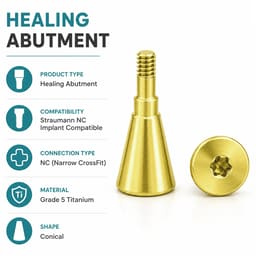
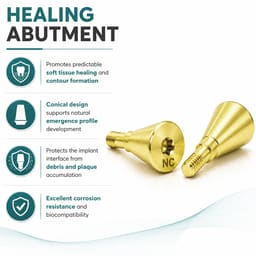
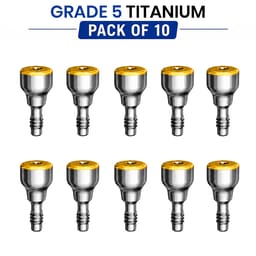
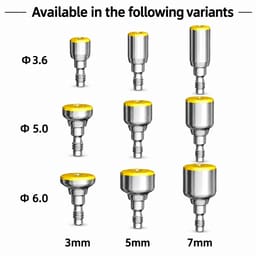
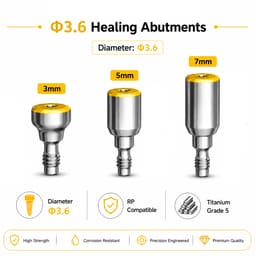
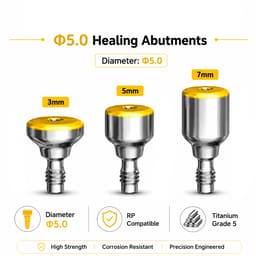
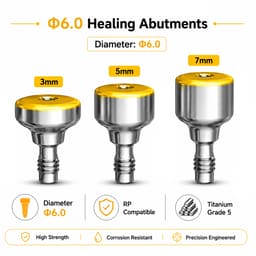
Healing Abutments — Shaping the Gum Before the Crown Exists
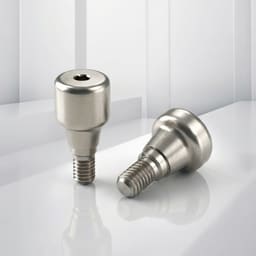
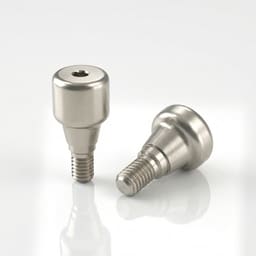
A healing abutment is a small titanium cylinder that screws into the implant and passes through the gum. It is temporary. It is also the part that decides how the final crown will look.
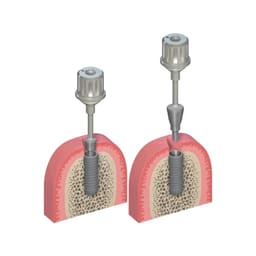
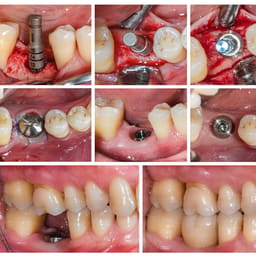
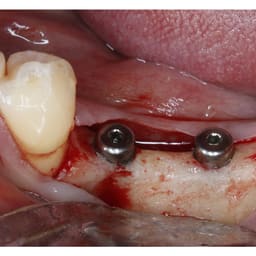
Soft tissue heals into whatever shape you give it. Leave an implant open with nothing on it and the tissue collapses across the platform. Put a healing abutment in and the tissue heals around it — forming a collar the crown can emerge from.
That collar is the emergence profile. Get it right and the crown looks like a tooth coming out of gum. Get it wrong and it looks like a crown sitting on gum.
What a healing abutment does
Three jobs, in order of how much they matter:
- Shapes the emergence profile. The tissue heals around the abutment, so the abutment's shape becomes the tissue's shape.
- Keeps the connection clean. Soft tissue cannot creep into the implant platform.
- Keeps access open. The internal threads stay clear for the impression coping or the scan body.
Which healing abutment fits my implant?
Match the implant system first. Everything else is secondary.
A healing abutment is not universal. Its connection is machined to one implant platform. A Straumann component will not seat on a Nobel Biocare implant — and if the connection is wrong, no amount of correct height or diameter will save it.
The range is organised by system:
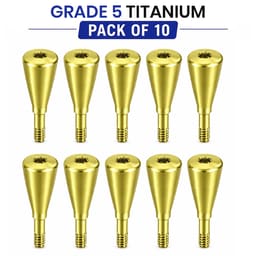
- Straumann — regular connection (RC) and narrow connection (NC). The Straumann RC-compatible healing abutment comes in a pack of ten.
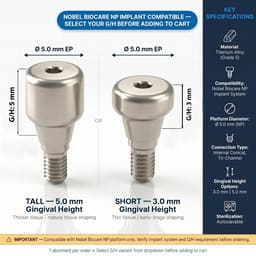
- Nobel Biocare — narrow platform (NP) and regular platform (RP). The Nobel Biocare RP-compatible version covers the regular platform.
- Osstem mini — the mini healing abutment for narrow-diameter implants.
- Adin, Noris, MIS and AB Dental — one shared RS-connection component covers all four.
- Multi-unit cases — the universal multi-unit healing abutment seats across Osstem, Noris, Adin, Straumann, Nobel, Neodent, ICX and Medentis multi-unit abutments.
Choosing height and diameter
Once the connection is right, one rule does most of the work: collar height must exceed soft-tissue thickness.
- Too short and the gum grows over the top. At the next visit you are digging a buried abutment out through tissue.
- Too tall and it fouls the opposing tooth.
Measure the tissue with a periodontal probe at placement, then take the next height up.
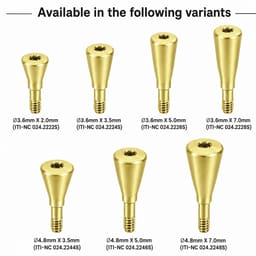
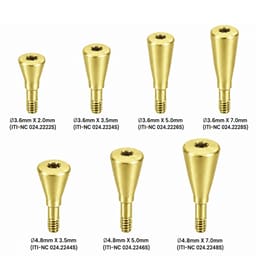
Diameter is a different question. Match it to the crown's intended emergence, not to the implant platform — a wide molar crown needs a wider former than the fixture diameter suggests.
Where the abutment sits under closed tissue during submerged healing, the Xcem submerged healing abutment comes in 4 mm, 5 mm and 5.5 mm.
How long does it stay in?
Long enough for the tissue to mature — usually four to eight weeks. Longer in the aesthetic zone, and longer where the site was grafted.
- Torque it properly. A loose healing abutment lets bacteria into the connection, and the tissue heals to the wrong shape around a moving part.
- Leave it alone. Every removal breaks the biological seal, which then has to re-form. Repeated removal costs crestal bone.
Why buy healing abutments from Dentalkart
Compatibility is not something you want to discover chairside, with the flap open and the patient waiting.
Every healing abutment here states the implant system and platform it fits, its collar height and its diameter — so the component is chosen before the surgery, not during it. They ship in packs of ten, which is how a practice actually uses them.
The implants they seat on are in implants, so a case can be ordered complete.
Frequently Asked Questions (FAQs):
What is a healing abutment used for?
A healing abutment is a temporary titanium component screwed into a dental implant to shape the gum while it heals. It passes through the soft tissue and holds open the space that becomes the emergence profile — the collar the final crown appears to grow out of. It also keeps soft tissue from creeping into the implant connection.
How do I choose the right healing abutment?
Match the implant system first, because the connection is platform-specific and a Straumann component will not seat on a Nobel Biocare implant. Then choose a collar height greater than the soft-tissue thickness, measured with a periodontal probe, so the gum cannot grow over the top. Match diameter to the intended crown's emergence profile.
Are healing abutments compatible with any implant system?
No. Healing abutments are platform-specific and must match the implant system and platform diameter exactly. Straumann RC and NC, Nobel Biocare NP and RP, Osstem mini and the shared Adin, Noris, MIS and AB Dental RS connection all differ. Multi-unit healing abutments are the exception, seating across a range of systems' multi-unit abutments.
How long does a healing abutment stay in place?
A healing abutment typically stays in for four to eight weeks, until the peri-implant soft tissue has matured and stabilised. Aesthetic-zone cases and grafted sites often need longer. It should be torqued properly and then left undisturbed, because each removal breaks the biological seal and it must re-form.
What happens if the healing abutment is too short?
If the collar height is less than the soft-tissue thickness, the gum simply grows over the top of the abutment. It becomes buried, and it has to be uncovered surgically at the next visit — an avoidable second procedure. Always measure tissue thickness at placement and select the next height up.