

Periosteal Elevators
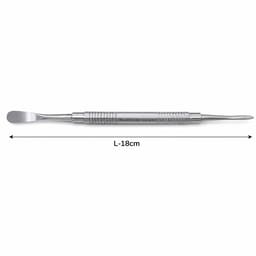
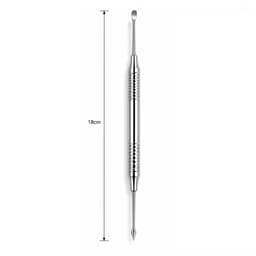
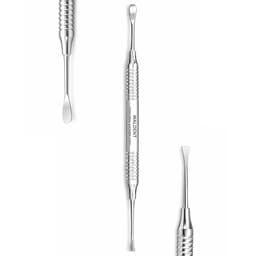
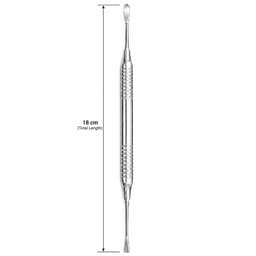
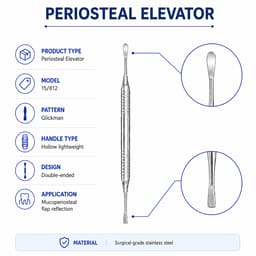
A periosteal elevator is a surgical hand instrument that separates the gum and periosteum from the bone to raise a full-thickness flap, exposing the site for extraction, implant, or bone surgery. Unlike a root elevator, it works on soft tissue, not the tooth. Named patterns — Molt, Howarth, Buser, Hirschfeld — come single- and double-ended, from GDC, Waldent, and Veecare.
 Recommended
 Price- High to LowPrice- Low to High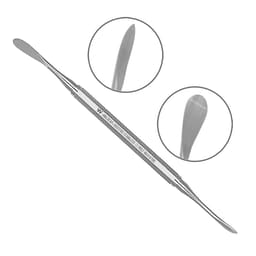

 10
10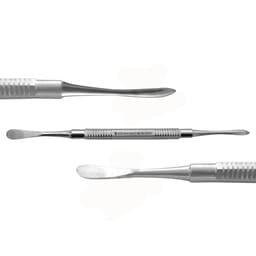
 15
15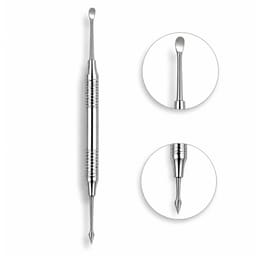
Only 5 Left
24
 24
24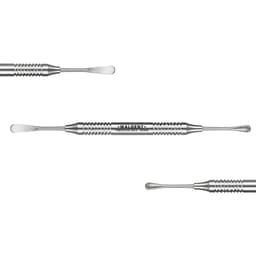
 17
17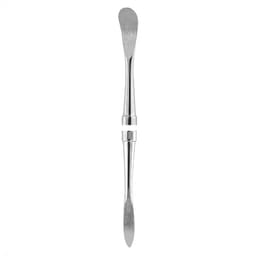
 4
4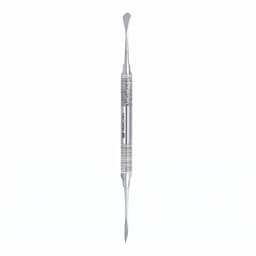
 20
20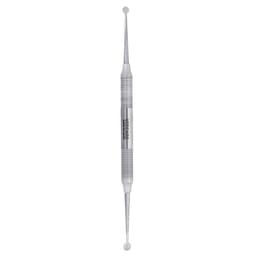
 21
21Periosteal Elevators
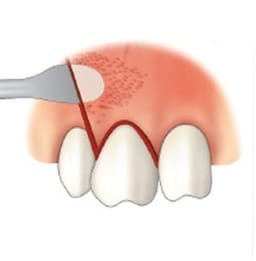
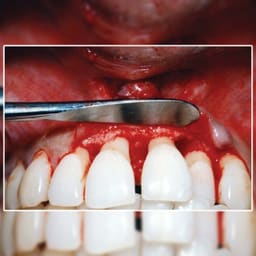
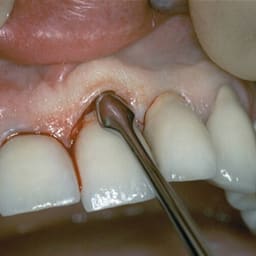
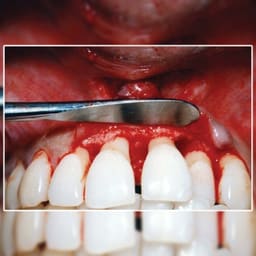
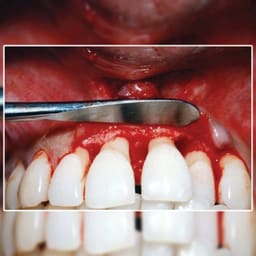
To reach the bone around a tooth or an implant site, the covering gum has to be lifted cleanly off it, and a periosteal elevator does exactly that. Its working end is slipped under the edge of the gum at an incision line and eased along the bone, so the soft tissue and the periosteum beneath it peel up together as one full-thickness flap. Keeping that layer intact matters: a flap raised in one piece heals better and can be laid back and sutured accurately. Because the instrument is about tissue rather than teeth, it is used in any procedure that needs the bone exposed — quite distinct from the levering job of a root elevator.
Raising a flap
Reflecting the tissue is a deliberate, layered movement:
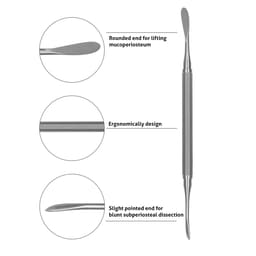
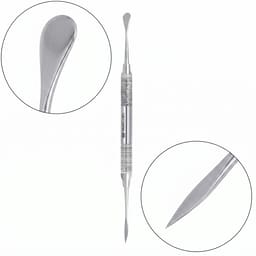
- Start at a corner — the pointed or thin end is worked under the papilla or the end of the incision, where the tissue lifts most easily.
- Stay on bone — the blade is kept against the bone so the periosteum comes up with the gum, not torn from it.
- Reflect the flap — the broad end sweeps along to lift the full-thickness flap back and hold it clear of the field.
Done this way, the flap stays healthy and repositions cleanly at the end. After the bone work, that same flap is laid back and closed with material from the sutures range.
The named patterns
Periosteal elevators are known by pattern name and by whether they are single- or double-ended:
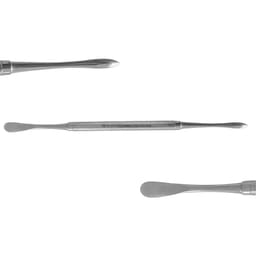
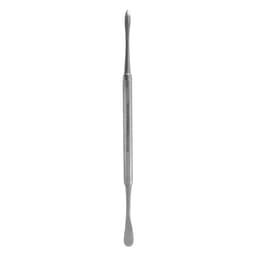
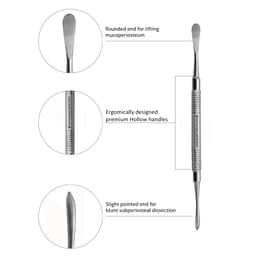
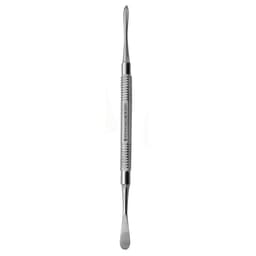
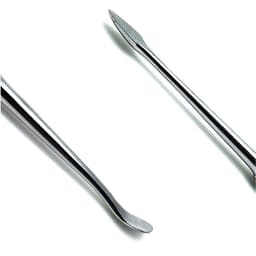
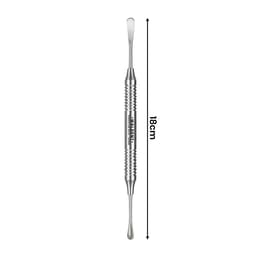
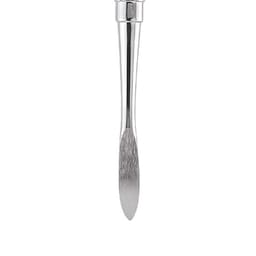
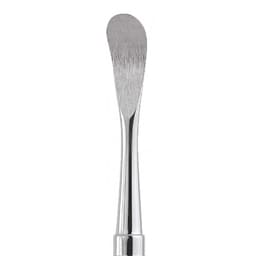
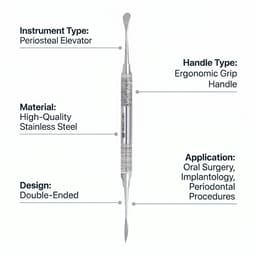
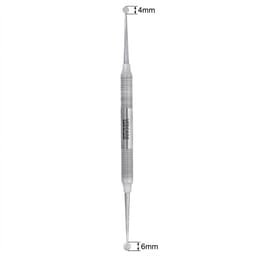
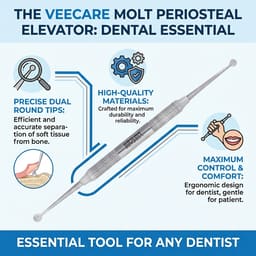
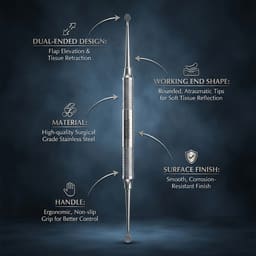
- Molt (No. 9) — the classic double-ended elevator, a sharp pointed end to start the flap and a broad rounded end to reflect it; the everyday choice.
- Howarth — a single-ended, rounded periosteal elevator popular for oral-surgery flaps.
- Buser — a fine, sharp pattern for precise flap starts in implant surgery.
- Hirschfeld, Glickman, Kramer-Nevins — finer periodontal patterns for delicate reflection around teeth.
- Benque, Beal, Labanca — specialist blades for particular flap shapes and access.
A general practice manages with a Molt-9; implant and periodontal work adds the finer patterns for controlled reflection.
Where it is used
Flap reflection is needed across surgery:
- Surgical extractions — raising a flap to reach a buried root or an impacted tooth.
- Implant placement — exposing the ridge to prepare the osteotomy and often to add grafting material, stocked in the bone grafts range.
- Periodontal and apical surgery — reflecting tissue to debride, resect, or access a root end.
In each case the periosteal elevator opens the site; the rest of the tray does the bone or root work.
Build
For an instrument pressed against bone and edged under tissue, the working end and handle decide how it performs:
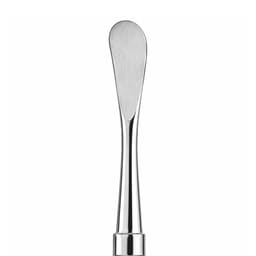
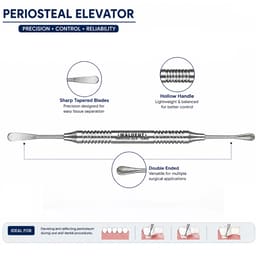
- A well-formed blade — thin enough to slip under the periosteum, smooth-edged so it lifts rather than tears.
- Single or double end — a double-ended Molt covers start and reflect in one instrument; single-ended patterns suit a preferred grip.
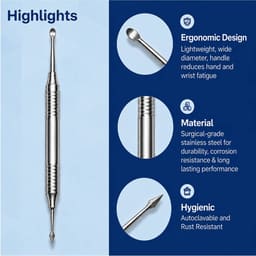
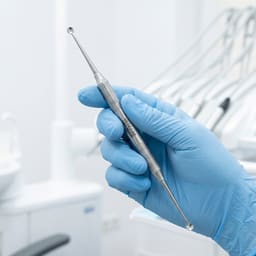
- A secure handle — a knurled or hollow grip that stays firm in a wet glove during a controlled sweep.
A clean, correctly shaped end lifts a flap without perforating it, which is what protects the tissue and its blood supply.
Buy periosteal elevators at Dentalkart
Choosing a periosteal elevator follows the surgery — a double-ended Molt-9 for general flap work, a Howarth or Buser for oral-surgery and implant flaps, and finer Hirschfeld or Glickman patterns for periodontal reflection. The named patterns here run across GDC, Waldent, Veecare, Julldent, and Oracraft, single- and double-ended. Whichever you pick is an authentic branded piece, with its form and stock detailed on the product page.
Frequently Asked Questions (FAQs):
What is a periosteal elevator used for?
It raises a mucoperiosteal flap — lifting the gum and the periosteum off the bone together — to expose the surgical site for an extraction, an implant, or bone and periodontal surgery. It works only on soft tissue, opening access to the bone; it is not used to loosen or lift a tooth, which is a root elevator's job.
How is it different from a root elevator?
Entirely different jobs. A periosteal elevator reflects gum and periosteum off bone to open a flap; a root elevator is levered between tooth and bone to loosen a tooth. One works on tissue, the other on the tooth. Both are called elevators, but a surgical tray keeps them for their own, separate steps.
What is a Molt No. 9 periosteal elevator?
The Molt No. 9 is the most common periosteal elevator: a double-ended instrument with a sharp, pointed tip to begin lifting the flap at the papilla and a broad, rounded blade to sweep the tissue back. Having both ends on one instrument makes it the general-purpose choice for raising and reflecting a flap.
Single-ended or double-ended — which should I choose?
A double-ended Molt gives a starting tip and a reflecting blade in one instrument and suits most general flap work. Single-ended patterns such as the Howarth or Buser offer one dedicated end and a preferred grip, favoured for specific oral-surgery or implant flaps. Many surgeons keep a double-ended Molt plus a single-ended pattern they like.
Which periosteal elevators suit implant or periodontal surgery?
For implant flaps, a fine, sharp pattern such as the Buser starts a clean flap on the ridge; a Molt-9 then reflects it. For periodontal work, finer patterns like the Hirschfeld or Glickman reflect delicate tissue around teeth with control. The choice follows how fine and how controlled the reflection needs to be.