

Root Elevators/Luxators
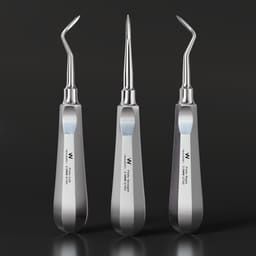
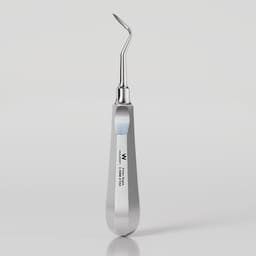
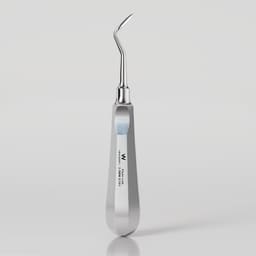
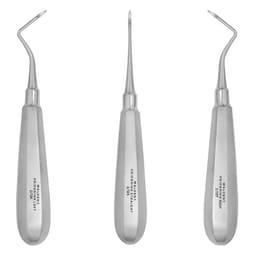
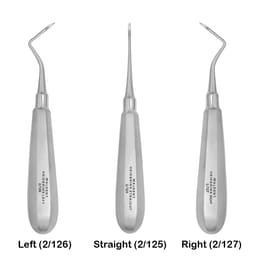
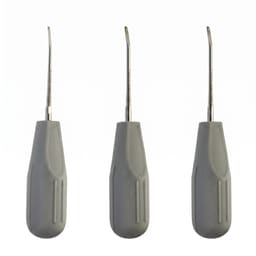
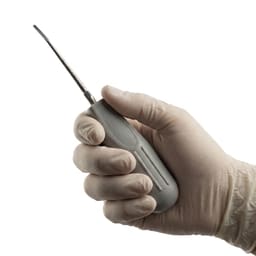
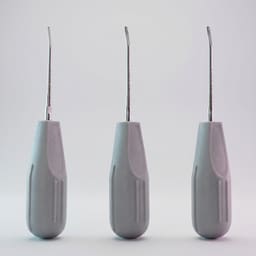
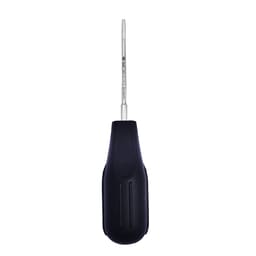
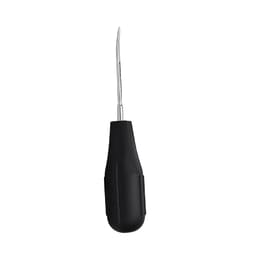
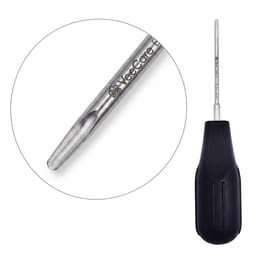
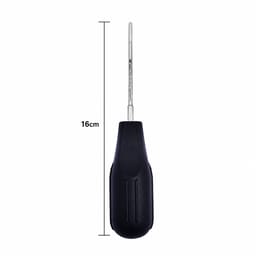
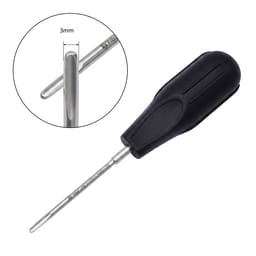
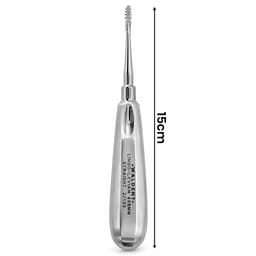
A root elevator or luxator is an oral-surgery hand instrument for freeing a tooth from its socket. The elevator levers the tooth upward between bone and root; the luxator, thinner and keener, severs the periodontal ligament with little leverage. Named blades — Bein, Coupland, Cryer, Flohr, Heidbrink, Seldin — come straight, angled, and curved, from GDC, Waldent, and Veecare.
 Recommended
 Price- High to LowPrice- Low to High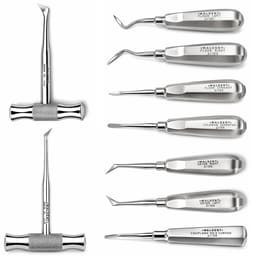
 199
199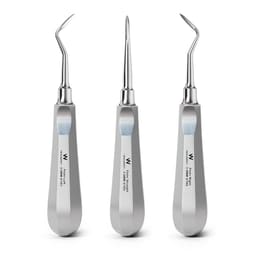



.jpg?w=256)
Only 1 Left
22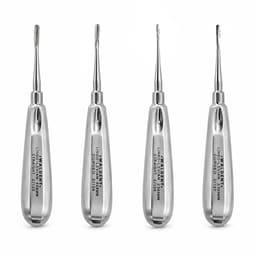
Root Elevators & Luxators
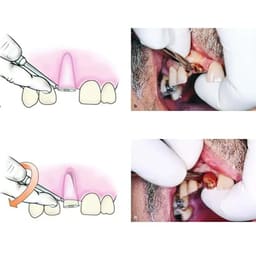
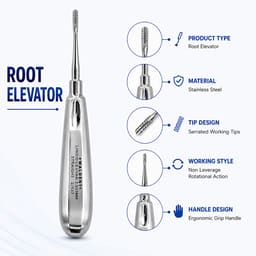
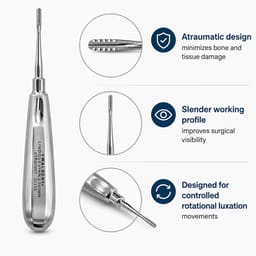
Before a tooth is taken with a forceps, it usually has to be loosened, and that is the job of an elevator or a luxator. The two do it differently. An elevator is a lever: its blade is worked into the space between the tooth and the surrounding bone, and a controlled turn lifts the tooth against a fulcrum. A luxator is finer and keener and is not levered but pushed — driven down the periodontal ligament to cut the fibres that hold the root, so the tooth loosens with almost no force on the bone. Both come as a family of named patterns, each blade shaped for a particular access and root. They are the loosening instruments that precede the extraction forceps in most extractions.
Elevator or luxator: the mechanism
The choice between the two turns on how the tooth is freed:
- Elevator — leverage — a blade and handle that lift and rotate the tooth against the bone, using mechanical advantage; good for a firm tooth or a buried root.
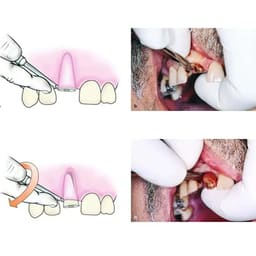
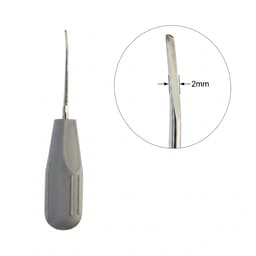
- Luxator — cutting — a thin, sharp blade slid down the ligament to sever it, loosening the tooth atraumatically with minimal pressure.
- Together — many surgeons luxate to start the space, then elevate to mobilise the tooth, then place the forceps.
Because a luxator spares the socket wall, it is favoured where an implant or graft is planned, drawing on the bone grafts range for the grafting material.
The named elevator patterns
Elevators are known by pattern names, each a particular blade:
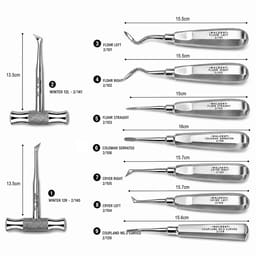
- Bein — a general-purpose straight elevator with a broad blade, the everyday workhorse.
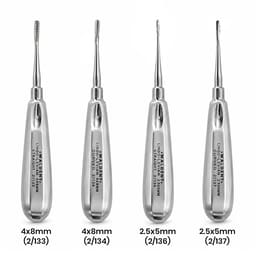
- Coupland — chisel-shaped elevators in graded widths, used to wedge and elevate.
- Cryer — triangular, paired left-and-right blades for engaging a root or a furcation.
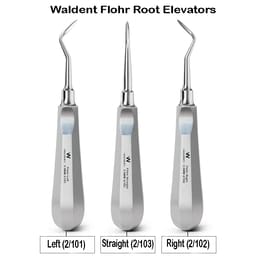
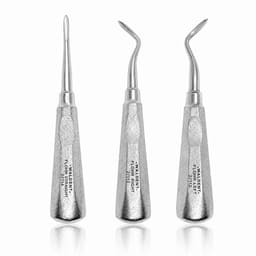
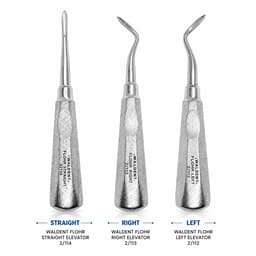
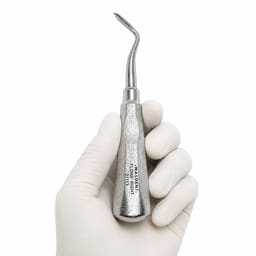
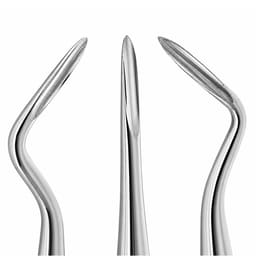
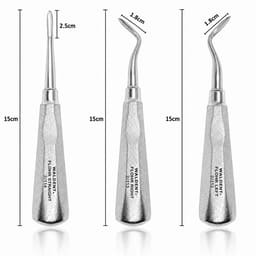
- Flohr — fine blades for delicate elevation and root work.
- Heidbrink — angled root-tip pick elevators for teasing out apices and fragments.
- Seldin and Lindo Levian — straight and curved patterns for wider access and specific root angles.
Which patterns a surgeon keeps depends on the extractions they do; a general set covers most, with specific blades added for root and surgical work.
Luxators and root tip picks
The finer instruments handle atraumatic loosening and fragment retrieval:
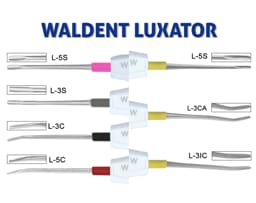
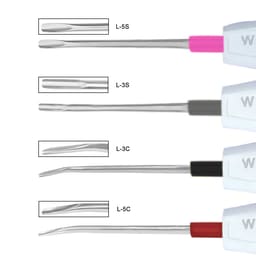
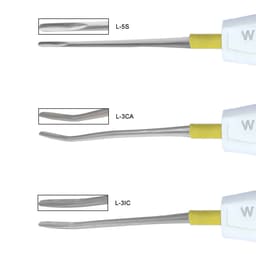
- Straight luxators — for direct, in-line access down the ligament of a front or premolar tooth.
- Angled and forward-bend luxators — reach the ligament of a posterior tooth while keeping the hand clear.
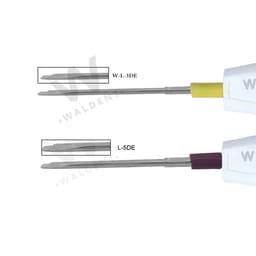
- Spade and proxitip — broader or hybrid tips for specific loosening tasks.
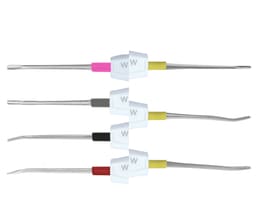
- Root tip picks — slender twin-ended points that reach a broken-off root fragment lodged deep and work it free.
Matching the blade angle to the tooth's position is what lets the instrument reach the ligament cleanly.
Sets, kits, and build
For instruments worked with force and fine control, the set and the build both count:
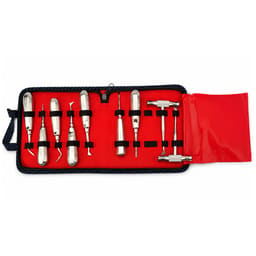
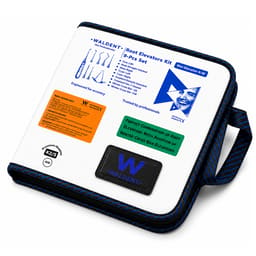
- Sets — a 9-piece root elevator set or an impaction kit equips a surgery with a spread of patterns in one purchase.
- Handles — shot-blast, thumb, and ergonomic handles give a secure, non-slip hold for a controlled lever.
- Blade steel — a hardened, well-finished blade holds its edge and shape against bone; a dull or bent blade slips and is retired.
A sharp, true blade and a firm handle are what make elevation controlled rather than forceful.
Buy root elevators and luxators at Dentalkart
Building an elevation set is a matter of the extractions a practice does — a Bein and a Coupland for everyday work, Cryer and Heidbrink for roots, luxators for atraumatic cases, and a kit to cover a new surgery. Across GDC, Waldent, Veecare, Oracraft, and Julldent, the named patterns come as single instruments and as sets, each a genuine branded piece with its blade form and stock shown on its own page. For the whole surgical family, the extraction instruments range sits above this one.
Frequently Asked Questions (FAQs):
What is a root elevator used for?
It loosens a tooth or root in its socket before a forceps is applied, and can deliver a mobile root on its own. The blade is worked between the tooth and the bone and turned against a fulcrum to lift the tooth. Elevators also help retrieve fractured roots, which is why an extraction tray always carries a few patterns.
How does a luxator differ from an elevator?
A luxator is thinner and sharper and works by cutting, not levering: it is pushed down the periodontal ligament to sever the fibres, loosening the tooth with minimal force on the socket. An elevator is broader and used as a lever. Luxators suit atraumatic, socket-preserving extractions; elevators give mechanical advantage on a firm tooth.
Which elevator patterns should a new practice buy?
A straight Bein and a set of Coupland elevators cover most everyday loosening. Cryer (triangular, paired) and Heidbrink (root-tip) patterns handle roots and fragments. Beyond that, a ready 9-piece set or an impaction kit gives a broad spread in one purchase. Add luxators if the practice does atraumatic or implant-site extractions.
What are Cryer elevators for?
Cryer elevators have triangular, pointed blades supplied as a left-and-right pair. They are used to engage a root socket or the furcation between roots, lifting a broken or divided root that a straight elevator cannot reach. Their paired design lets a surgeon work either side of a multi-rooted tooth.
Do elevator handles make a difference?
They do for control. A shot-blast or knurled handle resists slipping in a gloved grip, and a thumb or ergonomic handle lets the operator apply a measured lever with control. Because elevation is about controlled force rather than raw strength, a handle that grips securely makes the movement safer and more precise.