

Membranes
4.8
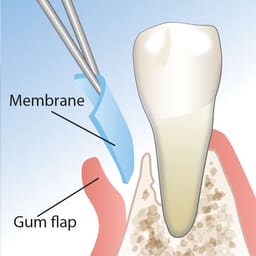
A barrier membrane is a thin sheet that keeps gum tissue out of a healing defect, so slower-growing tissue can fill the space. It is used for guided bone regeneration (GBR) around implants and ridges, and for guided tissue regeneration (GTR) around teeth. Membranes are either resorbable collagen or non-resorbable PTFE.
Sort by - Recommended
 Recommended
 Price- High to LowPrice- Low to High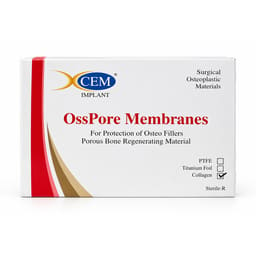
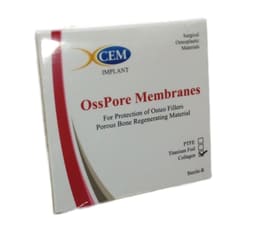
Porous bone regeneration membrane derived from bovine source to promote healing
Starting at₹ 1895
View Similar Products
Only 4 Left
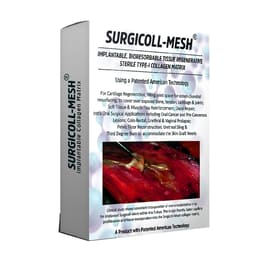
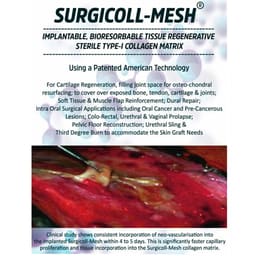
Implantable, bioresorbable Type-I collagen matrix designed for diverse surgical applications, facilitating tissue regeneration.
₹ 705₹ 903
21.93% Off
 7
7View Similar Products


★ 5.0
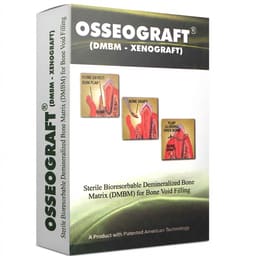
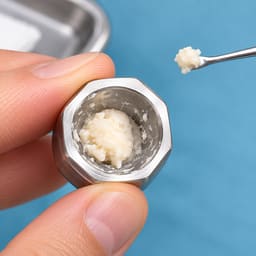
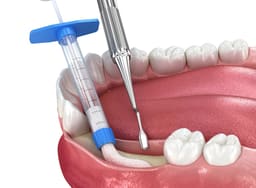
(8)Sterile Bioresorbable Demineralized Bone Matrix (DMBM-XENOGRAFT) for Bone void Filling.
₹ 2477₹ 3098
20.05% Off
25View Similar Products
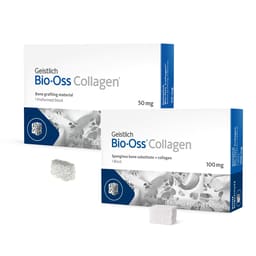
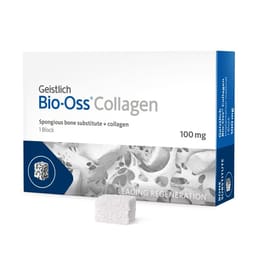
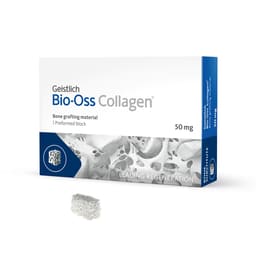
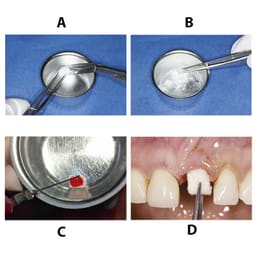
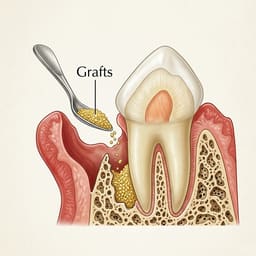
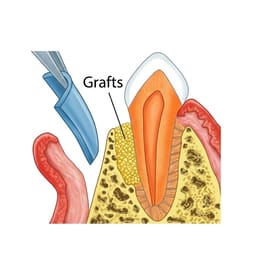
Used as a scaffold in dental procedures to promote healing and tissue regeneration
Starting at₹ 4233
View Similar Products
★ 4.5
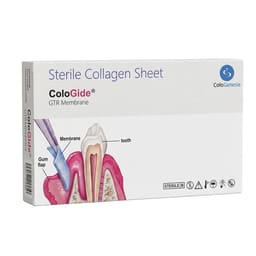
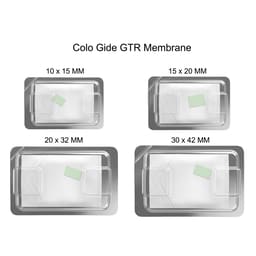
(2)CologGide GTR Membrane (Sterile Collagen Sheet)For guided Tissue Regeneration of bone damage
Starting at₹ 695
View Similar Products
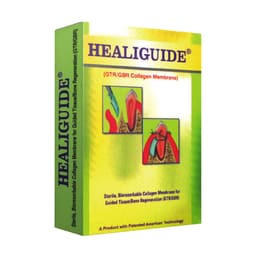
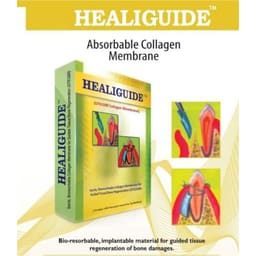
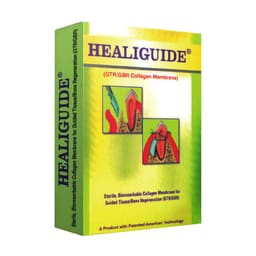
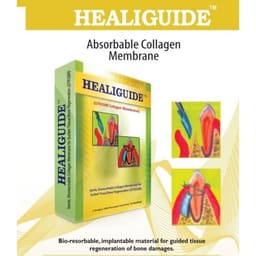
Bio-resorbable Type-I collagen GTR/GBR membrane derived from animal tissues
₹ 1486₹ 1859
20.06% Off
15View Similar Products

★ 5.0
(2)Bio-resorbable Type-I collagen GTR/GBR membrane derived from animal tissues
Starting at₹ 1486
View Similar Products
NOTIFY ME
Non - absorbable bone regeneration membrane containing polytetrafluoroethylene to promote tissue regeneration
Starting at₹ 6995
View Similar Products
Filters
Sort By
RecommendedDental Barrier Membranes — for GBR and GTR
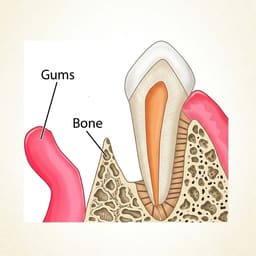
Gum heals faster than bone. Leave a bone defect open and soft tissue fills it first. The bone is then lost for good.
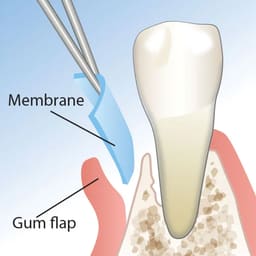
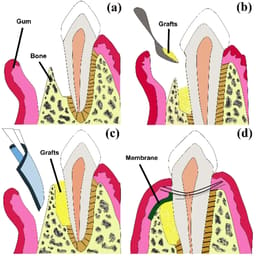
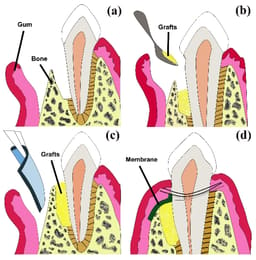
A barrier membrane prevents this. It is a thin sheet laid over the graft or defect. It holds the space open and keeps soft tissue out, so bone has time to grow. That is guided bone regeneration.
What does a barrier membrane do?
A membrane has three jobs:
- Excludes soft tissue. Gum epithelium and connective tissue cannot grow into the healing space.
- Contains the graft. Particles stay put instead of washing out.
- Maintains volume. The defect keeps its shape for the months bone needs.
Get the membrane right and the graft works. Get it wrong and the graft is usually wasted.
GBR or GTR — what is the difference?
They use the same barrier principle but target different tissue.
- GBR (guided bone regeneration) rebuilds bone. Used around implants, on ridges and in sockets. That is what this category covers.
- GTR (guided tissue regeneration) rebuilds the periodontal attachment — bone, periodontal ligament and cementum — around a natural tooth. Used for intrabony and furcation defects.
This category stocks both. For a periodontal (GTR) case, the Cologenesis ColoGide GTR Membrane is a sterile collagen sheet for guided tissue regeneration around a tooth.
Resorbable or non-resorbable?
This is the main decision. It is simple:
- Resorbable (collagen) — dissolves by itself. No second surgery. Soft and easy to drape. Best for routine GBR.
- Non-resorbable (PTFE) — does not dissolve. Needs removal later. Rigid, so it holds space far better. Best for large augmentations.
Resorbable collagen membranes
Made from Type-I collagen, usually bovine or porcine. They are soft, trim easily and sit neatly over a graft. The body breaks them down, so nothing is removed.
Typical uses: implant dehiscence, fenestration defects, socket preservation and sinus lateral windows.
The Advanced Biotech Healiguide is a bio-resorbable Type-I collagen barrier of this kind.
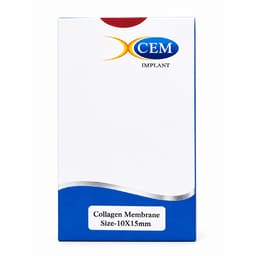
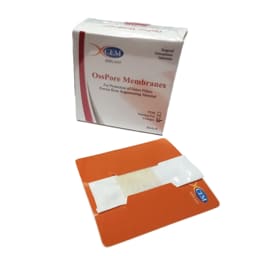
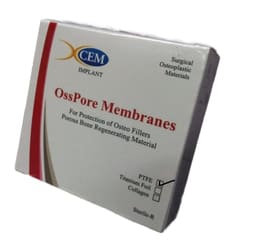
Collagen barriers come in several sheet sizes, so the membrane can be matched to the defect rather than cut down from an oversized one. The Xcem Osspore Collagen Membrane is a porous bovine-derived collagen barrier.
Non-resorbable PTFE membranes
PTFE does not dissolve. That means a second procedure to remove it. In return it gives rigidity.
A PTFE sheet holds its shape against soft-tissue pressure. That is what large horizontal and vertical ridge augmentations need. Titanium-reinforced versions are stiffer still.
The Xcem Osspore PTFE Membrane is a non-resorbable barrier for these demanding cases.
How long does a collagen membrane last?
It depends on cross-linking:
- Native, non-cross-linked collagen — about 4 to 8 weeks.
- Cross-linked or layered collagen — about 16 to 24 weeks.
One rule matters: the barrier must outlast the early bone-forming phase. If it dissolves too soon, soft tissue moves in and the graft is compromised.
When do you need a membrane?
Use one whenever soft tissue could collapse into the defect:
- GBR over an implant dehiscence or fenestration
- Lateral-window sinus lifts
- Horizontal and vertical ridge augmentation
- Larger extraction sockets with a missing wall
A contained, four-wall socket often heals well without one. The bony walls already hold the graft and keep the gum out.
How is a membrane placed?
- Trim it so it overlaps the defect by about 2–3 mm onto sound bone all round.
- Place it over the graft.
- Stabilise it with bone tacks, pins, sutures, or by tucking it under the periosteum.
- Close the flap without tension.
Tension causes the biggest complication: membrane exposure. An exposed membrane lets bacteria reach the graft and can cost you the bone. Our guide to managing exposed membranes covers what to do if it happens.
Membranes and bone grafts work together
A membrane rarely works alone. It covers a graft, and the graft gives bone something to grow into.
The particulate that goes underneath — xenograft, synthetic or demineralised matrix — sits in the bone grafts range. The two are usually ordered together for the same case.
Why buy membranes from Dentalkart
A membrane is a small sterile sheet carrying a large share of the result. What matters is that it arrives intact, in date, and in the size the defect needs.
Every membrane here lists its material, whether it resorbs, and its sheet dimensions. So a surgeon can pick the right barrier before the flap is raised — and order it alongside the graft, tacks and sutures the same case will use.
Frequently Asked Questions (FAQs):
What is a barrier membrane used for in dentistry?
A barrier membrane is used to keep gum tissue out of a bone defect while bone regenerates. Gum heals faster than bone, so without a barrier the soft tissue fills the space first. The membrane blocks it, contains the graft underneath and holds the volume open. This is the basis of guided bone regeneration (GBR).
What is the difference between GBR and GTR membranes?
Both use the same barrier principle but target different tissue. A GBR membrane rebuilds bone — around implants, on ridges and in sockets. A GTR membrane rebuilds the periodontal attachment around a natural tooth, meaning bone, periodontal ligament and cementum, in intrabony and furcation defects. The indication decides which you need.
Resorbable or non-resorbable membrane — which should I use?
Use a resorbable collagen membrane for most routine GBR: implant dehiscence, fenestration, socket preservation and sinus windows. It dissolves on its own, so there is no second surgery. Choose a non-resorbable PTFE or titanium-reinforced membrane for large horizontal or vertical ridge augmentation, where rigid space maintenance matters more.
How long does a collagen membrane take to resorb?
A collagen membrane resorbs in roughly 4 to 24 weeks, depending on cross-linking. Native, non-cross-linked collagen breaks down in about 4 to 8 weeks. Cross-linked or layered membranes last about 16 to 24 weeks. The barrier must outlast the early bone-formation phase, or soft tissue will invade the healing space.
What happens if a membrane becomes exposed?
Exposure is the most common complication and needs prompt attention. An exposed membrane lets bacteria reach the graft, risking infection and loss of the regenerated bone. Prevention is tension-free primary closure and secure fixation. If exposure does occur, management depends on the membrane type and how large the exposure is.