





Facebow
A dental facebow is an instrument that records the position of the maxilla relative to the temporomandibular hinge axis, so the upper cast can be mounted on an articulator in the patient's true orientation. It is used in full-mouth rehabilitation and complex prosthodontics, and comes as spring (arbitrary) facebows, kinematic facebows and dentofacial analysers.
 Recommended
 Price- High to LowPrice- Low to High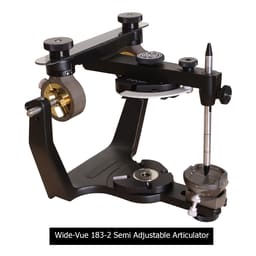
 1.1k
1.1k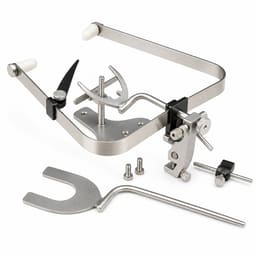
 634
634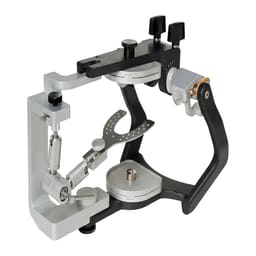 639
639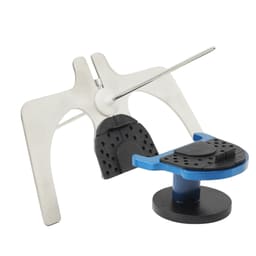 130
130Dental Facebow
An articulator can only reproduce a patient's jaw movement if the casts are mounted the way the jaws actually sit. The facebow is what makes that possible — it captures the relationship between the upper arch and the hinge axis of the jaw, then carries it to the bench so the maxillary cast is mounted at the correct angle and distance from the condyles.
Without it, the upper cast is mounted by guesswork, and every occlusal record built on it inherits the error. That is why it is the starting instrument of accurate full-mouth and complex restorative work, not an optional extra.
How it records the relationship
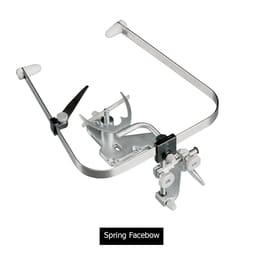
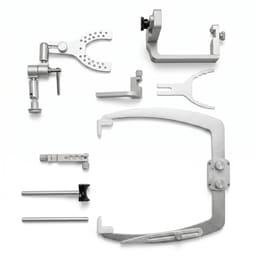
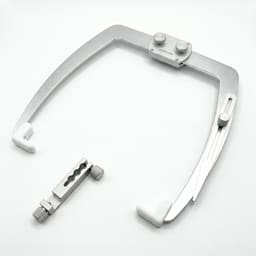
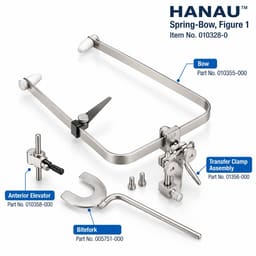
The instrument has a U-shaped frame that reaches back to reference points near each temporomandibular joint, and a bite fork that indexes into the maxillary teeth. Locked together, the frame holds the maxilla's position in space; transferred to the articulator, it reproduces that position on the bench.
A spring facebow is the common form, using an averaged (arbitrary) hinge-axis position that is accurate enough for the great majority of restorative cases.
Types of facebow
These instruments differ in how precisely they locate the hinge axis and in what they connect to.
Arbitrary and kinematic
The arbitrary type uses an average hinge-axis point, quick to apply and sufficient for routine full-mouth work. The kinematic type locates the patient's true hinge axis individually, used where the highest precision is needed — extensive rehabilitation or cases with altered vertical dimension. Most clinics work with the arbitrary type.
Dentofacial analysers
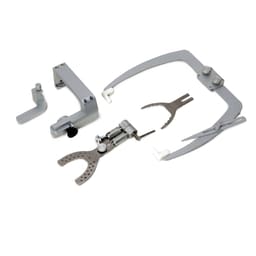
Some systems extend it into a dentofacial analyser, which also records the position of the maxilla against facial and horizontal reference planes for aesthetic mounting. The Julldent dentofacial analyser is used where the smile line and facial reference matter to the mounting.
Matching it to the articulator
A facebow only helps if it fits the articulator the case is mounted on. The transfer jig, the mounting mechanism and the condylar reference all have to correspond between the two.
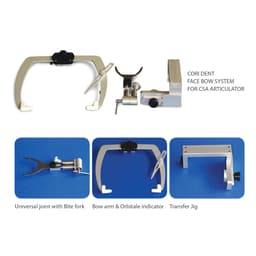
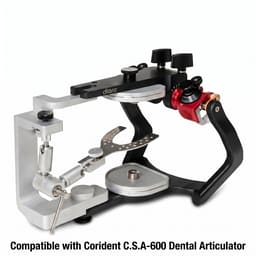
Some facebows are built to a specific articulator system — the Corident facebow for the CSA-600 articulator is matched to that system — while bow-and-articulator sets are supplied together so the pairing is guaranteed. Confirm compatibility before buying either instrument on its own.
Choosing and buying
A few points decide which type a practice or lab needs.
- Match it to your articulator. The bow and articulator must share a transfer and mounting system, so buy for the articulator you already use.
- Arbitrary suits most work; reserve kinematic for the most demanding rehabilitation.
- Consider a dentofacial analyser if aesthetic mounting against facial planes matters to your cases.
- Check whether an articulator is included — some listings bundle the two, others supply the facebow alone.
The articulators, casts and mounting materials these work with sit in the wider prosthodontics range.
Frequently Asked Questions (FAQs):
What is a dental facebow used for?
A dental facebow records the position of the maxilla relative to the temporomandibular hinge axis, so the upper cast can be transferred to an articulator in the patient's true orientation. This lets the articulator reproduce jaw relationships accurately, which is essential for full-mouth rehabilitation, complex crown and bridge work and other cases where occlusion must be precise.
What is the difference between an arbitrary and a kinematic facebow?
Accuracy of the hinge axis. An arbitrary facebow uses an averaged hinge-axis position, which is quick and sufficient for most restorative work. A kinematic facebow locates the patient's true individual hinge axis, used for the most demanding cases such as extensive rehabilitation or altered vertical dimension. Most routine work is done with the arbitrary type.
Do I need a facebow for every case?
No. A facebow is used where the maxillary cast must be mounted accurately in relation to the jaw joints — full-mouth rehabilitation, complex fixed prosthodontics and cases changing the occlusion. Simple single-unit work often does not require one. It becomes important as the number of units and the complexity of the occlusal scheme increase.
Does a facebow fit any articulator?
No. A facebow must match the articulator it transfers to — the mounting mechanism, transfer jig and condylar reference have to correspond. Some facebows are built for a specific articulator system, and many are supplied as a facebow-and-articulator set to guarantee the fit. Always confirm compatibility before buying either instrument separately.
What is a dentofacial analyser?
A dentofacial analyser is a facebow system that also records the maxilla's position against facial and horizontal reference planes, not just the hinge axis. This supports aesthetic mounting, where the smile line and facial midline guide how the case is set up. It is chosen where the appearance of the final restoration depends on accurate facial reference.