


Extraction Forceps
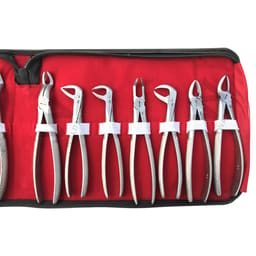
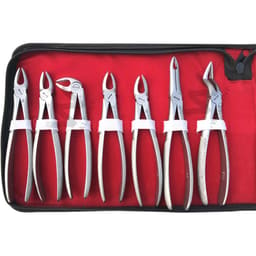
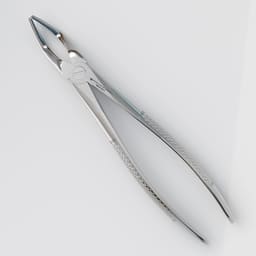
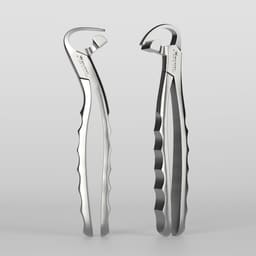
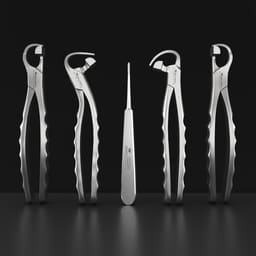
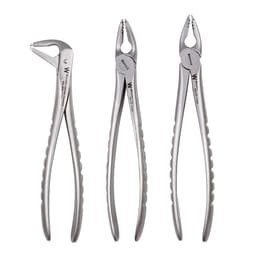
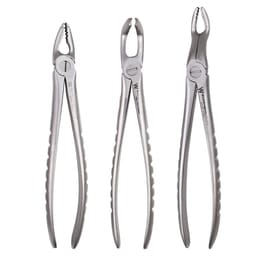
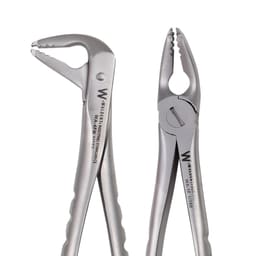
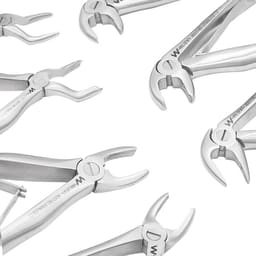
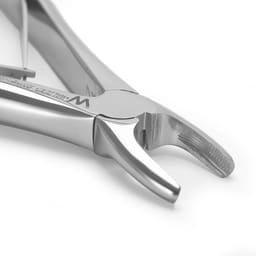
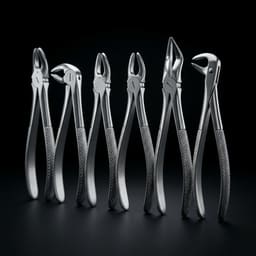
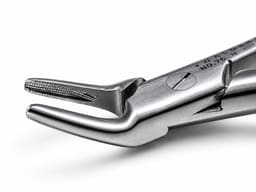
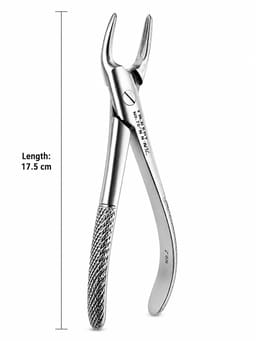
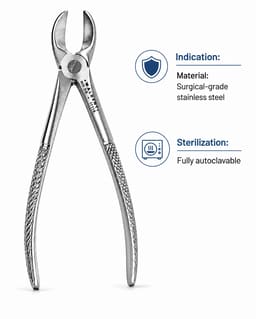
An extraction forceps is a dental plier, from Waldent, GDC, and Oracraft, that grips a tooth at the neck and lifts it from its socket. Each pattern is beaked for one tooth in one arch and carries a number mapping to that position — upper or lower, anterior, premolar, molar, or root. American, English, physics, and atraumatic designs are stocked.
 Recommended
 Price- High to LowPrice- Low to High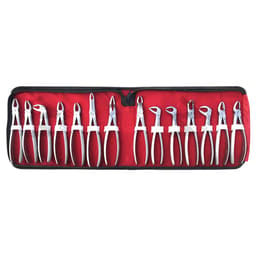

 200
200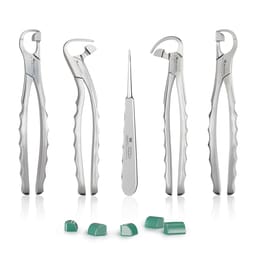
 850
850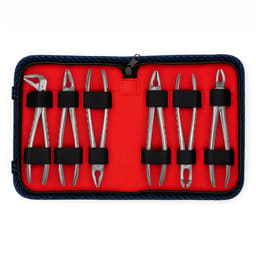
Only 1 Left
465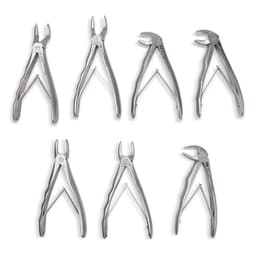


Only 5 Left
385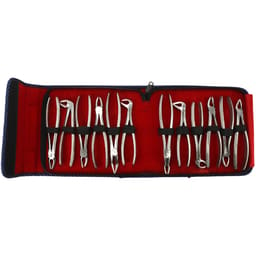
 415
415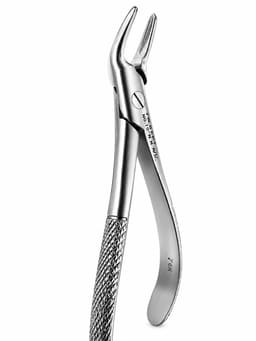
Only 4 Left
35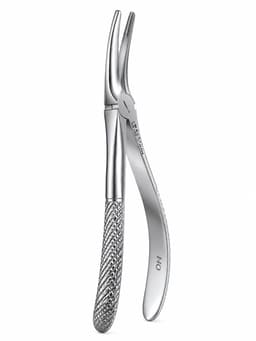
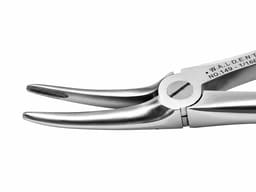
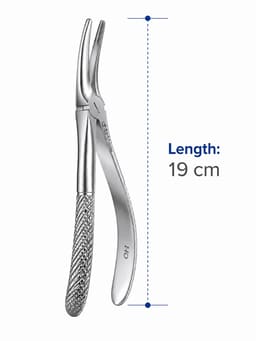
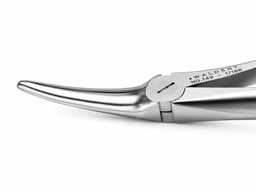
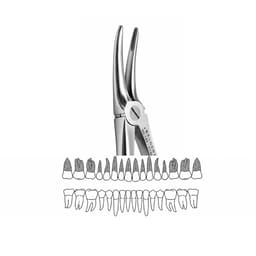
Only 3 Left
35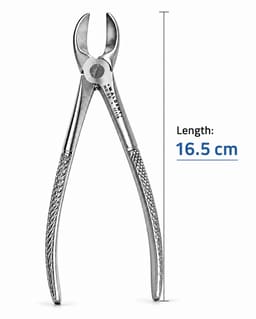
Only 3 Left
35Extraction Forceps
A forceps grips the tooth at the neck, below the crown, and the operator uses a firm, controlled movement to expand the socket and lift the tooth out. For that grip to be secure, the beaks have to match the tooth: an upper incisor, a lower molar, and a retained root each need a different beak shape and angle. That is why extraction forceps come as a large family of patterns rather than a single tool, and why choosing the right number for the tooth in front of you is the whole skill of ordering them. This page sits under the wider extraction instruments range, focused on the forceps themselves.
The forceps numbering system
Forceps are identified by number, and the number encodes the tooth and arch:
- A fixed pattern — each number, such as 55 or 151, always denotes the same beak shape, so the number is a reliable shorthand between clinician and supplier.
- Arch and tooth — the number tells you the jaw and the tooth group it is built for, from anterior through premolar and molar to root patterns.
- Left and right — molar forceps are often paired, one number for the right side and its mirror for the left, matched to the molar's root layout.
Learning a handful of numbers for the teeth you extract most makes ordering quick and accurate. The tooth is anaesthetised first, with an agent from the local anaesthesia range, before a forceps touches it.
By arch and by tooth
The pattern follows the anatomy of the tooth being removed:
- Upper anterior — fine, near-straight beaks for incisors and canines with single conical roots.
- Upper premolar and molar — beaks angled and, for molars, pointed to engage the buccal root furcation.
- Lower anterior and premolar — right-angled beaks that reach down into the lower arch.
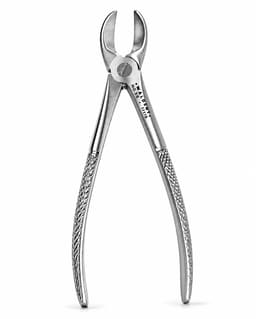
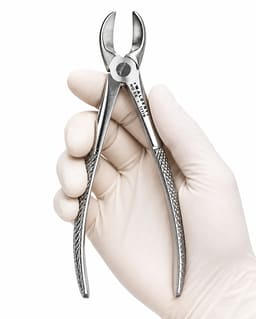
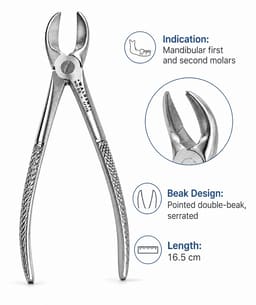
- Lower molar — beaks with two points to straddle the twin roots of a lower molar.
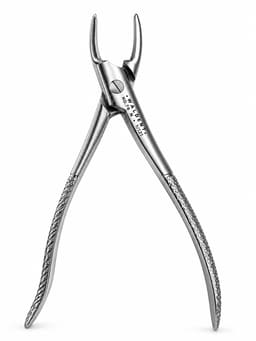
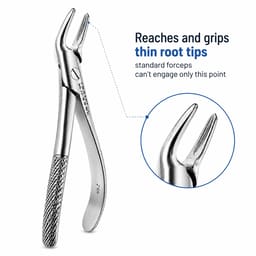
- Roots and fragments — narrow, fine-beaked root forceps for retained roots and broken pieces.
Each shape is built to seat on that tooth's crown and roots, which is what turns a squeeze into a controlled delivery.
Pattern styles: American, English, physics, atraumatic
Beyond the tooth number, forceps differ by design school and mechanism:
- American pattern — the numbering and beak style common in the GDC American range, widely used and taught.
- English pattern — a hinge and handle style favoured in some schools, with the same tooth-specific beaks.
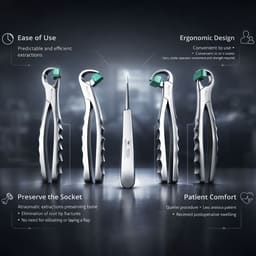
- Physics forceps — a first-class-lever design with a single beak and a bumper that cradles the opposite side, aimed at atraumatic delivery.
- Atraumatic forceps — beaks and technique intended to preserve the socket wall for later implant or graft work.
The pattern school is a matter of training and preference; the physics and atraumatic types are chosen when the socket must be kept intact for a later implant or graft, the materials for which sit in the bone grafts range.
Kits and build
Because a forceps drives real force into a tooth, both how it is made and how it is bought matter:
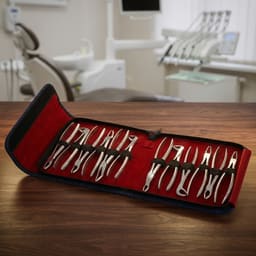
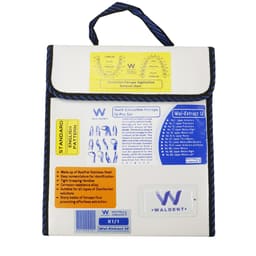
- Kits — a 12-piece set or a physics-forceps set covers the common positions in one purchase, the usual way to equip a new surgery.
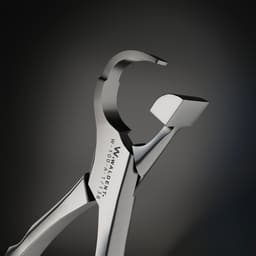
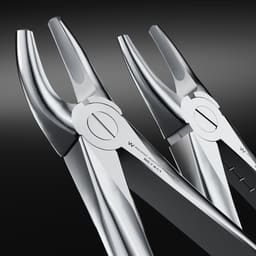
- Beak and joint — beaks that grip without crushing and a firm box joint that keeps them aligned under load.
- Handles — serrated or ergonomic handles that hold in a wet glove through a firm extraction.
A well-made forceps grips the same way for years; a sprung joint or a rounded beak is when a pattern is retired and replaced.
Buy extraction forceps at Dentalkart
Ordering forceps comes down to the teeth a practice removes most — a few numbered patterns for those positions, a pedo set if it treats children, and a physics or atraumatic design where a socket has to be spared. The full span is here, from single Waldent, GDC, and Oracraft patterns to 12-piece and physics kits. Each product page carries the pattern number, the tooth it fits, and a live stock line.
Frequently Asked Questions (FAQs):
How do I choose the right extraction forceps?
By the tooth: identify the arch (upper or lower) and the tooth group (anterior, premolar, molar, or root), then pick the numbered pattern built for it. Molars also need the correct side, left or right. If you extract certain teeth often, learn those few numbers; for a broad setup, a kit covers the common positions.
What does the number on a forceps mean?
The number is a set code for one beak shape and the tooth it suits. A given number always denotes the same pattern, so 55 or 151 points to one specific design every time. The number tells the arch, the tooth group, and often the side, which lets a clinician and supplier refer to the exact forceps without describing it.
What are physics forceps?
Physics forceps use a first-class-lever design: one beak grips the tooth while a bumper rests on the opposite bone, and a small rotational movement eases the tooth out with less force. They are chosen for atraumatic extractions that protect the surrounding bone, which suits sites planned for an implant or a graft.
American or English pattern — does it matter?
Both remove teeth effectively; the difference is the handle and hinge style and the tradition a clinician trained in. The American pattern, common in the GDC range here, is widely taught and numbered; the English pattern suits those used to it. Choose by what your hand is comfortable with, since the tooth-specific beaks are the part that counts.
Are there forceps for baby teeth?
Yes — pedo forceps are made smaller so their beaks close on a milk tooth and its fine roots without swamping them, sold singly or as a pedo kit. A full-size forceps over-spans a primary tooth and tends to slip, so any practice seeing children keeps the smaller patterns to hand.