





Standard Screws
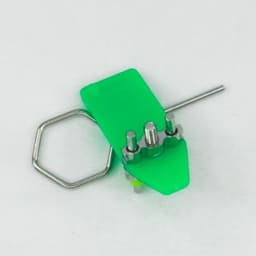
Standard orthodontic screws cover the workhorse jackscrew and mini-screw components used in palatal expander appliances, lingual arches and removable orthodontic plates — 14 mm range maxillary jackscrews (Modern Ortho SES-002) for rapid palatal expansion (RPE), plus mini-screws and TADs (temporary anchorage devices) for skeletal anchorage in complex cases. Dentalkart stocks Modern Ortho orthodontic screws.
 Recommended
 Price- High to LowPrice- Low to High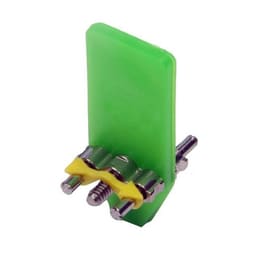

 10
10What are Standard Orthodontic Screws?
Standard orthodontic screws are the mechanical screw components used to deliver controlled forces in fixed and removable orthodontic appliances — including jackscrews for palatal and lingual arch expansion appliances, mini-screws and temporary anchorage devices (TADs) for skeletal anchorage during complex tooth movement, and specialty screws for differential expansion and habit-correction appliances. Calibrated 0.25 mm-per-turn activation provides predictable force application, with the screw orientation indicator ensuring correct turn-direction during clinician-administered or patient-administered activation routines across the typical 6 to 18 month orthodontic treatment span.
Types of Standard Orthodontic Screws
Maxillary & Mandibular Jackscrews (Expansion Screws)
Jackscrews are the most common standard orthodontic screw type — used in palatal expander appliances and lingual arches to deliver transverse arch expansion. Modern Ortho Standard Expansion Screw For Upper 14 mm (SES-002) is the dedicated maxillary jackscrew in this category. For the broader dedicated category see Expansion Screws.
Mini-Screws & Temporary Anchorage Devices (TADs)
Mini-screws (also called TADs — temporary anchorage devices) are small titanium screws placed into the alveolar bone or palate to provide absolute skeletal anchorage during complex tooth movement — useful for molar distalisation, anterior retraction without anchorage loss, impacted tooth traction, and asymmetric tooth movement cases where conventional bracket-only mechanics would lose anchorage. TADs are placed surgically and removed at end of active treatment.
Specialty Screws (Differential, Fan, Three-Way Expansion)
Specialty orthodontic screws extend beyond standard parallel-expansion jackscrews — fan-shaped screws deliver more anterior than posterior expansion (useful in maxillary crossbite with normal molar relation), three-way screws combine transverse and sagittal expansion in a single appliance, and differential screws give anterior-only or posterior-only expansion for cases where only a segment of the arch needs widening.
Activation, Force Application & Removal
Standard orthodontic screws are activated using a manufacturer-supplied activation key — typically a small wire or pointed instrument inserted into the screw body hole. Each quarter-turn advances the screw by 0.25 mm. The activation key turn-direction indicator on the screw body ensures the activation force is applied in the correct direction. Placement of screws into appliances requires precise embedding in the acrylic baseplate during fabrication, often guided by Orthodontic Instruments for screw-handling and placement.
Choosing Standard Screws by Clinical Indication
Choose maxillary jackscrews (Modern Ortho 14 mm SES-002) for typical rapid palatal expansion (RPE) and slow expansion protocols in mixed-dentition cases. Choose mini-screws/TADs for adult complex anchorage cases requiring skeletal-rather-than-dental anchorage. Choose specialty differential or fan-shaped screws for cases needing selective arch-segment expansion. Match screw size to appliance acrylic capacity and patient age-stage carefully.
When Are Standard Orthodontic Screws Used?
Standard orthodontic screws are used during palatal expansion treatment for maxillary transverse deficiency, during arch development cases in mixed-dentition patients, during complex anchorage-critical cases where TADs are needed for absolute skeletal anchorage, during habit-correction appliance fabrication combining expansion with thumb-sucking or tongue-thrust correction, during sagittal arch development with three-way screws, and during retention-phase appliance maintenance where mild arch adjustment may be required during the post-treatment stability period.
How to Choose Standard Orthodontic Screws
Match screw type to clinical purpose first — jackscrews for arch expansion in palatal/lingual appliances, mini-screws/TADs for skeletal anchorage in complex anchorage-critical cases, specialty screws for differential expansion patterns. Match activation range to the planned expansion target — 14 mm maxillary jackscrews cover typical RPE protocols, smaller-range screws suit mandibular slow expansion. Verify screw orientation indicator during fabrication so activation direction matches the desired expansion direction. Stock common sizes for clinic inventory replenishment.
Top Brands of Standard Orthodontic Screws at Dentalkart
Dentalkart stocks Modern Ortho Standard Expansion Screw For Upper (14 mm SES-002) as the primary maxillary jackscrew offering — a long-established Indian orthodontic appliance component manufacturer with reliable jackscrew geometry and activation key fit. Modern Ortho's expansion screws integrate cleanly into Hyrax-style fixed expanders, Haas-style fixed expanders, and removable maxillary expander appliance acrylic baseplates Intraoral & Extraoral Appliances.
Why Buy Standard Orthodontic Screws from Dentalkart?
Dentalkart supplies clinic-grade standard orthodontic screws at distributor pricing, trusted by 50,000+ dentists across 110000+ Indian pincodes. Authentic brand sourcing, calibrated 0.25 mm-per-turn activation precision, GST invoicing, COD on eligible orders and fast pan-India shipping for orthodontic appliance fabrication labs and chair-side fitting clinics. For broader appliance-component needs, explore Bondable Accessories.
Frequently Asked Questions (FAQs):
What are standard orthodontic screws used for?
Standard orthodontic screws are used to deliver controlled mechanical forces in fixed and removable orthodontic appliances — including arch expansion using jackscrews in palatal expander appliances, skeletal anchorage using mini-screws and temporary anchorage devices (TADs) during complex tooth movement, and differential arch expansion using specialty fan-shaped or three-way screws for selected arch-segment expansion patterns.
What is the difference between an expansion screw and a mini-screw/TAD?
The difference between an expansion screw and a mini-screw/TAD is function and placement — an expansion screw (jackscrew) is embedded into appliance acrylic and uses its mechanical activation to push apart two halves of the appliance for arch expansion, while a mini-screw/TAD is a small titanium screw surgically placed directly into alveolar bone or palate to provide absolute skeletal anchorage during complex tooth movement.
How is an orthodontic screw activated?
An orthodontic screw is activated using the manufacturer-supplied activation key inserted into the screw body hole. Each quarter-turn advances the screw by 0.25 mm. The arrow indicator on the screw body shows the correct turn direction. The parent, patient or clinician turns the key at the prescribed schedule — typically 0.5 mm per day for RPE protocols or 0.25 mm every other day for slow expansion.
Are standard screws and expansion screws the same thing?
Standard screws and expansion screws overlap but are not identical — "expansion screws" specifically refers to jackscrew components used for arch expansion in palatal expander appliances, while "standard orthodontic screws" is a broader category that includes expansion jackscrews plus mini-screws, TADs, specialty differential screws and three-way screws. The Modern Ortho 14 mm maxillary screw stocked here is both — a standard screw that's also specifically an expansion screw.
What does TAD mean in orthodontics?
TAD in orthodontics stands for Temporary Anchorage Device — a small titanium mini-screw surgically placed into alveolar bone or palate to provide absolute skeletal anchorage during complex orthodontic tooth movement cases. TADs are used when conventional bracket-only mechanics would lose anchorage (molar distalisation, anterior retraction in adults, asymmetric movements) and are removed surgically at the end of active treatment.