

Dental Loupes
Dental loupes are wearable magnifiers that enlarge the working field two-and-a-half to six times, letting a dentist see caries margins, canal orifices and restoration edges the naked eye misses at arm's length. Worn on a frame or headband and usually paired with an LED headlight, they sharpen detail and ease the neck-and-back strain of leaning in.
 Recommended
 Price- High to LowPrice- Low to High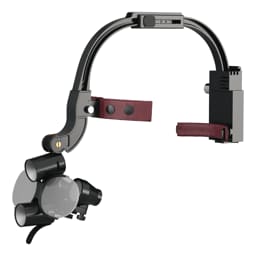
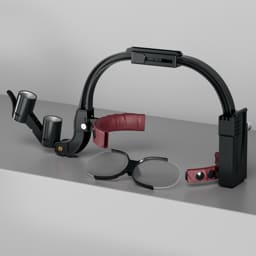
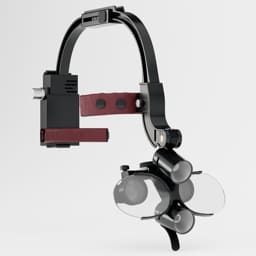
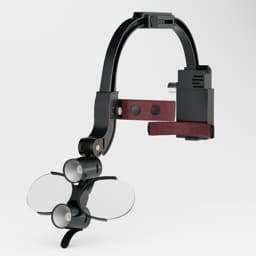
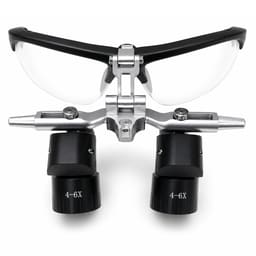
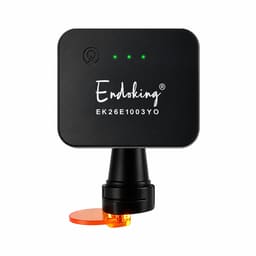
 1.2k
1.2k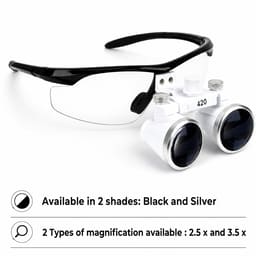
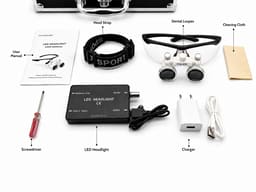
 1k
1k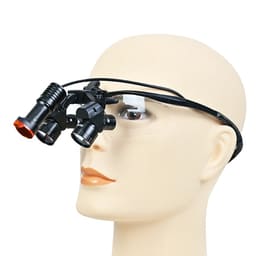
Only 2 Left
150
 35
35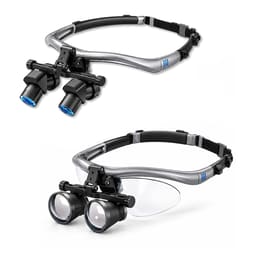

Dental Loupes — Seeing More, Sitting Straighter
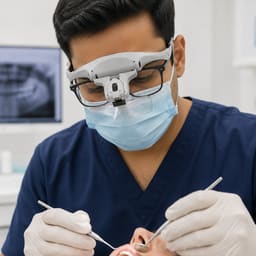
Much of dentistry happens at a scale the unaided eye cannot resolve from a normal working distance — a hairline margin, a hidden canal orifice, the edge where a restoration meets tooth. Dental loupes bring that detail into view by magnifying the field 2.5x to 6x, and in doing so they change how the operator sits: instead of stooping closer to see, the dentist stays upright and lets the optics do the reaching. Better vision and better posture come together, which is why loupes are one of the first upgrades many clinicians make.
What magnification adds
The obvious gain is detail — caries at the margin, a cracked cusp, a second canal — spotted sooner and treated more precisely. The quieter gain is ergonomic. Loupes are built to a fixed working distance and a downward declination angle, so the eyes drop to the field while the head and back stay neutral, sparing the neck and shoulders the cumulative strain that ends many dental careers early.
The loupes and the headlight
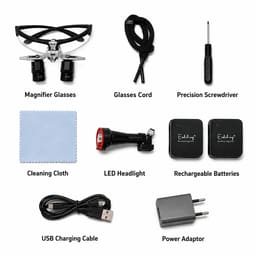
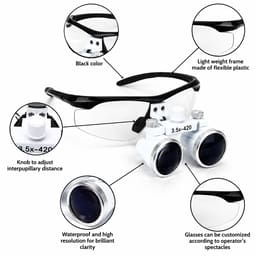
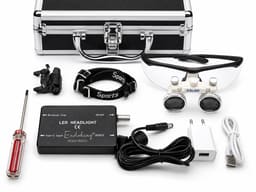
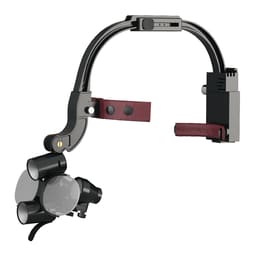
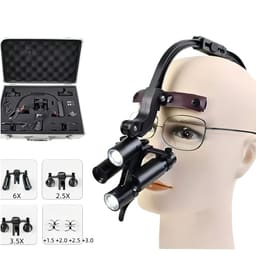
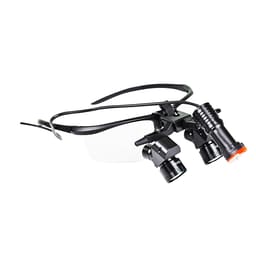
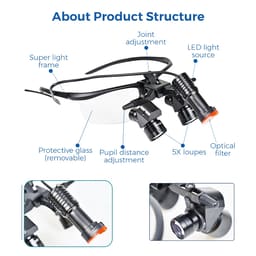
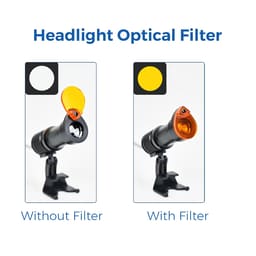
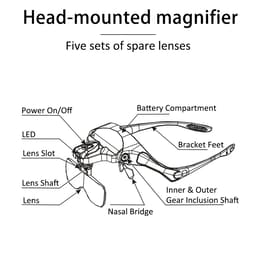
A loupe is only as good as the light reaching the field it magnifies. A magnified view gathers less light, so most loupes are used with a coaxial LED headlight that throws a shadow-free beam straight down the line of sight. The Jinguang Dental Loupes with LED pair the optics and a light in one kit for that reason.
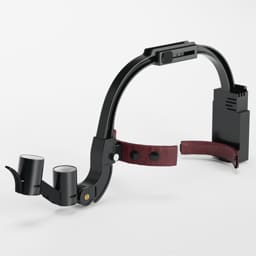
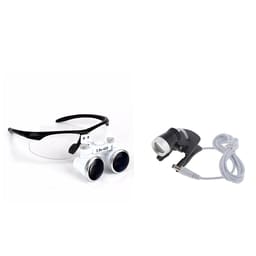
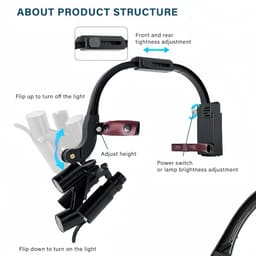
Some clinicians prefer a separate head-mounted light they can position independently or move between frames. The Waldent Head Mounted Double Light is that kind of standalone magnifying headlight.
How to choose: magnification, working distance, declination
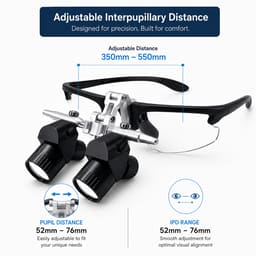
Three numbers decide the fit. Magnification sets detail against field width — higher power shows more but sees a smaller area. Working distance must match how far your eyes naturally sit from the mouth, so the image is sharp without leaning. Declination, the downward tilt of the oculars, keeps the head upright. Getting all three right is what makes a pair usable for a full day.
Galilean or prismatic
The optics come in two designs. Galilean loupes use a simple two-lens telescope — light, affordable and well suited to lower magnifications up to about 3.5x. Prismatic loupes route light through prisms for a wider, brighter field at 4x and beyond, at the cost of extra weight and price. Lower power leans Galilean; serious high magnification calls for prismatic.
The brands and the wider kit
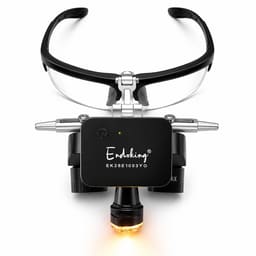
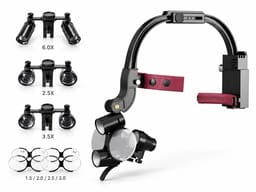
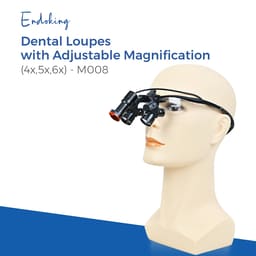
EndoKing builds adjustable-magnification surgical loupes aimed at endodontic and surgical detail; the EndoKing range collects its optics and lights.
Loupes sit within a clinic's imaging and visibility kit alongside operating lights and cameras, all of which are part of the broader dental equipment range.
Picking your first pair
Choosing a first set is mostly about not over-reaching on magnification before the eyes adapt. Our guide to selecting dental loupes walks through magnification, working distance and declination and how they translate into a comfortable, long-wearable pair.
Why buy dental loupes from Dentalkart
Loupes are a personal, long-term instrument, and buying them through Dentalkart puts the optics and a matched LED headlight in one order with the specification spelled out — magnification, frame, working distance and light — so a clinician can judge the fit before committing. They arrive from the same catalogue as the rest of a practice's equipment, backed by the maker's warranty.
Frequently Asked Questions (FAQs):
What magnification do dental loupes come in, and what is each level for?
Dental loupes come in magnifications from about 2.5x to 6x, and the level suits the task. Lower powers around 2.5–3.5x give a wide field for general restorative and hygiene work with a forgiving depth of focus; higher 4.5–6x powers narrow the field but resolve fine detail for endodontics, crown margins and surgery. Most dentists begin low and move up.
Galilean or prismatic dental loupes — which is better?
Galilean and prismatic loupes differ in optics and power. Galilean loupes use a simple two-lens telescope, are lighter and cheaper, and suit lower magnifications up to about 3.5x. Prismatic loupes fold the light path through prisms for a wider, brighter field at 4x and above, at more weight and cost. Lower power favours Galilean; high magnification needs prismatic.
What magnification should a dentist start with?
A dentist new to loupes should usually start around 2.5x to 3.5x. That range gives a real jump in detail while keeping a wide field and a forgiving depth of focus, so the head can move without losing the image — the hardest part of adapting. Higher powers reward experience but demand a steadier position, better suited to a later upgrade.
How are dental loupes matched to the right working distance?
Dental loupes are matched to working distance by measuring how far the eyes sit from the patient's mouth in an upright posture — commonly 30–45 cm — so the image is sharp without hunching. The declination angle, how far the oculars tilt down, is set alongside it so the eyes drop, not the neck. A correct fit is what protects posture.
Do dental loupes here include the LED headlight and a warranty?
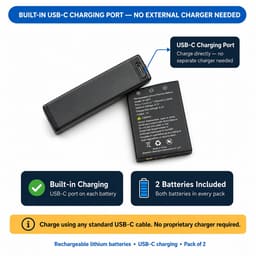
Many dental loupes here are sold with a matched LED headlight, either bundled or free, and each listing states exactly what the box contains — magnification, frame type, headlight and battery. The optics carry the maker's warranty, and buying through Dentalkart means the pair is the manufacturer's own, so the specification on the page is what arrives.