

Sinus lift instruments
Sinus lift instruments are surgical tools that raise the maxillary sinus floor and make room for a bone graft. This lets an implant be placed in a back upper jaw that has too little bone height. They include osteotomes, hydraulic crestal kits, lateral-window kits and bone scrapers. Which set you need depends on whether the lift uses a crestal or lateral approach.
 Recommended
 Price- High to LowPrice- Low to High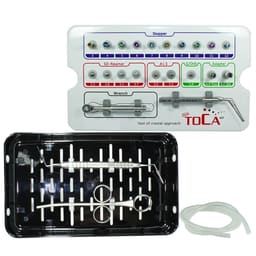
 1.8k
1.8k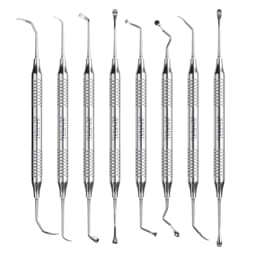
 360
360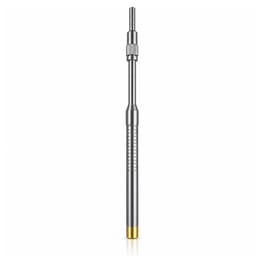
 15
15

Only 3 Left
34
Only 4 Left
34
Only 5 Left
34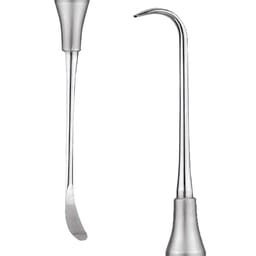
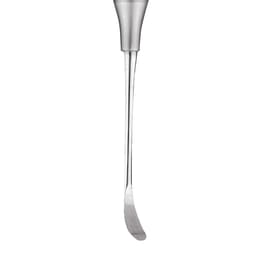
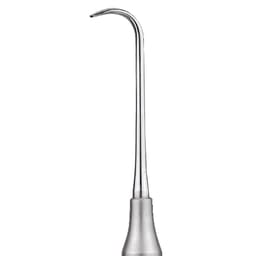
Only 1 Left
34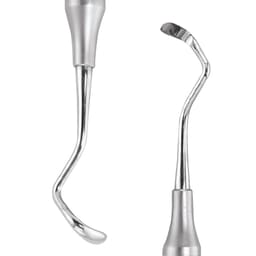
Only 4 Left
34Sinus Lift Instruments
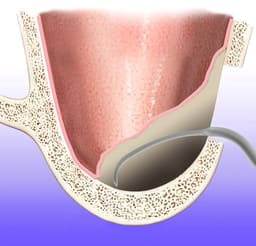
The back of the upper jaw is the hardest place to put an implant. The maxillary sinus sits right above it. Once teeth are lost, the bone there shrinks, and there is often too little height left to hold a fixture. A sinus lift fixes this. It gently raises the sinus floor membrane and packs graft material underneath. The instruments in this category are the tools that do it.
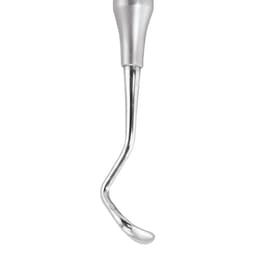
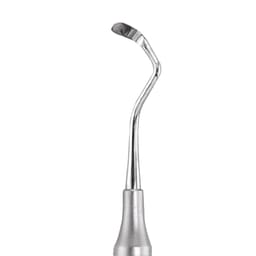
Everything depends on lifting a thin membrane without tearing it. So these are precision surgical tools, not general ones. Tapered osteotomes push up the floor. Hydraulic or balloon systems raise the membrane evenly. Curettes free it from the bone, and scrapers collect the graft. Each tool handles one step of a careful sequence.
The two approaches: crestal and lateral
A sinus lift is done one of two ways, and the instruments depend on which.
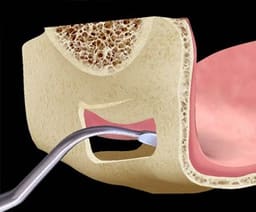
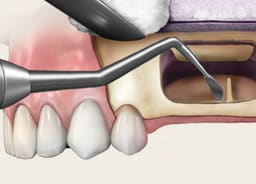
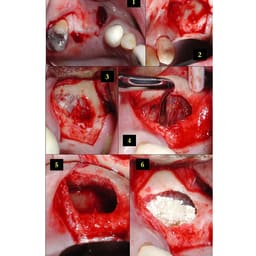
The crestal (transalveolar) approach works through the implant site itself. The floor is tapped or hydraulically pushed upward. It is less invasive and suits lifts of only a few millimetres. The lateral window approach opens a small window in the outer sinus wall and raises the membrane directly. It is used when a larger graft is needed. Both are stages of implant surgery, and the wider surgical range sits in implantology.
Osteotomes and crestal kits
For the crestal route, the main instruments are osteotomes and their hydraulic versions.
Osteotomes
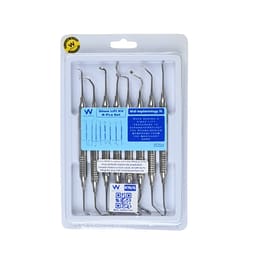
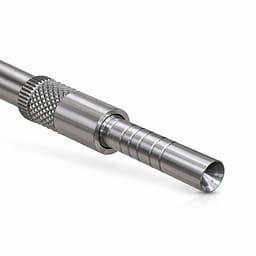
Osteotomes are tapered, graduated instruments. They are tapped through the osteotomy to lift the sinus floor in small, controlled steps, compacting bone as they go. A GDC sinus lifting instrument set of 8 gives the full graded range in one pouch.
Hydraulic crestal kits
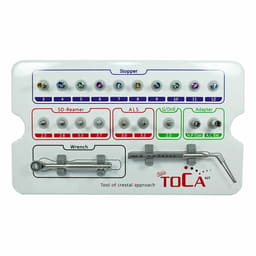
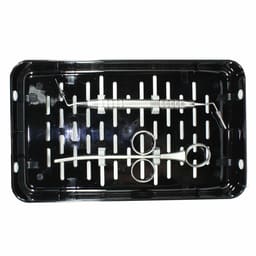
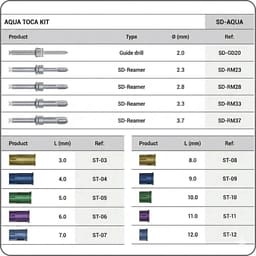
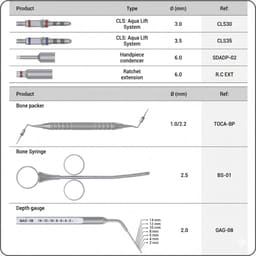
A gentler option uses water pressure instead of tapping. A fluid cushion raises the membrane evenly, which lowers the risk of a tear. A Surgident Aqua Toca hydraulic kit is a crestal system of this kind.
Lateral-window kits and bone scrapers
When the case calls for the lateral approach, or for harvesting the patient's own bone, a different set is used.
Lateral-window kits carry the drills and membrane elevators needed to open the outer wall and lift the membrane through it. Some also include magnetic or piezo hardware. An MCTBio magnetic lateral approach kit is built for this window technique. Bone scrapers do a separate job: they shave bone chips from a donor site to mix with, or replace, commercial graft.
Choosing sinus lift instruments
Start with the approach the case needs. Small crestal lifts need only a graded osteotome set or a hydraulic crestal kit. Larger defects need a lateral-window kit. Then decide whether a full kit or individual instruments suit your caseload, and add a bone scraper if the patient's own bone is part of the plan.
The graft packed under the lifted membrane — xenograft, synthetic or allograft — sits in the bone grafts range. It is chosen alongside the instruments for the procedure.
Frequently Asked Questions (FAQs):
What are sinus lift instruments used for?
They raise the maxillary sinus floor and create space for a bone graft. This lets a dental implant be placed in a back upper jaw that lacks bone height. The set includes osteotomes, hydraulic and lateral-window kits, membrane elevators and bone scrapers. Each tool handles one step in lifting the sinus membrane without tearing it.
What is the difference between a crestal and a lateral sinus lift?
It comes down to the route to the sinus. A crestal (transalveolar) lift works through the implant site, tapping or hydraulically pushing the floor up a few millimetres. It is less invasive. A lateral window lift opens a small window in the outer sinus wall and raises the membrane directly, and it is used when a larger graft is needed. Each uses a different instrument set.
What are osteotomes used for in a sinus lift?
Osteotomes are tapered, graduated instruments. They are tapped through the implant osteotomy to lift the sinus floor in small, controlled steps, and they compact bone as they advance. A graded set covers the sequence of diameters a crestal lift works through, which is why sinus osteotomes are usually bought as a matched set.
What is a hydraulic sinus lift kit?
A hydraulic sinus lift kit raises the sinus membrane with controlled water pressure instead of tapping. A fluid cushion lifts the membrane evenly through the crestal osteotomy. This lowers the risk of tearing the delicate lining. These crestal kits are preferred for gentle lifts where protecting the membrane matters most.
Do I need a bone graft as well as the instruments?
Usually yes. A sinus lift creates a space, and that space is filled with graft material to form new bone for the implant. The graft can be xenograft, synthetic, allograft or the patient's own bone taken with a scraper. The instruments raise the membrane and prepare the site; the graft is what rebuilds the bone. So both are planned together.