

Typodonts
Typodonts are the replaceable teeth that seat into a dental training jaw set, used by students to practise preparations, restorations and extractions. They are sold individually or as full sets of teeth, in adult and paediatric sizes, and must match the jaw system — Nissin or Frasaco. Ivorine teeth are a harder material that carves more like natural tooth.
 Recommended
 Price- High to LowPrice- Low to High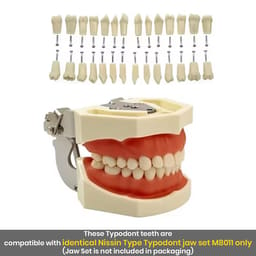

.jpg?w=256)
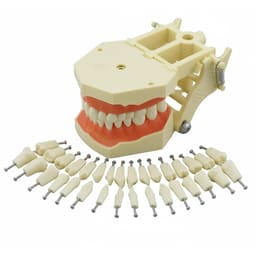
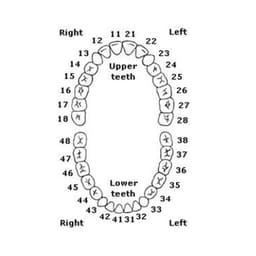
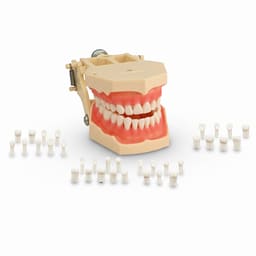
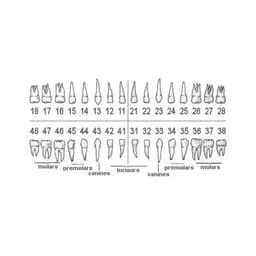

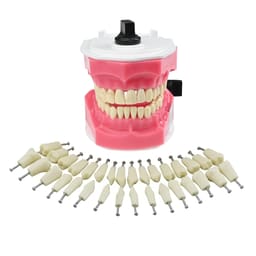
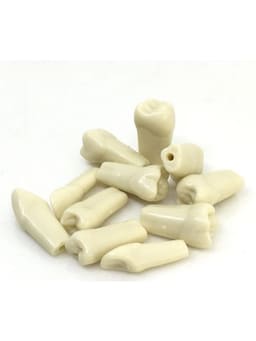
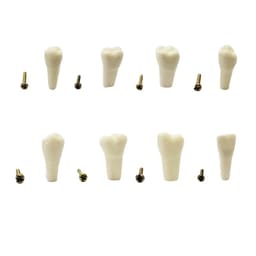
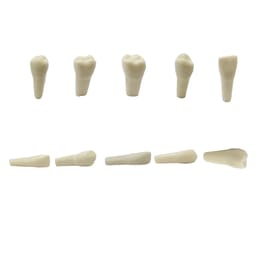
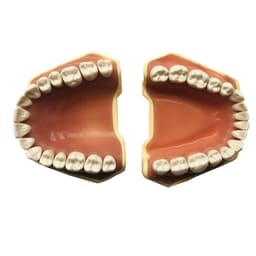
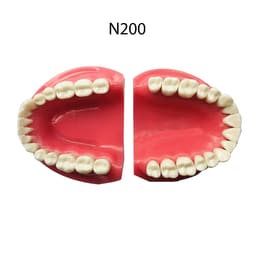
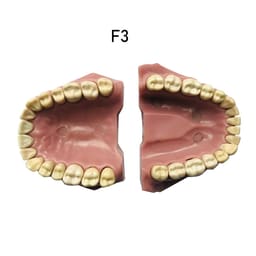
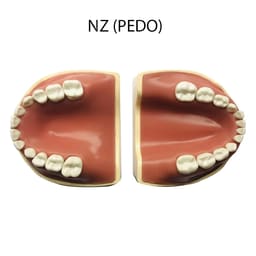
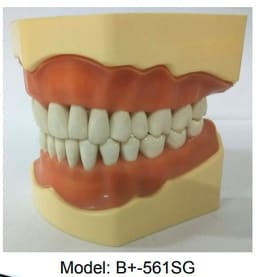

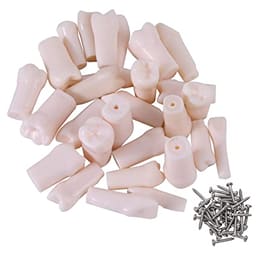
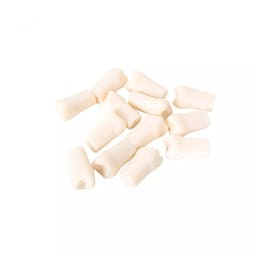


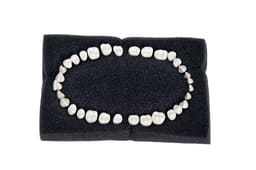
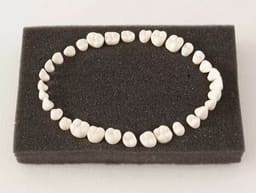
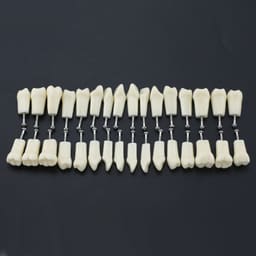
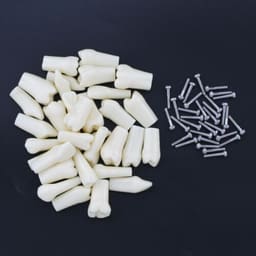


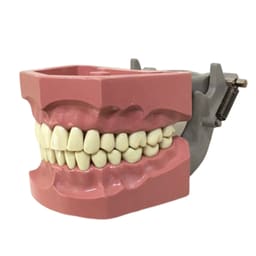

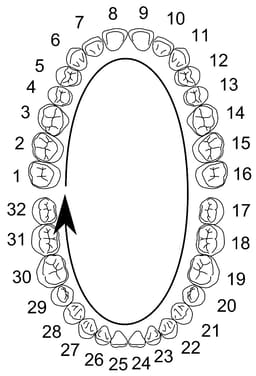


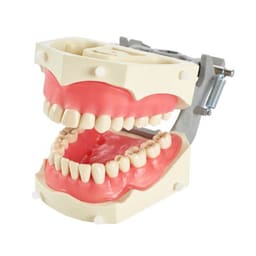

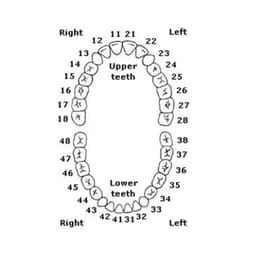
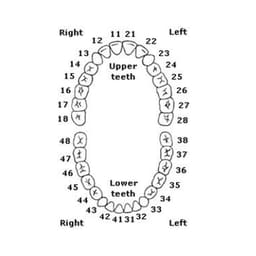
Typodont Teeth
The teeth are the part that gets used up. A jaw set lasts for years, but the ones in it are cut, drilled, extracted and discarded through every exercise — which is why they are bought and rebought far more often than the jaw itself. This category holds them: individual replacements and full sets that seat into a training jaw.
Buying them well comes down to a few things — that they fit the jaw system in use, that they are the right size and count for the exercise, and that the material suits how realistic the practice needs to be.
Matching the jaw system
A typodont is cut to seat in one mounting standard, and it will not fit another. This is the first thing to get right, and it mirrors the model the student already owns.
For Nissin-type jaw sets
Teeth cut to the Nissin pattern seat only in a Nissin holder. Nissin-compatible typodonts are the replacement teeth for that jaw, and they are available individually so a single worn tooth can be replaced rather than a whole arch.
For Frasaco-type jaw sets
Where the holder is Frasaco-pattern, the teeth must be too. Frasaco-compatible typodonts fit that standard, again supplied tooth by tooth, so a student on a Frasaco course replaces to the same pattern as the jaw they already use.
Individual teeth or a full set
The next choice is whether to buy one tooth or all of them, and that depends on where the student is in the course.
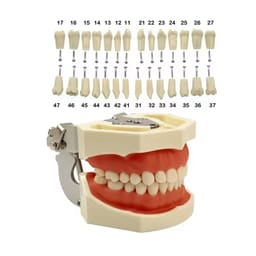
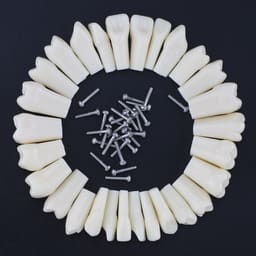
An individual tooth is the economical replacement when only one has worn out. A full set restocks an entire arch at once, which suits the start of a term or an exercise that works through many teeth. Sets are supplied as a complete dentition, often screw-fitting, so an arch can be restocked in a single purchase.
Adult, paediatric and material
Two further distinctions decide which teeth are right for a given exercise.
- Adult vs paediatric size. Adult teeth are the default; paediatric-size typodonts are smaller, for practising on a child's dentition in a paedodontics exercise.
- Standard plastic vs ivorine. Standard typodonts are moulded plastic. Ivorine teeth are a harder, denser material that cuts and feels closer to natural tooth structure, favoured where realistic tactile feedback matters.
Which to pick follows the exercise: a paedo case needs paediatric teeth, and a preparation exercise that trades on feel benefits from ivorine.
Buying typodont teeth
Because teeth are the consumable in preclinical training, it is worth buying them to match the holder already owned and keeping a few spares of the sizes an exercise uses most, so a worn tooth never stalls a practice session.
The holders these seat into are in jaw sets, so teeth and jaw can be matched to the same mounting standard.
The rest of a course's preclinical models and materials sit alongside them in student section.
Frequently Asked Questions (FAQs):
What are typodont teeth?
Typodont teeth are the replaceable artificial teeth that seat into a dental training jaw set. Students use them to practise cavity preparations, restorations, crown work and extractions before treating patients. Because they are cut and discarded during practice, they are a consumable — bought individually or as full sets to restock the jaw as teeth wear out.
How do I know which typodont teeth fit my jaw set?
Match the teeth to the jaw's mounting standard. A Nissin-type jaw takes Nissin-pattern teeth; a Frasaco-type jaw takes Frasaco-pattern teeth. A tooth cut for one system will not seat in another, so buy replacement teeth to the same standard as the jaw set already in use. Product listings state the compatible system.
Should I buy individual teeth or a full set?
It depends on need. An individual tooth is the economical choice when only one has worn out and needs replacing. A full set of teeth restocks an entire arch at once, which suits the start of a course or an exercise that uses many teeth. Buying singly keeps cost down; buying a set saves reordering.
What are ivorine typodont teeth?
Ivorine teeth are made from a harder, denser material than standard moulded-plastic typodonts. They cut and feel closer to natural tooth structure, giving more realistic tactile feedback during preparation exercises. Ivorine ranges are chosen where that realism matters more than the lower cost of plastic teeth.
Are there paediatric-size typodont teeth?
Yes. Alongside adult-size teeth, paediatric-size typodonts are available for practising on a child's smaller dentition, as needed in paedodontics exercises. The size is stated on the product, so a student on a paediatric module can buy teeth scaled to that work rather than adapting adult teeth.