

Alginate
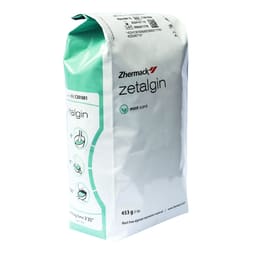
Alginate is the irreversible-hydrocolloid powder a dentist mixes with water to take a fast, low-cost impression of the teeth and gums. Regular-set, fast-set, chromatic, dust-free, and extended-pour grades run on Dentalkart from DPI, Zhermack, GC, and Waldent. It sets in one to three minutes and must be cast quickly, since the gel loses accuracy within the hour.
 Recommended
 Price- High to LowPrice- Low to High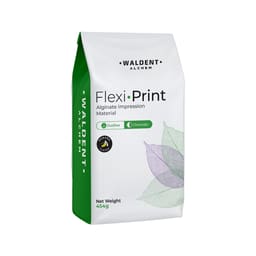
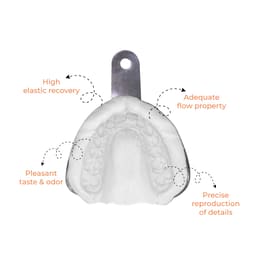

 13
13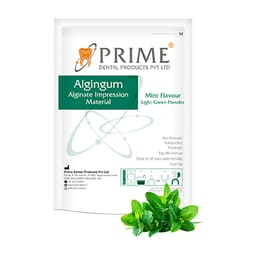
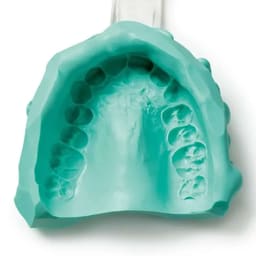
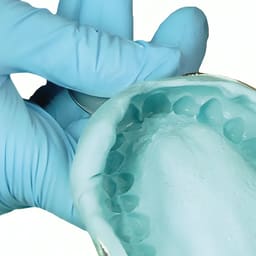
 3
3
 4
4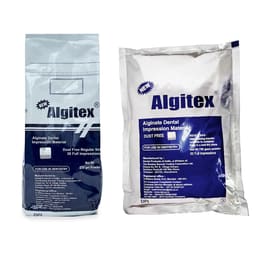

 3
3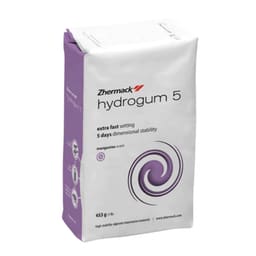
 6
6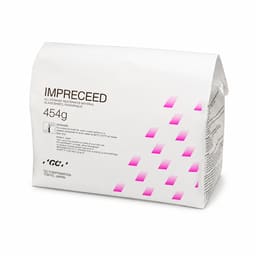
 3
3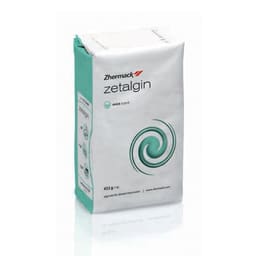
 4
4Alginate Impression Material — Regular-Set, Chromatic, Dust-Free and Extended-Pour Powders
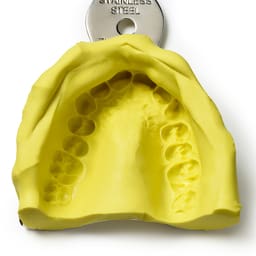
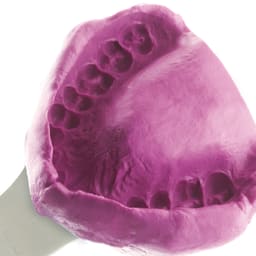
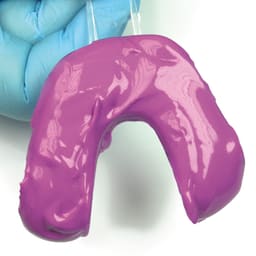
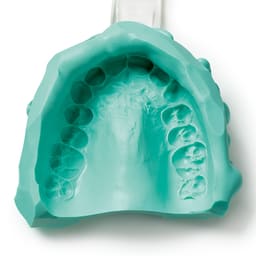
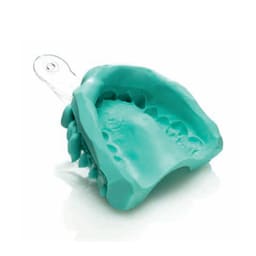
Alginate is the most-used impression material in everyday dentistry — a seaweed-derived powder that turns into a soft, elastic gel seconds after it meets water. The set is a chemical reaction between sodium alginate and a calcium salt, and the gel that forms records the teeth and gums closely enough for a diagnostic or working model. What it gives up for that speed and low price is staying power: the gel shrinks as it dries and swells if left damp, so an alginate impression is cast in stone almost straight away rather than stored. It belongs to the wider range of impression material as the everyday, preliminary option.
Types of alginate impression material
Regular-set and fast-set
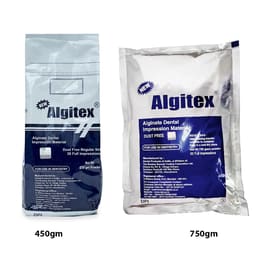
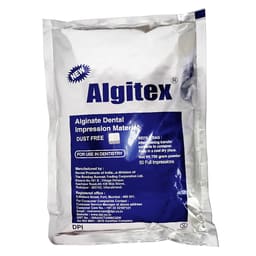
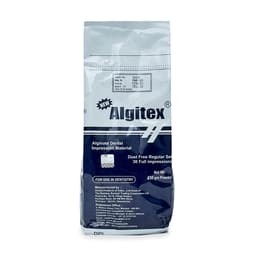
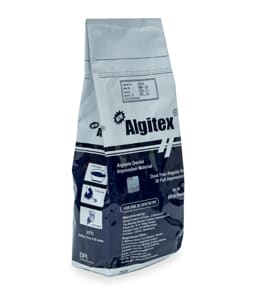
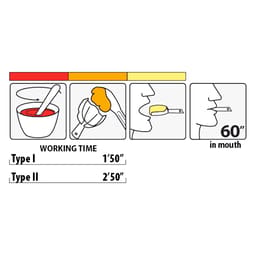
Set speed is the first thing to choose. A regular-set powder gives roughly two to three minutes from mix to set, which suits a calm full-arch impression, while a fast-set version firms up in around a minute for a fidgety child or a gag-prone patient. The Dpi Algitex Alginate Impression Powder is a long-running regular-set choice in Indian practice.
Chromatic alginate
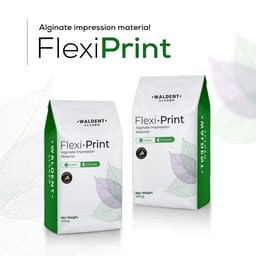
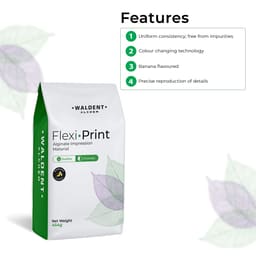
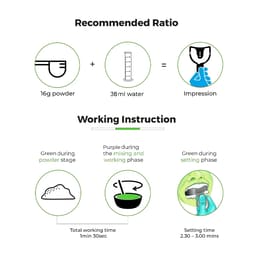
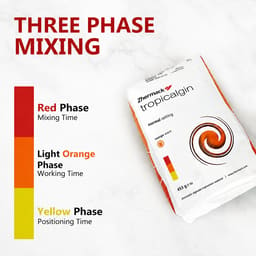
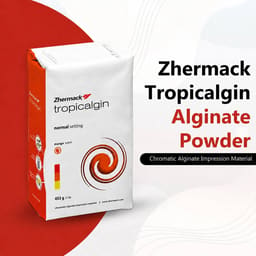
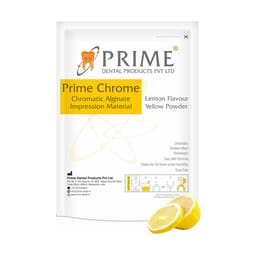
A chromatic alginate changes colour as it passes through mixing, working, and set, giving the operator a visual cue for when to load the tray and when to remove it — useful for students and for clinics where assistants rotate. The Waldent FlexiPrint Chromatic Dust Free Alginate Impression Material shows the phase colours.
Dust-free
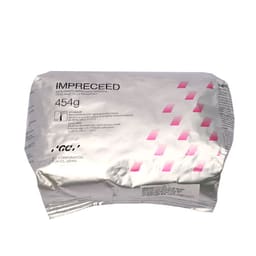
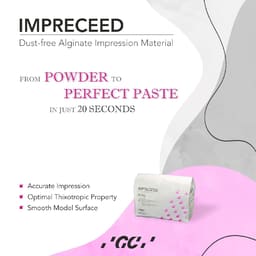
A dust-free powder is coated so it does not throw up a cloud when scooped and spatulated, which keeps the fine particles out of the air the assistant and patient breathe. It is the sensible default in a small operatory or where a staff member has asthma. The GC Impreceed Alginate Powder Impression Material is one such grade.
Extended-pour
An extended-pour alginate is formulated to hold its dimensions for several days rather than minutes, so a clinic can send the impression to an off-site lab without a remake. It costs more per pouch but earns it back on accuracy. The Zhermack Hydrogum 5 Alginate Impression Powder - 453g stays stable for up to five days.
When alginate is used
Alginate covers the preliminary and diagnostic impressions that make up most of an everyday workload, wherever sub-micron precision is not the point:
- Diagnostic study models for planning and patient discussion
- Working casts for orthodontic appliances and clear aligners
- Primary impressions for complete and partial dentures
- Models for provisional crowns and bridges
- Opposing-arch impressions for a fixed restoration
- Casts for bleaching trays, night guards, and sports guards
How to choose an alginate
- Set speed — regular-set for an unhurried full arch, fast-set for a child, a gag reflex, or a single quadrant.
- Chromatic or plain — colour-change powders help trainees and rotating staff time the mix; plain powders cost a little less.
- Dust-free — choose a coated, low-dust grade where air quality and staff comfort matter, especially in a small room.
- Pour window — a standard powder must be cast within the hour; pick an extended-pour grade only if the model goes to an off-site lab.
- Mix quality — a creamy, lump-free mix with reasonable tear strength pulls cleanly out of undercuts; thin, gritty mixes tear.
- Pack size — a 450–500 g pouch yields roughly 30–40 mixes; buy to a few months' use, since opened powder degrades.
Alginate brands on Dentalkart
DPI runs the highest volume in Indian general practice, with Algitex, Imprint, and chromatic options covering routine diagnostic work at the lowest cost per mix.
Zhermack, GC, 3M ESPE, and Dentsply are the imported picks for extended-pour and fine-detail grades, while Prime Dental, Waldent, Septodont, Medicept, and Heraeus Kulzer offer chromatic, dust-free, and flavoured powders at friendlier prices.
Why buy alginate from Dentalkart
Alginate is a consumable that ages: once the foil is opened the powder draws in moisture and begins to set short and gritty within two to three months, so a fresh pouch with headroom on its date is worth far more than a bulk jar bought too far ahead. Every pack here is genuine, dated, and checked before it ships, and a faulty or short-dated pouch is put right. To keep the water-to-powder ratio consistent from one mix to the next, the measuring scoop and graduated jar are sold beside the powder, and the rest of the impression range sits alongside for the precision cases alginate is not meant to finish.
Frequently Asked Questions (FAQs):
What is alginate used for?
Alginate is the everyday impression material for preliminary and diagnostic records — study models, orthodontic casts, denture primaries, opposing arches, and models for guards and provisionals. It is quick to mix, cheap per impression, and accurate enough for these jobs, though not for a crown or implant fit, which calls for a silicone or polyether.
What do "chromatic" and "dust-free" mean on an alginate pack?
Chromatic means the powder changes colour through mixing, working, and set, so the operator can read the stage by eye. Dust-free means the particles are coated to stop a powder cloud when scooping and spatulating, keeping it out of the air. Many powders are both, which helps trainees and protects staff breathing in a small room.
Why does alginate have to be poured so quickly?
Because the gel is mostly water and its shape depends on holding that water. Left in air it dries and shrinks; left in a humid box it absorbs water and swells. Either way the model becomes inaccurate. A standard alginate is cast within the hour; only an extended-pour grade, sealed correctly, holds for longer.
How do I get an accurate, bubble-free alginate mix?
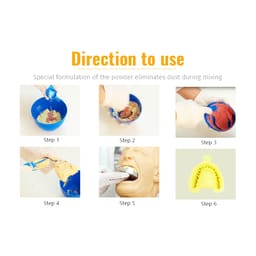
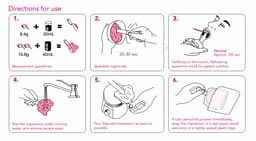
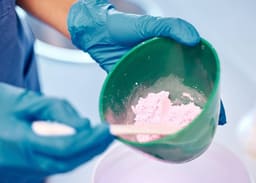
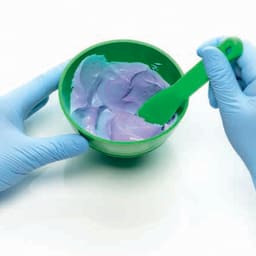
Measure powder and water to the maker's ratio with the supplied scoop and jar, use room-temperature water, and spatulate firmly against the bowl wall to drive out air. Warm water speeds the set and cold water slows it. Load the tray in one smooth motion and seat it before the working time runs out.
How long does an alginate pack last once opened?
A sealed pouch is good until its printed expiry, usually a couple of years from manufacture. Once opened, the powder slowly takes up moisture and should be used within about two to three months, kept tightly resealed and away from heat and damp. A pack that sets too fast or feels gritty has aged and should be replaced.