





Distal End Cutter
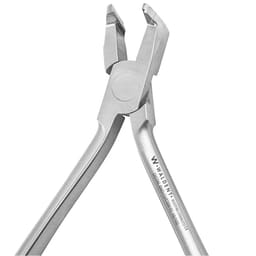
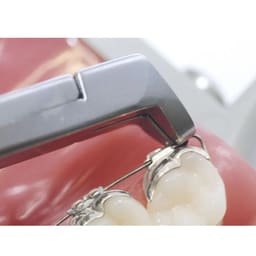
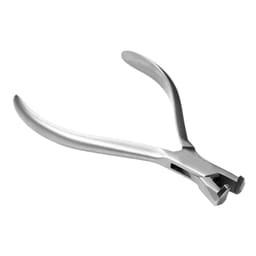
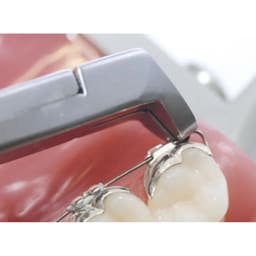
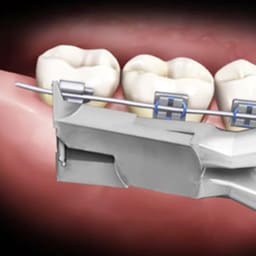
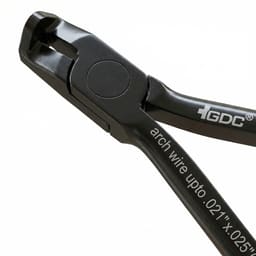
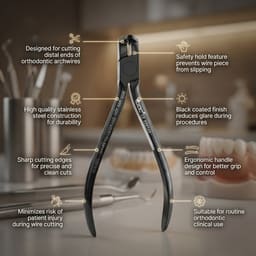
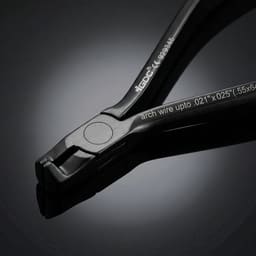
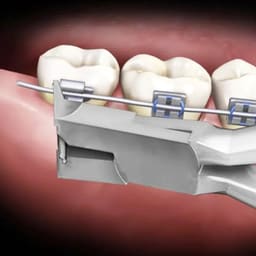
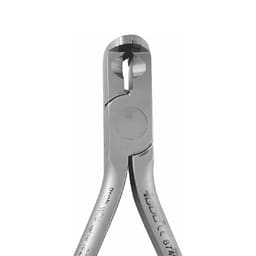
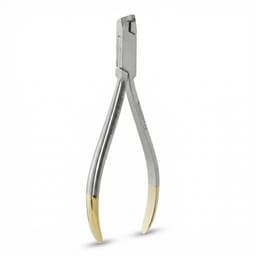
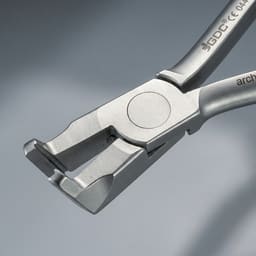
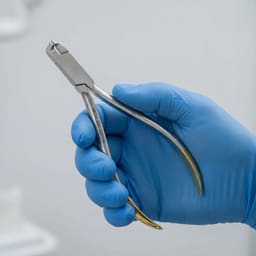
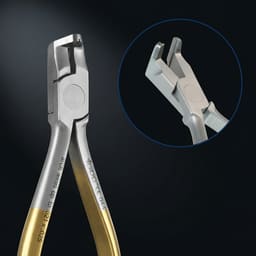
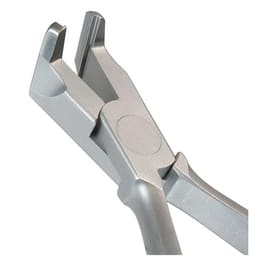
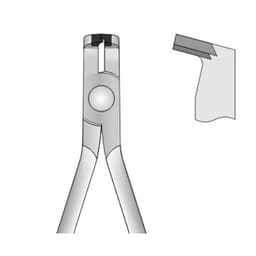
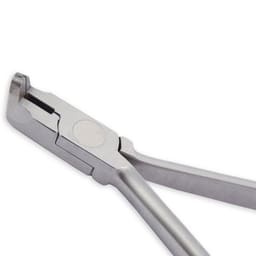
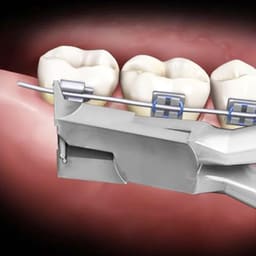
A distal end cutter is a hold-and-cut orthodontic plier: it shears the arch-wire end flush behind the last molar tube while a gripping face retains the offcut, keeping the fragment out of the patient's mouth. That combined cut-and-hold is what makes it safe to use intraorally. Tungsten-carbide blades and micro, flush, and angular heads suit different posterior access.
 Recommended
 Price- High to LowPrice- Low to High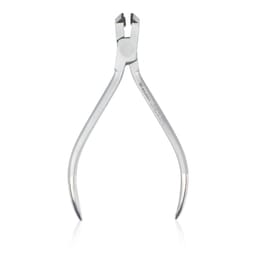



 70
70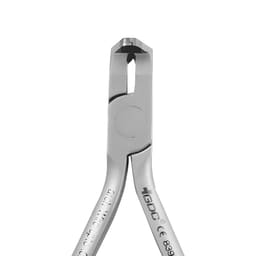
 59
59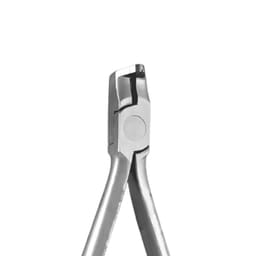
 35
35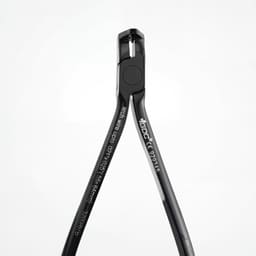
Only 2 Left
108


 59
59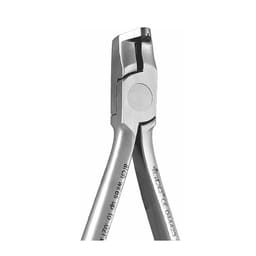

 59
59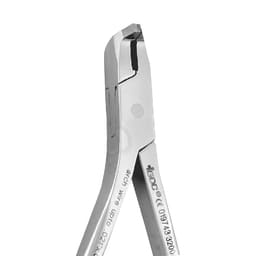

Only 4 Left
59Distal End Cutter
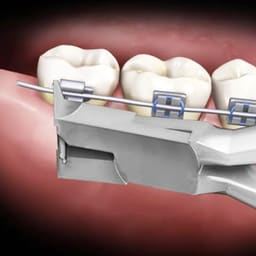
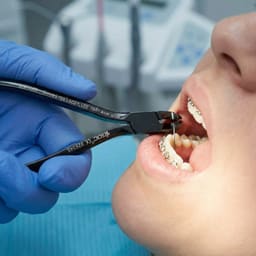
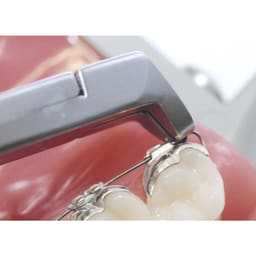
Once an arch wire is engaged, its ends run past the last molar tube and have to be shortened, and the trimmed piece sits deep by the rearmost tooth where a loose fragment would be dangerous. A distal end cutter answers both problems at once: a hard blade shears the wire flush with the tube, while a soft gripping pad on the same tip clamps the trimmed piece so it stays on the instrument. The operator lifts the plier away and the offcut comes with it. That single hold-and-cut movement is why this cutter, and not a plain wire nipper, is used intraorally. It ranks among the cutting orthodontic instruments that a fixed-appliance clinic cannot do without.
The hold-and-cut safety action
The dual function is what makes the instrument safe to use deep in the posterior region:
- Flush shear — a tungsten-carbide blade cuts the wire level with the tube, leaving no protruding point to catch the cheek.
- Retained offcut — a gripping insert beside the blade holds the severed piece, keeping it clear of the throat and floor of the mouth.
- Single action — cutting and holding happen in one squeeze, so there is no separate step to catch the fragment.
Losing an offcut into the oropharynx is a genuine risk without this feature, which is why the retention face matters as much as the blade. The wire being trimmed exits the molar buccal tubes at the back of the arch.
Flush, micro, and angular patterns
The cutters vary by blade profile and access:
- Standard / flush-cut — trims the wire level with the tube for a smooth, non-irritating end.
- Micro — a slim head that reaches a tight distal space where a full-size cutter will not fit.
- Micro-angular — an angled slim head for awkward second-molar access, keeping the handle clear of the cheek.
- Short handle — a compact grip for better control in a limited working space.
A standard cutter covers most cases, while a micro or angular head proves its worth on tight posterior access. Ties and pins, as opposed to the arch wire itself, call for a separate pin and ligature cutter.
Blades, handles, and upkeep
For a cutter used on hard stainless and beta-titanium wire, the blade decides its working life:
- Tungsten-carbide blades — the standard for distal cutters, hard enough to shear spring-hard wire cleanly and hold an edge through many cuts.
- Handle length — short and standard handles trade reach for control; pick to suit the operator's grip and access.
- Clean and lubricate — wipe the blade and gripping face after use and oil the joint before autoclaving so the action stays smooth.
Cutting only the wire it is rated for keeps the TC edge sharp; forcing it through heavier material chips the blade and ends its accuracy.
Buy distal end cutters at Dentalkart
The distal end cutters here run from GDC's standard, flush, micro, and angular models to Waldent, Koden, and OSL patterns, nearly all tungsten-carbide bladed with the hold-and-cut action. Short- and standard-handle options let an operator match the grip to their access.
Frequently Asked Questions (FAQs):
What makes a distal end cutter different from an ordinary wire cutter?
It cuts and holds in one action. As the blade trims the arch wire flush behind the molar tube, a gripping face retains the severed piece so it cannot fall into the mouth. A plain wire cutter only severs the wire, leaving the offcut loose — a hazard so far back in the arch, which is exactly where a distal end cutter is designed to work.
Why does holding the offcut matter?
The wire is trimmed right at the rearmost tooth, so a freed fragment could drop toward the throat or floor of the mouth and be swallowed or inhaled. The cutter's retention face keeps the offcut on the instrument until the operator lifts it clear. That safety margin is the main reason this specific cutter is used intraorally rather than a bench nipper.
When is a micro or angular head worth it?
A slim micro head reaches a tight distal space that a full-size cutter cannot enter, and an angular version adds a bend for awkward second-molar access while keeping the handle off the cheek. If a practice regularly finishes wires on crowded or hard-to-reach posterior teeth, one of these heads makes the cut cleaner and easier.
Can a distal end cutter cut ligatures too?
It is built for the working arch wire, not thin ligatures or pins. Using it on ligature wire wastes the fine distal edge and can nick it. A dedicated pin and ligature cutter handles ties and pins, so most trays carry both — the distal cutter for the arch-wire ends and the ligature cutter for the finer work.
How is the tungsten-carbide edge kept sharp?
Cut only the wire the instrument is rated for; hard arch wire is fine, but heavier or off-spec material chips the carbide. Wipe the blade and gripping face clean after each use, oil the joint before autoclaving, and store it so the tips are protected. Treated this way, a TC distal cutter stays accurate over years of routine trimming.