

Oral Surgery
Oral surgery is the part of dentistry that removes teeth and repairs the bone and soft tissue around them — routine extractions, impacted wisdom teeth, and grafting to rebuild a ridge before an implant. It runs on forceps and elevators, local anaesthetic, scalpels and surgical burs, haemostats, sutures, and bone grafts, from names like Septodont, GDC, Coltene and Waldent.
 Recommended
 Price- High to LowPrice- Low to High
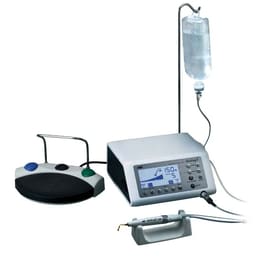

 4.2k
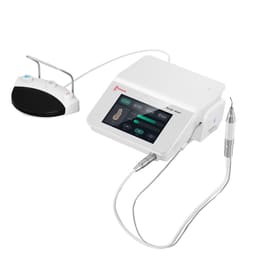

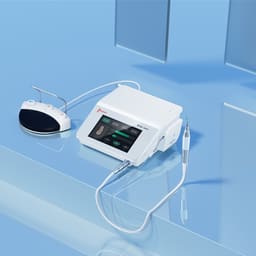
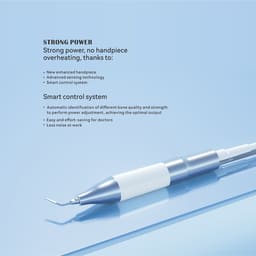

Only 1 Left
1.7k
Only 3 Left
649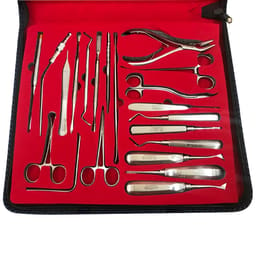
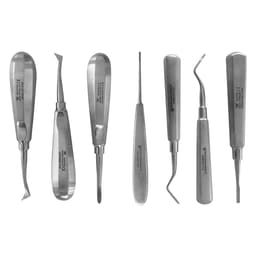
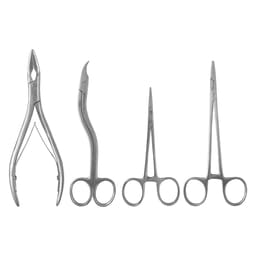
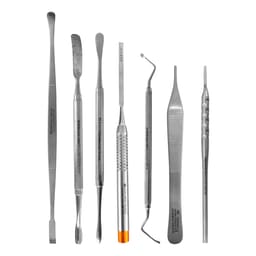
Only 3 Left
410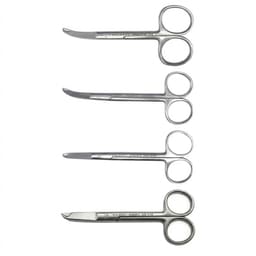
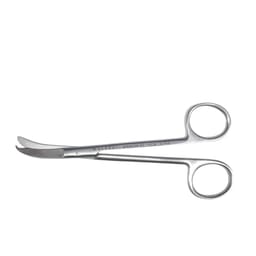
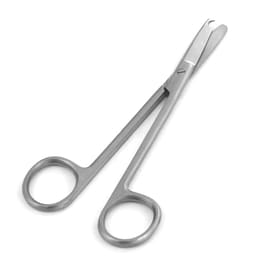
Oral Surgery — Instruments and Materials for the Surgical Chair
Every surgical procedure in the mouth follows the same shape: numb the area, get the tooth or tissue out, stop the bleeding, and close the wound so it heals — and where bone was lost, rebuild it. What changes is the difficulty, from a loose tooth lifted in seconds to an impacted third molar that has to be cut free and its socket grafted. This category holds the instruments and materials for the whole span, so a clinic can equip a single quick extraction and a full surgical case from the same shelf.
The stages of a surgical case
Numbing the field
Nothing starts until the area is anaesthetised. A cartridge of local anaesthetic delivered through a fine needle blocks the nerve or infiltrates the site, and the choice of agent and adrenaline ratio is matched to the procedure and the patient’s medical history. The Septodont Septanest 4% Articaine is a common infiltration choice for surgical work.
Taking the tooth out
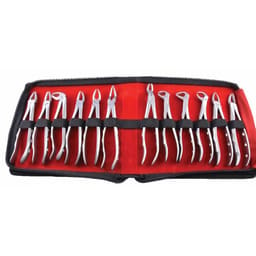
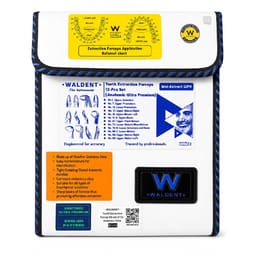
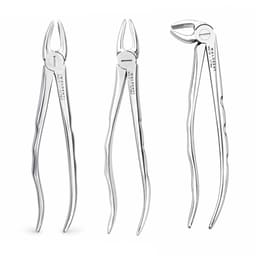
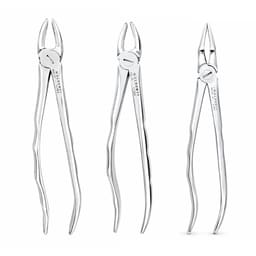
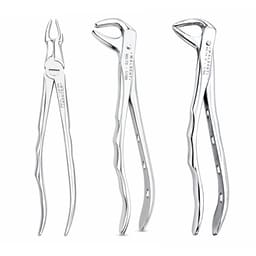
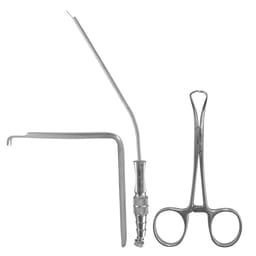
Most extractions are done by feel. An elevator or luxator is worked into the ligament to loosen the tooth and widen the socket, then forceps shaped to that specific tooth grip it and lift it out. A comprehensive set like the Waldent Tooth Extraction Forcep Kit (set of 12) covers the upper and lower, anterior and posterior patterns a clinic needs.
Cutting for access
When a tooth is buried or broken below the gum, it has to be reached. A scalpel raises a flap, a periosteal elevator lifts the soft tissue clear, a surgical bur removes the bone over the tooth or sections it, and a retractor holds everything back for a clear view. This is the difference between a simple and a surgical extraction.
Controlling the bleeding
Once the tooth is out, the socket has to stop bleeding before it can be closed — more so in patients on blood thinners. A resorbable sponge placed in the socket gives the clot something to hold onto and is left to dissolve. The Coltene Gelasponge is an absorbable gelatin haemostat for that job.
Closing the wound
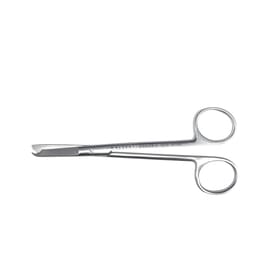
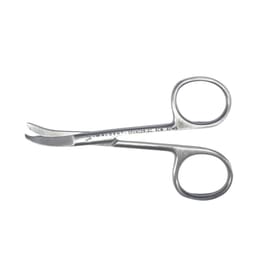
A flap is held together while it heals with sutures, either the resorbable kind that dissolve on their own or a non-resorbable one taken out at a week. A braided silk like the Meril Filasilk Silk Suture handles and knots easily for routine closures.
Rebuilding lost bone
An extraction leaves a gap in the ridge, and if an implant is planned the volume has to be preserved or rebuilt. Graft granules fill the socket as a scaffold for new bone, and a barrier membrane keeps the soft tissue from growing in before the bone does. The B-Ostin TP Bone Graft is a synthetic TCP graft, laid under a membrane such as the Xcem Osspore Collagen Membrane.
From a simple extraction to a graft
- Infiltration or block anaesthesia before any surgical procedure
- Lifting an erupted tooth with elevators and forceps
- Raising a flap and removing bone to reach an impacted third molar
- Sectioning a multi-rooted tooth so the roots come out separately
- Trimming and smoothing the ridge after multiple extractions
- Packing a socket with a haemostat in a patient on anticoagulants
- Grafting a socket and covering it with a membrane for ridge preservation
- Suturing the flap closed and reviewing at a week for removal
Choosing for the procedure in front of you
- Forceps to the tooth — beak shape and angle are made for a specific tooth; upper molar forceps differ left from right for the palatal root, and a physics-style forceps spares a fragile ridge on a periodontally weak tooth.
- Anaesthetic to the site and the patient — articaine infiltrates the dense lower jaw well; lignocaine with adrenaline is the block standard; a plain agent without vasoconstrictor suits a cardiac contraindication.
- Suture to the case — resorbable where a patient may not return for removal or in children; a monofilament for low tissue reaction on a clean flap; silk where handling ease matters most.
- Graft to the timeline — a slower-resorbing xenograft holds volume for a delayed implant; a synthetic that turns over faster suits a socket that will be implanted sooner.
- Membrane to the defect — a resorbable collagen membrane covers most single-socket cases without a second surgery; a non-resorbable one maintains space over a larger defect but has to be removed.
Who supplies the surgical tray
The instrument side of the tray is the deepest. GDC, Waldent, Veecare and Julldent between them cover the forceps, elevators, luxators, periosteal elevators, rongeurs and scalpel handles; Prima Dental takes the surgical burs and SK Surgicals the fixation screws. Septodont supplies the anaesthetic.
On the consumables side, Meril and Ethicon carry the sutures while Coltene and Agarwals handle the haemostats and gauze. The bone-regeneration shelf — graft granules and barrier membranes — draws on B-Ostin, Xcem, MedPark, Ammdent and Fredna.
Equipping a surgical practice
A surgical appointment cannot pause halfway: once a flap is open, the bur, the haemostat, the suture and, if the plan calls for it, the graft all have to be within reach. Holding the anaesthetic, the instruments, the closure materials and the regeneration kit together means a clinic can take on anything from a five-minute extraction to a grafted third-molar case without discovering mid-procedure that a needle, a sponge or a membrane has run out.
Frequently Asked Questions (FAQs):
What separates a simple extraction from a surgical one?
A simple extraction lifts a fully erupted, accessible tooth out through the socket with elevators and forceps alone. A surgical extraction is needed when the tooth is impacted, broken below the gum, or heavily rooted — the surgeon raises a flap, removes some of the covering bone, and often sections the tooth so the pieces come out separately. The second needs a scalpel, a bur, and sutures that the first does not.
Why is a tooth sometimes cut into pieces instead of pulled out whole?
Because splitting it is often kinder to the bone than forcing it. A molar with divergent or curved roots, or one fused to the socket, will resist coming out in one piece and risks fracturing the surrounding bone if levered hard. Sectioning it with a bur lets each root be removed along its own path with far less force, which preserves the ridge and speeds healing.
Resorbable or non-resorbable sutures — which should be used?
It depends on follow-up and the wound. Resorbable sutures dissolve on their own over one to three weeks and are the sensible choice for children or any patient who may not return to have stitches out. Non-resorbable silk or nylon holds a flap more precisely and is removed at five to seven days, preferred for surgical flaps where accurate wound-edge position matters.
What does a bone graft in the socket actually achieve?
It preserves the ridge. Left empty, an extraction socket loses width and height as it heals, which can leave too little bone for an implant later. Graft granules fill the socket and act as a scaffold that the body replaces with its own new bone over a few months, holding the shape of the ridge so an implant can be placed into solid bone rather than a collapsed site.
Which local anaesthetic works best for lower-jaw surgery?
Articaine 4% with adrenaline is widely favoured for the lower jaw because it infiltrates the dense cortical bone of the mandible better than older agents, often supplementing or reducing the need for a nerve block. Lignocaine with adrenaline remains the standard for the inferior alveolar block itself, and a vasoconstrictor-free agent is chosen where a patient’s heart condition rules adrenaline out.