
Rubber Dam Clamp Holder
A rubber dam clamp holder is a stand or box that stores, organises and sterilises a set of rubber dam clamps. It arranges the clamps by number for quick chairside selection, shields their beaks from damage, and carries the full set through the autoclave as a single tray — turning loose clamps into a ready, sterile kit.
 Recommended
 Price- High to LowPrice- Low to High
Rubber Dam Clamp Holder — Organise, Protect and Sterilise Your Clamp Set
A rubber dam clamp holder is a stand, rack or box that keeps a working set of rubber dam clamps organised, protected and ready to sterilise. Also called a clamp organiser or holding box, it seats each clamp in a numbered slot so the right size is picked at a glance, shields the beaks from damage in storage, and lets the whole set go through the autoclave as one tray. For a clinic that runs rubber dam daily, that is the difference between a tidy, sterile kit and a drawer of loose, hard-to-find clamps.
What does a rubber dam clamp holder do?
Three jobs. First, it keeps the clamps in size order — winged and wingless, anterior to molar — so choosing the anchor for a tooth is a glance rather than a search. Second, it protects the jaws and points from knocking together and blunting. Third, it lets the set be cleaned and autoclaved together, so a sterile clamp is always to hand without handling each one separately.
Clamp holder stand vs clamp holding box
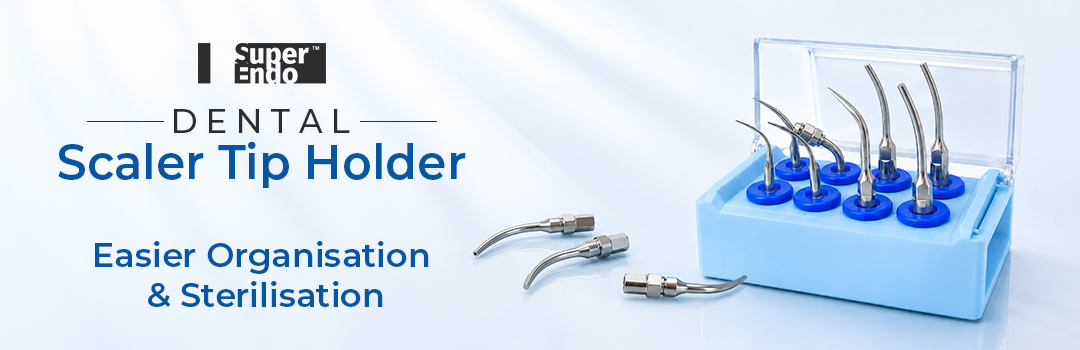
The two forms suit different needs. An open clamp holder stand seats the clamps upright in numbered slots for the fastest chairside reach and quick drying after sterilisation. The GDC Rubber Dam Clamp Holder (RDCOB) is a stand of that kind for placing and organising clamps.
A closed clamp holding box adds a lid, keeping the set dust-free in storage and safe to carry between operatories. The Julldent Rubber Dam Clamp Holding Box holds and sterilises up to ten clamps in a compact case.
Rubber dam clamp set with a holder
Starting rubber dam from scratch is simpler with the clamps and holder bought together than assembled piece by piece. The GDC Rubber Dam Clamp Set of 11 with Clamp Holder pairs a full range of matt-finished clamps with the organiser to keep them in, while individual replacements come from the wider rubber dam clamps range as clamps wear or a size runs out.
How a clamp holder fits your rubber dam kit
The holder is one part of the isolation setup, alongside the sheet, frame, punch and forceps that create the dry, retracted field restorative and endodontic work depends on. Those make up a rubber dam kit, and the treatment they support runs through endodontics and operative dentistry.
How to choose a rubber dam clamp holder
Match it to your set and workflow. Check the capacity — most hold ten to a dozen clamps, enough for a full anterior-to-molar range. Decide between an open stand for quick chairside access and a closed box for protected storage or transport. Favour stainless steel or an autoclavable box so the set sterilises as one tray, and pick a capacity that leaves room for the sizes you actually use.
Why buy rubber dam clamp holders from Dentalkart
A clamp holder is a low-cost, long-life accessory that makes rubber dam quicker to set up and easier to keep sterile — often what decides whether a clinic reaches for the dam at all. Each option here states its capacity and whether it is a stand or a closed box, so a practice can match it to the size of its set and order it beside the clamps, sheets and frames of the rest of an isolation kit.
Rubber Dam Clamp Holder — Organise, Protect and Sterilise Your Clamp Set
A rubber dam clamp holder is a stand, rack or box that keeps a working set of rubber dam clamps organised, protected and ready to sterilise. Also called a clamp organiser or holding box, it seats each clamp in a numbered slot so the right size is picked at a glance, shields the beaks from damage in storage, and lets the whole set go through the autoclave as one tray. For a clinic that runs rubber dam daily, that is the difference between a tidy, sterile kit and a drawer of loose, hard-to-find clamps.
What does a rubber dam clamp holder do?
Three jobs. First, it keeps the clamps in size order — winged and wingless, anterior to molar — so choosing the anchor for a tooth is a glance rather than a search. Second, it protects the jaws and points from knocking together and blunting. Third, it lets the set be cleaned and autoclaved together, so a sterile clamp is always to hand without handling each one separately.
Clamp holder stand vs clamp holding box
The two forms suit different needs. An open clamp holder stand seats the clamps upright in numbered slots for the fastest chairside reach and quick drying after sterilisation. The GDC Rubber Dam Clamp Holder (RDCOB) is a stand of that kind for placing and organising clamps.
A closed clamp holding box adds a lid, keeping the set dust-free in storage and safe to carry between operatories. The Julldent Rubber Dam Clamp Holding Box holds and sterilises up to ten clamps in a compact case.
Rubber dam clamp set with a holder
Starting rubber dam from scratch is simpler with the clamps and holder bought together than assembled piece by piece. The GDC Rubber Dam Clamp Set of 11 with Clamp Holder pairs a full range of matt-finished clamps with the organiser to keep them in, while individual replacements come from the wider rubber dam clamps range as clamps wear or a size runs out.
How a clamp holder fits your rubber dam kit
The holder is one part of the isolation setup, alongside the sheet, frame, punch and forceps that create the dry, retracted field restorative and endodontic work depends on. Those make up a rubber dam kit, and the treatment they support runs through endodontics and operative dentistry.
How to choose a rubber dam clamp holder
Match it to your set and workflow. Check the capacity — most hold ten to a dozen clamps, enough for a full anterior-to-molar range. Decide between an open stand for quick chairside access and a closed box for protected storage or transport. Favour stainless steel or an autoclavable box so the set sterilises as one tray, and pick a capacity that leaves room for the sizes you actually use.
Why buy rubber dam clamp holders from Dentalkart
A clamp holder is a low-cost, long-life accessory that makes rubber dam quicker to set up and easier to keep sterile — often what decides whether a clinic reaches for the dam at all. Each option here states its capacity and whether it is a stand or a closed box, so a practice can match it to the size of its set and order it beside the clamps, sheets and frames of the rest of an isolation kit.
Frequently Asked Questions (FAQs):
What is a rubber dam clamp holder used for?
A rubber dam clamp holder is used to store, organise and sterilise a set of rubber dam clamps. It seats each clamp in a numbered place so the operator can pick the correct size quickly, protects the jaws from damage, and carries the whole set through the autoclave together, keeping a sterile clamp ready for the next isolation.
Rack stand or holding box — which should I choose?
Both organise the set; they differ in protection and access. An open stand seats the clamps upright for the fastest chairside reach and quick drying after sterilisation. A closed holding box adds a lid, keeping the clamps dust-free in storage and safe to move between operatories. A busy chairside setup often prefers a stand; a travelling or stored set suits a box.
How many clamps does a holder hold?
Most rubber dam clamp holders are sized for a working set of around ten to a dozen clamps — enough to cover anterior, premolar and molar teeth in the common winged and wingless patterns. A set-with-holder bundle typically comes with eleven clamps already arranged, while a standalone stand or box gives the slots to build or complete your own set.
Can a rubber dam clamp holder be autoclaved?
Yes — a clamp holder is designed to go through the autoclave with the clamps in place, which is much of its value: the set is cleaned and sterilised as one tray rather than clamp by clamp. Stainless-steel stands and autoclavable boxes tolerate the cycle; follow the maker's instructions and let the set dry fully before it is closed away.
Do I really need a holder for my rubber dam clamps?
A holder is not strictly essential, but it makes rubber dam faster and more reliable to run. Loose clamps are slow to sort, easy to blunt and awkward to sterilise as a set, and that friction is often why a dam is skipped. A simple stand or box removes it, keeping the right clamp sterile and to hand every time.