

Surface Disinfectants
Surface disinfectants are the chemicals a dental clinic uses to kill microbes on chairs, worktops, and inside the suction system between patients. They come as ready-to-use sprays and wipes for surfaces, enzymatic cleaners for organic soil, and dedicated aspiration-line solutions. Used after each patient, they break the chain of infection across every touched surface in the surgery.
 Recommended
 Price- High to LowPrice- Low to High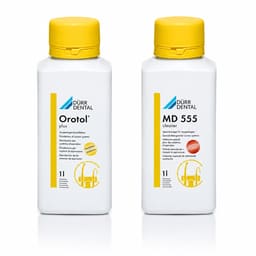
 47
47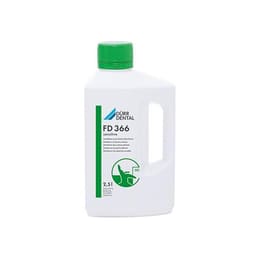
 49
49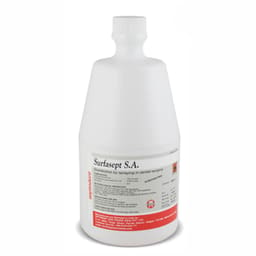

 20
20


Only 3 Left
65
 17
17
 10
10
 25
25Surface Disinfectants
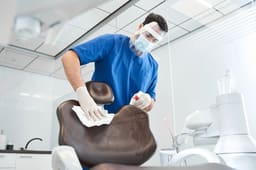
Every patient leaves microbes on the chair, the bracket table, the light handle, and inside the suction line. Surface disinfectants clear them before the next patient sits down. They are chemical agents — sprays, wipes, and line solutions. They kill bacteria, fungi, and viruses on the hard surfaces of the surgery. This is the routine, between-patient half of infection control. It works alongside the heat-based sterilization that handles instruments.
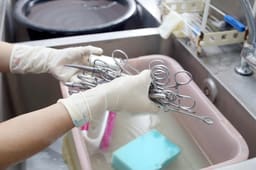
Clean first, then disinfect
Disinfectant does not work well on a dirty surface, so the order matters:
- Clean — wipe off visible blood, saliva, and debris first; organic matter shields microbes from the chemical.
- Disinfect — apply the agent and leave it wet for its full contact time so it can actually kill.
- Let it act — do not wipe dry early; the stated contact time is what the kill claim depends on.
Skipping the clean step or wiping too soon is the most common reason disinfection fails. Single-use covers and barriers from the dental disposables range cut how much surface needs this treatment in the first place.
Surfaces and the suction line
The category covers two different targets:
- Surfaces — chairs, counters, light handles, and tubing get a ready-to-use spray or wipe (such as Surfasept). Fast contact time suits a quick turnaround.
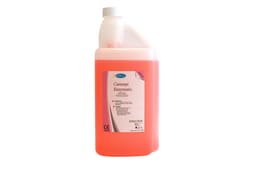
- Enzymatic cleaners — break down protein and organic soil, useful before disinfecting heavily soiled items.
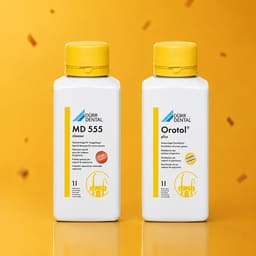
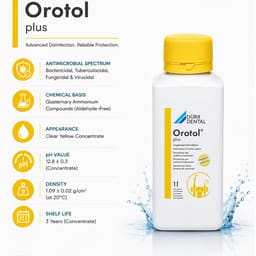
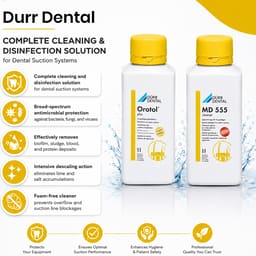
- Aspiration lines — the suction system needs its own solution (such as Dürr Orotol Plus). It is run through daily to clear biofilm the sprays never reach.
A surface spray and a suction-line solution are not interchangeable; a clinic needs both. The line solution also keeps the saliva ejectors and tubing that draw through that same system clean.
What to check before you buy
Match the product to how your clinic actually works:
- Kill time — a shorter contact time frees the chair faster, so it matters most for a busy list.
- Range covered — confirm it lists bacteria, fungi, and the viruses your setting needs, not just "kills 99.9%".
- Ready-to-use or concentrate — a spray or wipe for instant use, or a concentrate to dilute when you get through volume.
- Material safety — check it will not mark upholstery, metals, or plastics after repeated use.
- Right job, right product — a surface agent for worktops, a line solution for suction; keep the operator's hand hygiene covered too.
Frequently Asked Questions (FAQs):
What are surface disinfectants used for in a dental clinic?
Surface disinfectants kill microbes on the hard surfaces and equipment of the surgery between patients. They are applied to chairs, worktops, light handles, tubing, and the suction line, removing bacteria, fungi, and viruses left after treatment. Used after each patient, they break the chain of cross-infection and keep the operatory safe for the next appointment.
What is the difference between cleaning and disinfecting?
Cleaning removes visible dirt, blood, and saliva; disinfecting kills the microbes left behind. They are two steps, not one. A surface must be cleaned first, because organic matter shields microbes and stops the disinfectant working. Only after the soil is gone does the disinfectant, left for its full contact time, reliably kill what remains.
What is contact time and why does it matter?
Contact time is how long a disinfectant must stay wet on a surface to kill the claimed microbes. If it dries or is wiped off early, it has not had time to work and the surface is not truly disinfected. Always apply enough product to keep the surface visibly wet for the time stated on the label.
Can I use a surface spray in the suction lines?
No. Suction and aspiration lines need a dedicated line disinfectant, such as Dürr Orotol Plus. It is run through the system to clear biofilm and debris inside the tubing. A surface spray is made for external hard surfaces and will not clean the internal line. Using the wrong product leaves the suction system contaminated.
Ready-to-use or concentrate — which should I buy?
It depends on volume and workflow. Ready-to-use sprays and wipes are convenient and consistent, ideal for fast chairside turnaround. Concentrates are diluted before use, cost less per litre, and suit higher-volume clinics that can mix and store safely. Many practices keep a ready-to-use spray at the chair and a concentrate for larger cleaning jobs.