





Close Coil Springs
A close coil spring is an orthodontic spring used to pull teeth together and close a space. Its coils touch at rest, so when stretched between two attachments it exerts a steady pulling force. Most are nickel-titanium (NiTi), which delivers a light, constant force over a long range. It is the opposite of an open coil spring, which pushes teeth apart.
 Recommended
 Price- High to LowPrice- Low to High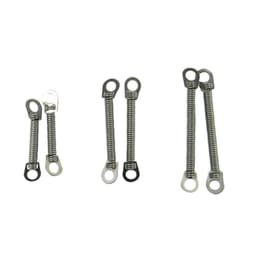
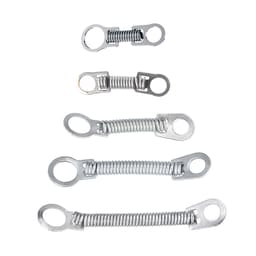
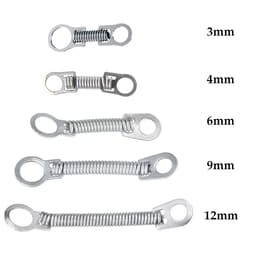
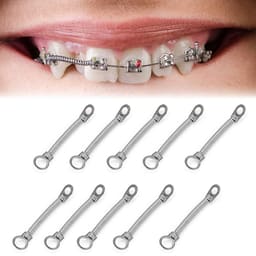
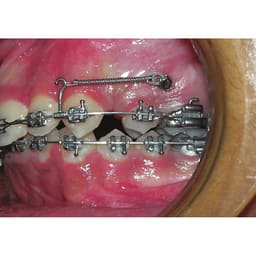


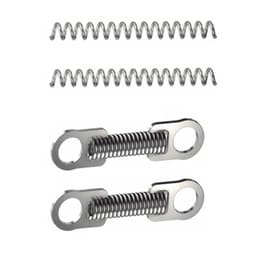
Close Coil Springs
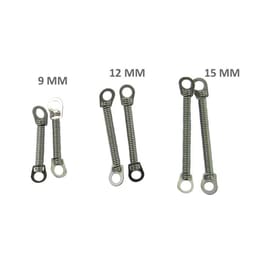
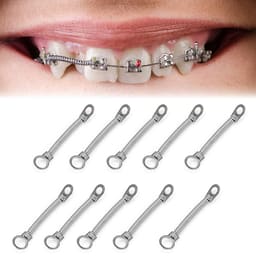
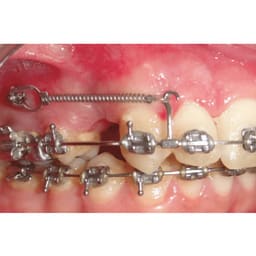
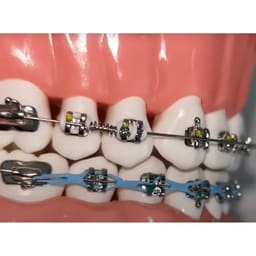
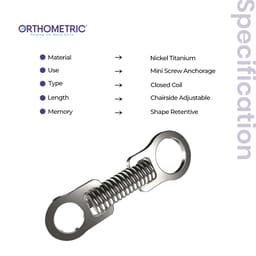
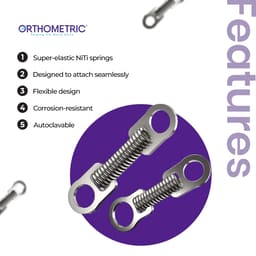
Closing a space is one of the commonest jobs in fixed orthodontics, and a closed-coil spring is a clean way to do it. The coils sit tight together at rest. Hook one end to a bracket and stretch it to a hook further along the arch, and the spring pulls the two points toward each other. That steady traction moves a tooth into an extraction gap, brings a drifted tooth back, or consolidates spacing along the arch. Nearly all the springs here are nickel-titanium, and they belong with the rest of a fixed orthodontics setup.
Close versus open
The two coil springs do opposite jobs:
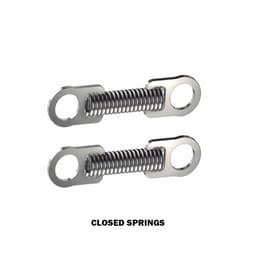
- Closed coil — coils touching at rest; stretch it and it pulls the ends together to close a space.
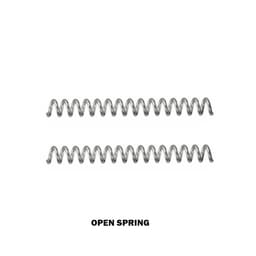
- Open coil — coils spaced apart; compress it and it pushes the ends apart to open space, covered on the open coil springs page.
Same coil idea, reversed force — pick by whether you need to close or open.
Why NiTi and force levels
What to weigh when choosing:
- NiTi springs — superelastic, so they give a light, near-constant force over a wide stretch, unlike steel which drops off quickly.
- Force level — lighter forces for controlled tooth movement, firmer for faster closure; match to the case.
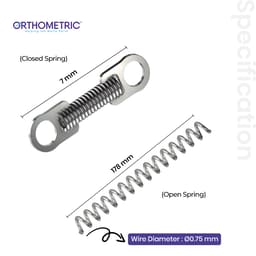
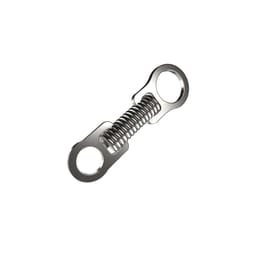
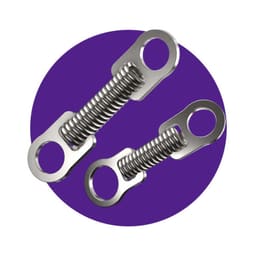
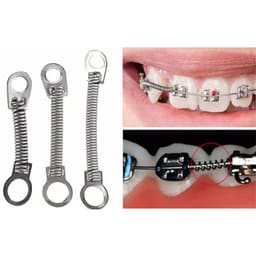
- Eyelets — springs with eyelets at each end are quicker to ligate to a bracket or hook.
- Mini-screw type — versions made to anchor to a TAD for absolute anchorage during retraction.
Lighter continuous force is generally kinder to the tooth than the heavier pull of orthodontic elastics.
How it is used
The spring is the active space-closing element:
- Anchor — attach one end to a fixed point, a bracket hook, or a mini-screw.
- Stretch and engage — hook the other end to the tooth or attachment to be moved, so the spring is under tension.
- Reactivate — over visits the force fades as the space closes; re-stretch or replace to keep it working, alongside e-chains where used.
Frequently Asked Questions (FAQs):
What is a close coil spring used for?
It closes a space between teeth. Stretched between two attachments on the archwire or brackets, the spring pulls the points toward each other with a steady force. It is used to retract teeth into an extraction gap, bring a drifted tooth back into line, or consolidate spacing along the arch. It is a standard active component in fixed orthodontic space closure.
What is the difference between a close coil and an open coil spring?
They apply force in opposite directions. A close coil spring has coils that touch at rest; when stretched, it pulls its ends together to close a space. An open coil spring has spaced coils; when compressed between two points, it pushes them apart to open or maintain space. One shuts a gap, the other opens one — choose by the movement you need.
Why are close coil springs made of NiTi?
Nickel-titanium is superelastic, so a NiTi spring delivers a light, near-constant force across a wide range of stretch. Stainless steel springs lose force quickly as they shorten, needing frequent reactivation. NiTi keeps pulling steadily as the space closes, which gives smoother tooth movement and fewer adjustments. That constant, gentle force is why NiTi is the usual choice for space closure.
What force level of close coil spring should I choose?
Match it to the movement and the case. Lighter forces give controlled, gentle tooth movement and are kinder to anchorage and the periodontium; firmer forces close a space faster where that is appropriate. Many springs are supplied to a rated force; check the specification. As a rule, lighter continuous force is preferred over heavy force for most space closure.
What are the springs with eyelets and mini-screw versions for?
The eyelets are small loops at each end that make the spring quick to ligate onto a bracket hook or attachment, saving chairside time. The mini-screw versions are designed to anchor to a temporary anchorage device (TAD), giving absolute anchorage so the spring retracts the target teeth without the anchor teeth drifting. Choose the type that matches your anchorage plan.