DT (1).jpg)
 Ipad (1).jpg)
 Mobile (1).jpg)
Intraoral Camera
Intraoral cameras are handheld devices that show a magnified live view of the teeth on a chairside screen, documenting cavities and cracks. Available on Dentalkart: wired USB, cordless, and screen-integrated models from Waldent, Endoking, and True Smile. Resolutions span 2 to 10 megapixels with auto-focus from 5 to 50 millimetres, and each wand uses a single-use barrier sheath per patient.
 Recommended
 Price- High to LowPrice- Low to High
Intraoral Cameras — USB, Wireless & Built-In-Screen Imaging Wands for Chairside Diagnosis
Intraoral cameras are handheld diagnostic wands that photograph and film the teeth, gingiva, and restorations at high magnification, using a CMOS sensor behind an LED-lit lens to send the live image to a screen over USB, HDMI, or a wireless link. Unlike a 3D scanner, the camera produces flat 2D photos and video rather than an STL file, which makes it a tool for diagnosis, patient communication, and record-keeping instead of restoration design.
Types of intraoral cameras
USB wired cameras
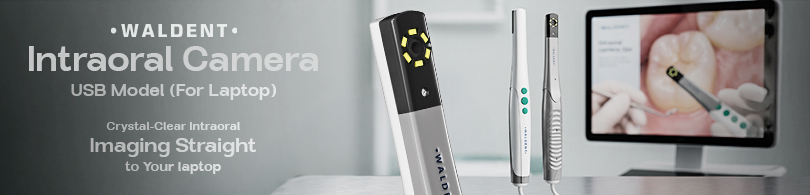
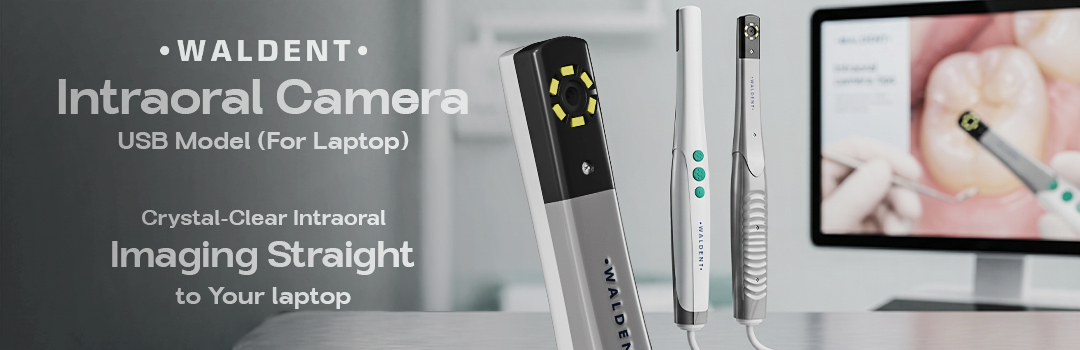
USB cameras plug straight into a chairside laptop or PC and stream live video through the bundled imaging software, the lowest-cost and most plug-and-play format for a clinic that already has a computer at the chair. For example, Waldent Intraoral Camera USB Model ( For Laptop ) — a 5-megapixel wand with a six-LED ring.
Wireless cameras
Wireless cameras pair to a phone, tablet, or PC over Wi-Fi, clearing cables from the operatory and moving easily between chairs. For example, True Smile Intra Oral Dental Camera — a 2-megapixel Full-HD wand with eight LEDs and a rechargeable battery good for about two hours.
Cameras with a built-in monitor
Built-in-monitor systems bundle the wand with their own LCD on a stand, so the patient sees the image on a large screen without a separate PC. For example, Waldent Intra Oral Camera with Screen - Ergo (10 MP) — a 10-megapixel CMOS wand with a 17-inch HD display and auto-focus from 5 to 50 mm.
TV/HDMI-output cameras
TV-output cameras send their feed over AV or HDMI to any operatory monitor, suiting a chair that already has a display but no dedicated computer for imaging software.
When are intraoral cameras used?
An intraoral camera is reached for whenever the patient needs to see what the dentist sees, as a magnified live image on the chairside screen during examination and treatment. Unlike an intraoral scanner, which records a 3D impression, the camera documents conditions as 2D photos saved to the patient record. Common uses include:
- Showing a cracked cusp or proximal cavity to a hesitant patient
- Documenting pre- and post-treatment views for crowns and veneers
- Capturing evidence for insurance pre-authorisation and claims
- Tracking gingival inflammation across recall visits
- Recording calculus and plaque for oral-hygiene counselling
- Building a photographic record for medico-legal case files
How to choose the right intraoral camera
Match these factors to the clinic setup and budget before buying; the guide Choosing Your Dental Intraoral Camera works through each in detail.
- Connection type — match USB, HDMI, or wireless to whether the chair has a PC, a monitor only, or neither.
- Sensor resolution — 2 MP suffices for patient education, 5 MP and up for caries and crack documentation, and 10 MP for margin-grade record images.
- Focus and field — fixed versus auto-focus and the working range (for example 5 to 50 mm) decide single-tooth versus quadrant views.
- Software and PMS compatibility — TWAIN or bundled software should drop images straight into the patient file.
- Barrier sheaths and infection control — the wand body is not autoclavable, so confirm single-use sleeves are cheap and stocked locally.
- Warranty and cable durability — the cable bend-point is the usual failure, so check the warranty term and spare-cable availability.
Intraoral camera brands available on Dentalkart
Waldent supplies the broadest camera range here, spanning USB wands, the built-in-screen Ergo, and PMS-connected models for general practice.
Endoking and True Smile cover the entry-level and wireless segments, with cordless wands aimed at clinics that move the camera between chairs.
Why buy an intraoral camera from Dentalkart
Because an intraoral camera earns its keep on daily uptime, Dentalkart ships every wand from the manufacturer or its authorised Indian distributor with the imaging software and a starter pack of disposable barrier sheaths in the box. The 12–24 month warranty covers sensor and electrical faults, replacement sheaths and spare cables are stocked separately for the parts that wear first, and COD plus EMI keep a first camera affordable for a new clinic.
Intraoral Cameras — USB, Wireless & Built-In-Screen Imaging Wands for Chairside Diagnosis
Intraoral cameras are handheld diagnostic wands that photograph and film the teeth, gingiva, and restorations at high magnification, using a CMOS sensor behind an LED-lit lens to send the live image to a screen over USB, HDMI, or a wireless link. Unlike a 3D scanner, the camera produces flat 2D photos and video rather than an STL file, which makes it a tool for diagnosis, patient communication, and record-keeping instead of restoration design.
Types of intraoral cameras
USB wired cameras
USB cameras plug straight into a chairside laptop or PC and stream live video through the bundled imaging software, the lowest-cost and most plug-and-play format for a clinic that already has a computer at the chair. For example, Waldent Intraoral Camera USB Model ( For Laptop ) — a 5-megapixel wand with a six-LED ring.
Wireless cameras
Wireless cameras pair to a phone, tablet, or PC over Wi-Fi, clearing cables from the operatory and moving easily between chairs. For example, True Smile Intra Oral Dental Camera — a 2-megapixel Full-HD wand with eight LEDs and a rechargeable battery good for about two hours.
Cameras with a built-in monitor
Built-in-monitor systems bundle the wand with their own LCD on a stand, so the patient sees the image on a large screen without a separate PC. For example, Waldent Intra Oral Camera with Screen - Ergo (10 MP) — a 10-megapixel CMOS wand with a 17-inch HD display and auto-focus from 5 to 50 mm.
TV/HDMI-output cameras
TV-output cameras send their feed over AV or HDMI to any operatory monitor, suiting a chair that already has a display but no dedicated computer for imaging software.
When are intraoral cameras used?
An intraoral camera is reached for whenever the patient needs to see what the dentist sees, as a magnified live image on the chairside screen during examination and treatment. Unlike an intraoral scanner, which records a 3D impression, the camera documents conditions as 2D photos saved to the patient record. Common uses include:
- Showing a cracked cusp or proximal cavity to a hesitant patient
- Documenting pre- and post-treatment views for crowns and veneers
- Capturing evidence for insurance pre-authorisation and claims
- Tracking gingival inflammation across recall visits
- Recording calculus and plaque for oral-hygiene counselling
- Building a photographic record for medico-legal case files
How to choose the right intraoral camera
Match these factors to the clinic setup and budget before buying; the guide Choosing Your Dental Intraoral Camera works through each in detail.
- Connection type — match USB, HDMI, or wireless to whether the chair has a PC, a monitor only, or neither.
- Sensor resolution — 2 MP suffices for patient education, 5 MP and up for caries and crack documentation, and 10 MP for margin-grade record images.
- Focus and field — fixed versus auto-focus and the working range (for example 5 to 50 mm) decide single-tooth versus quadrant views.
- Software and PMS compatibility — TWAIN or bundled software should drop images straight into the patient file.
- Barrier sheaths and infection control — the wand body is not autoclavable, so confirm single-use sleeves are cheap and stocked locally.
- Warranty and cable durability — the cable bend-point is the usual failure, so check the warranty term and spare-cable availability.
Intraoral camera brands available on Dentalkart
Waldent supplies the broadest camera range here, spanning USB wands, the built-in-screen Ergo, and PMS-connected models for general practice.
Endoking and True Smile cover the entry-level and wireless segments, with cordless wands aimed at clinics that move the camera between chairs.
Why buy an intraoral camera from Dentalkart
Because an intraoral camera earns its keep on daily uptime, Dentalkart ships every wand from the manufacturer or its authorised Indian distributor with the imaging software and a starter pack of disposable barrier sheaths in the box. The 12–24 month warranty covers sensor and electrical faults, replacement sheaths and spare cables are stocked separately for the parts that wear first, and COD plus EMI keep a first camera affordable for a new clinic.
Frequently Asked Questions (FAQs):
What is an intraoral camera used for during a dental appointment?
An intraoral camera is used during the appointment to show the patient a magnified live view of a tooth, restoration, or gum problem on the chairside screen. The captured photos and short videos then save into the patient's digital record for treatment planning, before-and-after comparison, and insurance documentation.
What is the difference between an intraoral camera and an intraoral scanner?
The difference between an intraoral camera and an intraoral scanner is what each produces. A camera records 2D photos and video for diagnosis, patient education, and documentation, while a scanner builds a 3D digital impression for crown, bridge, and aligner fabrication. Intraoral cameras start near ₹4,000; scanners begin around ₹2,00,000.
Which intraoral camera is best for a general clinic in India, and what does it cost?
For a general clinic in India, a 5-megapixel USB intraoral camera handles routine patient education and documentation. The Waldent USB model sits near ₹4,000, while a 10-megapixel built-in-screen unit such as the Waldent Ergo runs about ₹21,000 for margin-grade record images and a large chairside display.
How long does an intraoral camera last, and how is it kept clean between patients?
A well-handled intraoral camera lasts about 3 to 5 years of daily use, with the cable bend-point and the lens tip wearing first. Slip a fresh disposable barrier sheath over the wand for every patient, wipe the body with a non-alcoholic disinfectant, and never autoclave or submerge it.
Are the intraoral cameras on Dentalkart genuine, and what's in the box?
Yes, every intraoral camera on Dentalkart is genuine, shipped from the manufacturer or an authorised Indian distributor. The box includes the camera wand, the imaging software, and a starter pack of disposable sheaths, backed by a 10-day replacement window and the brand's 12 to 24 month warranty on sensor and electrical faults.