

Denture Base Material
Denture base material is the pink-shaded PMMA acrylic — supplied as heat-cure powder + liquid, cold-cure self-set, or pre-shaded light-cure plates — used to form the tissue-bearing base of complete and partial dentures, relines and orthodontic appliance bases. Dentalkart stocks denture base materials from DPI, Voco and Maarc. Trusted by 50,000+ dentists across 110000+ Indian pincodes.
 Recommended
 Price- High to LowPrice- Low to High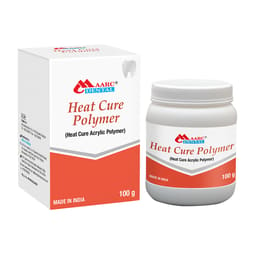

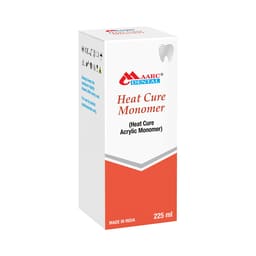
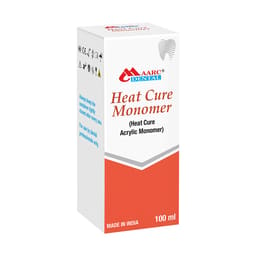
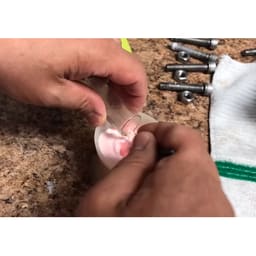
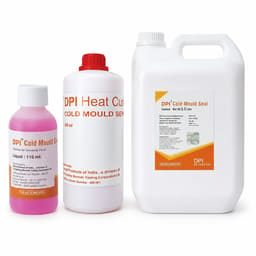
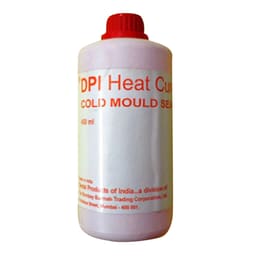
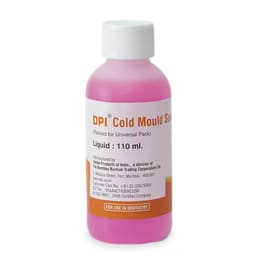
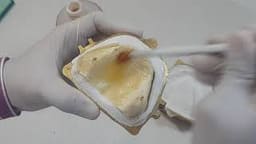
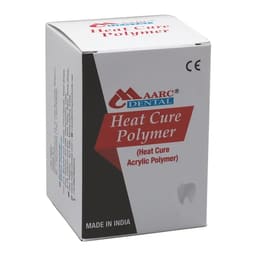
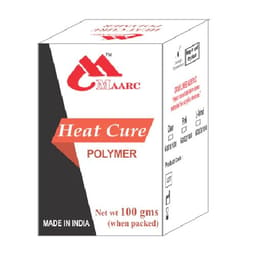
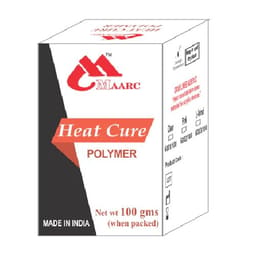
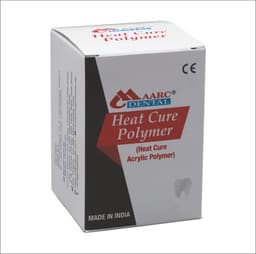
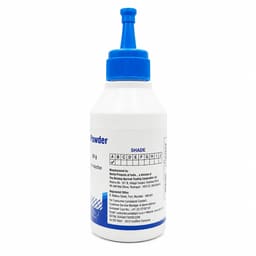
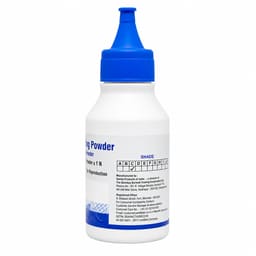
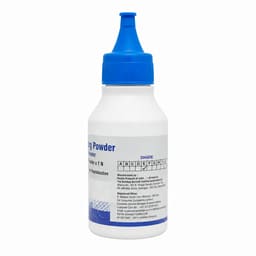
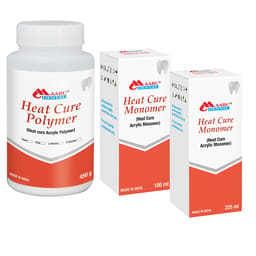
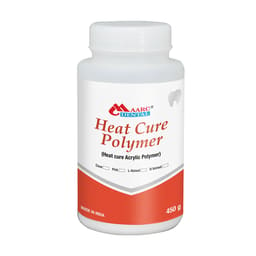
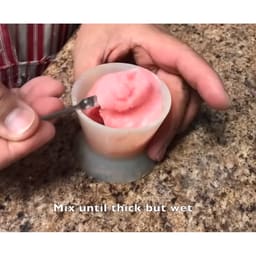
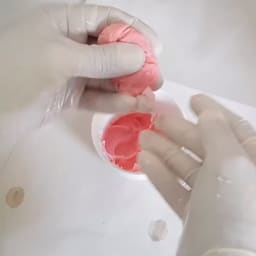
Denture Base Material — Heat-Cure, Cold-Cure & Light-Cure Acrylic for Complete and Partial Dentures
Denture base material is the pink-shaded polymethyl methacrylate (PMMA) acrylic — supplied as powder + liquid (heat-cure and cold-cure) or pre-shaded light-cure plates — used to form the tissue-bearing pink portion of complete and partial removable dentures, denture relines and orthodontic appliance bases. Dentalkart stocks heat-cure, cold-cure and light-cure denture base materials from DPI, Voco and Maarc — covering everyday acrylic denture work in colleges, labs and clinics.
Types of Denture Base Material
Heat-cure PMMA (heat-polymerised acrylic)
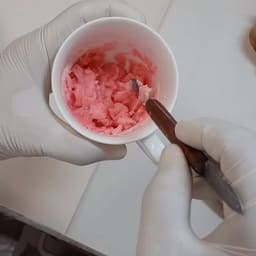
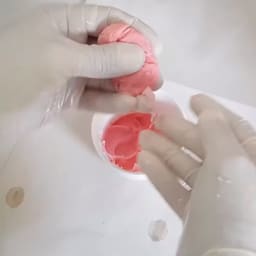
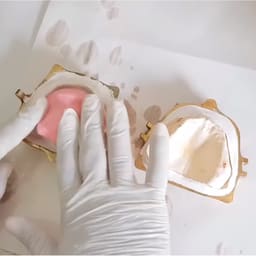
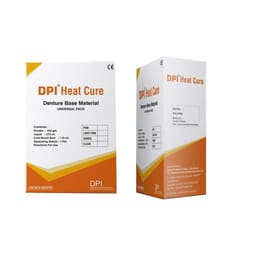
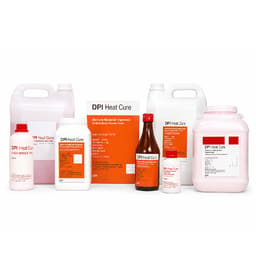
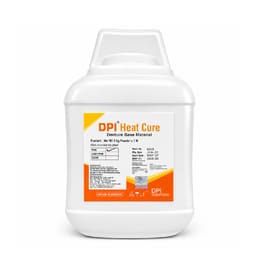
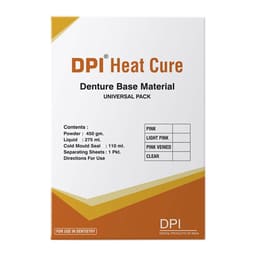
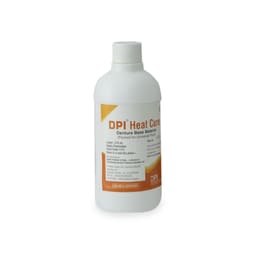
The classic powder + liquid PMMA that polymerises at 70–100 °C in a water bath inside a flask — best mechanical properties, lowest residual monomer and the gold standard for complete denture bases. For example, DPI Heat Cure Denture Base Material — the most widely used acrylic in Indian dental colleges and labs.
Cold-cure / self-cure PMMA
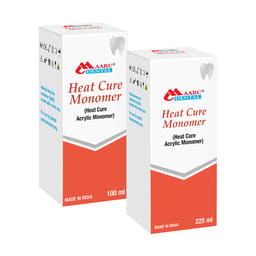
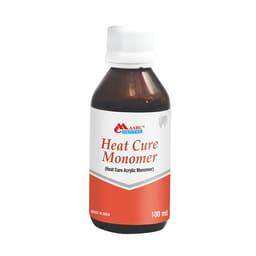
Auto-polymerising powder + liquid acrylic that sets at room temperature in 5–10 minutes — used for denture repair, relining, special trays, and orthodontic appliance baseplates where chairside or fast set is needed. For example, Maarc Cold Cure Monomer 4 Litres.
Light-cure denture base plates
Pre-shaded light-curable PMMA plates that polymerise under a UV/visible-light curing unit — fast workflow, low residual monomer and minimal dimensional change, ideal for custom trays, baseplates for record bases, and modern denture workflows. For example, Voco Individo Lux Maxillae 50 pcs.
Custom tray / baseplate material
Cold-cure or light-cure resin sheets shaped over a primary cast to form the custom tray used in secondary edentulous impressions and bite-registration record bases — for example, Maarc Eazy Tray 100 gm.
When Denture Base Material Is Used
- Complete maxillary and mandibular denture fabrication (heat-cure PMMA)
- Removable partial denture acrylic saddle and connector areas
- Denture relining, rebasing and repair (cold-cure)
- Custom acrylic tray fabrication for secondary edentulous impressions
- Orthodontic appliance baseplates (Hawley retainers, expansion plates)
- Bite-registration record bases for maxillomandibular relation recording
- Dental college teaching of denture processing techniques
How to Choose the Right Denture Base Material
- Pick heat-cure PMMA for primary denture base fabrication — best strength, lowest residual monomer, lowest patient irritation potential.
- Pick cold-cure / self-cure for chairside relines, denture repair, special trays and orthodontic appliances where fast room-temperature set is needed.
- Pick light-cure plates when workflow speed and dimensional accuracy matter — popular for custom trays and modern record-base fabrication.
- Maintain the correct powder-to-liquid ratio (typically 2.5:1 by volume for heat-cure) — over-monomer mixes shrink and warp.
- For heat-cure, follow a controlled curing cycle (long-cure 9 hours at 74 °C or short-cure with terminal boil) — fast cycles increase residual monomer and porosity.
- Store powders in cool, dry conditions and liquid monomer away from light to preserve shelf life.
Denture Base Brands at Dentalkart
Dentalkart's denture base material range includes DPI (Heat Cure PMMA — the classic Indian dental college and lab standard), Voco (Individo Lux Maxillae light-cure plates — premium German light-cure denture base) and Maarc (Cold Cure Monomer for repair and relining, Eazy Tray for custom tray fabrication) — covering heat-cure, cold-cure and light-cure chemistries for complete and partial denture work.
Why Buy Denture Base Material from Dentalkart
Every denture base material is sourced direct from the manufacturer or authorised Indian distributor, ships with manufacturing date, batch and expiry printed on every box, and reaches 110000+ pincodes across India with COD on most SKUs. Pair denture base material with matched impression materials, custom trays and articulator records to complete the full denture workflow from one trusted catalogue serving 50,000+ dentists and dental colleges.
Frequently Asked Questions (FAQs):
What is denture base material made of?
Denture base material is made of polymethyl methacrylate (PMMA) acrylic resin. It is supplied as a powder (PMMA polymer beads + initiator) and a liquid monomer (methyl methacrylate + cross-linking agent) that are mixed and polymerised by heat, light, or chemical (cold-cure) activation. Pink shading and fibre veining match natural gingival mucosa.
What is the difference between heat-cure and cold-cure denture base material?
The difference between heat-cure and cold-cure denture base material is polymerisation method and properties. Heat-cure PMMA polymerises at 70–100 °C in a water bath flask and gives the best strength, lowest residual monomer, and is the standard for complete denture bases. Cold-cure auto-polymerises at room temperature in 5–10 minutes — used for repairs, relines and special trays.
Which denture base is best for complete denture fabrication?
Heat-cure PMMA (such as DPI Heat Cure) is the best denture base for complete denture fabrication. The flask-and-water-bath polymerisation gives the highest mechanical strength, lowest porosity, and the lowest residual monomer of all three chemistries — minimising patient irritation and giving the longest-lasting denture base under occlusal load.
Can I use light-cure denture base for custom trays?
Yes, you can use light-cure denture base for custom trays. Pre-shaded light-cure plates like Voco Individo Lux are widely used for custom acrylic tray fabrication — they are dimensionally stable, polymerise in 60–120 seconds under a curing unit, and produce a smooth tray without the methyl methacrylate odour of cold-cure resins.
Are the denture base materials on Dentalkart genuine with valid expiry?
Yes, every denture base material on Dentalkart is genuine with valid expiry. All DPI, Voco and Maarc heat-cure, cold-cure and light-cure denture base materials are sourced direct from the manufacturer or authorised Indian distributor and ship with the original lot number, manufacturing date and expiry printed on every sealed box.