

Disinfectant Wipes
Disinfectant wipes are pre-moistened cloths that clean and disinfect a dental surface in a single wipe. Each cloth is already soaked with the disinfectant, so there is no spraying, mixing, or measuring — pull one, wipe the surface, and let it dry. They are the fastest way to turn a chair around between patients.
 Recommended
 Price- High to LowPrice- Low to High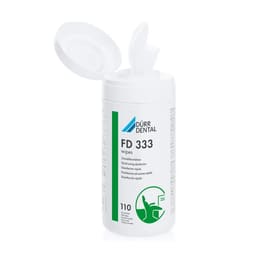
 15
15
Only 3 Left
8Disinfectant Wipes
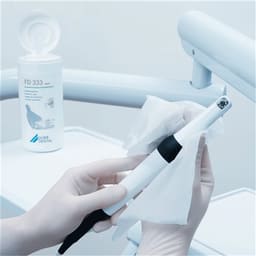
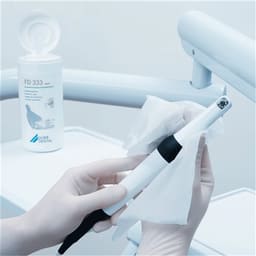
A disinfectant wipe does in one motion what a spray and cloth do in several. The cloth arrives already soaked with a surface disinfectant, so the operator pulls a wipe, cleans the surface, and moves on. Nothing is sprayed into the air, nothing is measured, and there is no bottle to refill mid-list. That speed is why many clinics keep wipes at the chair for quick turnarounds, alongside the bottled agents in the surface disinfectants range.
Why a wipe over a spray
The wipe format changes how the job feels at the chair:
- One action — cleaning and disinfecting happen in the same pass, not two separate steps.
- No aerosol — nothing is sprayed into the air, which matters in a small operatory.
- Consistent dose — every cloth carries the same amount of agent, so coverage does not depend on how hard someone sprays.
- Grab-and-go — pull, wipe, bin; ideal for the seconds between patients.
For heavy soil or large areas, a spray still has its place; the wipe wins on speed.
The tub and refill system
Most surface wipes work as a tub plus refill:
- The tub — a sealed canister that keeps the cloths moist and feeds them one at a time through the lid.
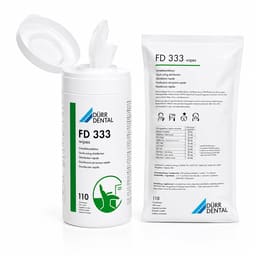
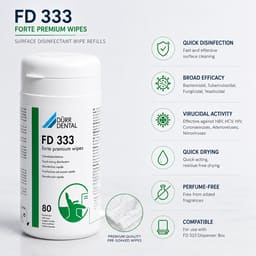
- The refill — a sealed bag or roll (such as the Dürr FD 333, 110 pulls a bag) that drops into the tub when it runs low.
- Buying refills — cheaper per wipe than a new tub each time, and less plastic.
Keep the lid closed between uses so the last wipes are as wet as the first.
Using wipes correctly
A wipe still has to be used properly to disinfect:
- Enough wipes — use a fresh cloth once it is soiled or dry; one wipe does not cover a whole chair.
- Stay wet — the surface must stay visibly wet for the product's contact time to actually kill.
- Not for instruments — surface wipes are for hard surfaces, not for reprocessing tools; that is the job of proper sterilization.
- Pair with hands — wiping surfaces sits alongside the operator's hand hygiene between patients.
Used this way, wipes keep the operatory turning over quickly and safely.
Frequently Asked Questions (FAQs):
What are dental disinfectant wipes used for?
They clean and disinfect the hard surfaces of a dental operatory between patients. Because the cloth is pre-soaked with disinfectant, a single wipe removes soil and kills microbes on chairs, worktops, and light handles in one pass. They are used for quick chairside turnarounds where reaching for a spray bottle and cloth would take longer.
Are wipes better than a disinfectant spray?
For speed, yes; for every job, not always. Wipes clean and disinfect in one action with no aerosol and a consistent dose per cloth, which suits fast turnarounds. A spray or concentrate is better for heavy soil, large areas, or soaking awkward shapes. Most clinics keep both and reach for whichever fits the task.
How do disinfectant wipe tubs and refills work?
A tub is a sealed canister that holds the moist cloths and dispenses them one at a time through its lid. When it empties, a refill — a sealed bag or roll of wipes, such as the Dürr FD 333 — is dropped in rather than buying a whole new tub. Refills cost less per wipe and use less plastic.
Do the surfaces still need contact time with wipes?
Yes. A wipe kills microbes only while the surface stays wet with the agent, for the contact time on the label. Wiping a surface and having it dry in seconds is not full disinfection. Use enough wipes to leave the surface visibly wet for the stated time, then let it air-dry rather than buffing it off early.
Can I use surface wipes on instruments?
No. Surface disinfectant wipes are made for hard surfaces like chairs and worktops, not for reprocessing instruments that enter the mouth. Instruments must be cleaned and then heat-sterilised in an autoclave. Using a surface wipe in place of sterilisation leaves instruments unsafe for the next patient.