

Impression Trays
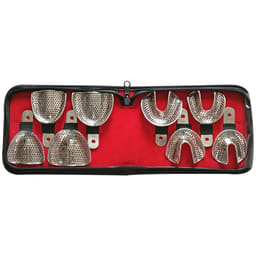
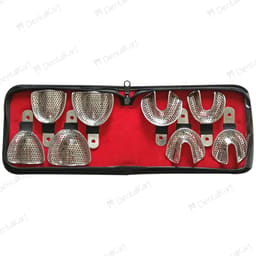
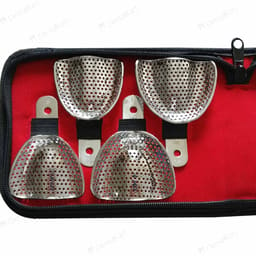
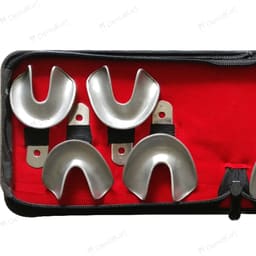
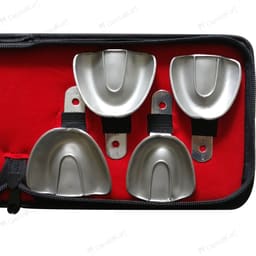
Choose an impression tray based on arch type (dentulous vs edentulous), the impression material being used, and whether retention requires perforated or smooth walls. Stock trays cover routine cases, while custom and mouldable trays suit complex prosthodontic work. Dentalkart stocks impression trays from GDC, Waldent, Samit, Cotisen, Moriz, ET and Dentalplant.
 Recommended
 Price- High to LowPrice- Low to High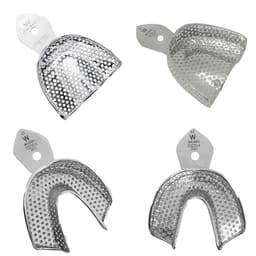
 125
125
 125
125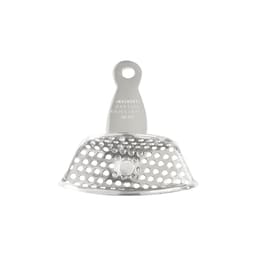
 15
15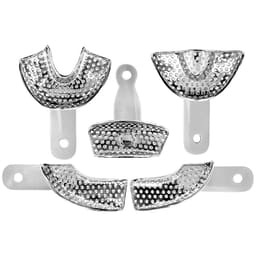
 170
170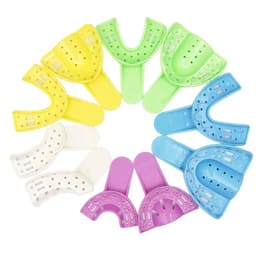
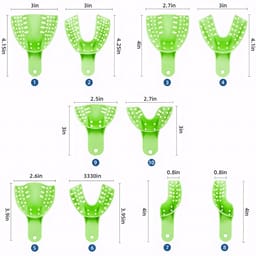
 4
4Impression Trays for Accurate Dental Impressions
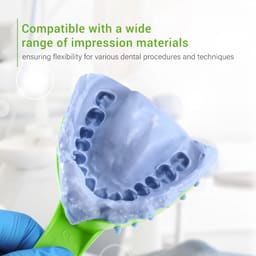
Impression trays are rigid stock or custom-fabricated carriers used by dentists to record arch impressions in alginate, polyvinyl siloxane (PVS), polyether, or zinc-oxide-eugenol materials. Available in perforated, non-perforated, dentulous, edentulous, and implant designs across upper and lower arches in small-to-large sizes, the tray controls material flow, retention, and registration accuracy. Correct tray selection is the first critical step in delivering well-fitting prosthodontic, orthodontic, and restorative work.
Types of Impression Trays
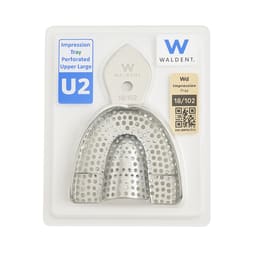
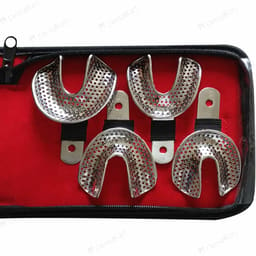
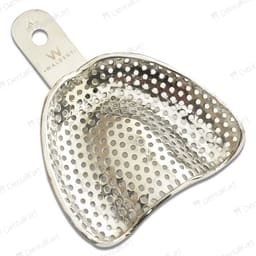
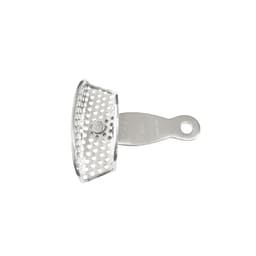
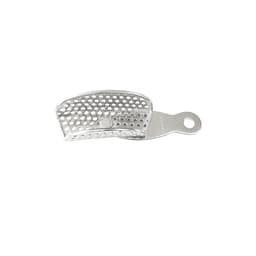
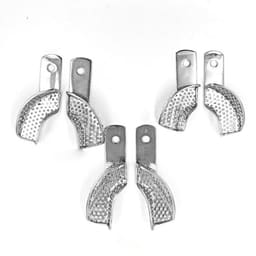
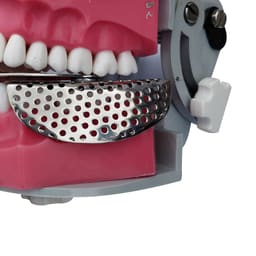
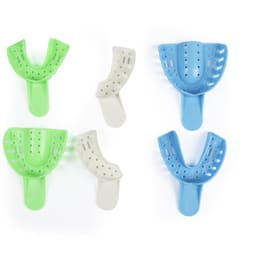
Perforated Impression Trays
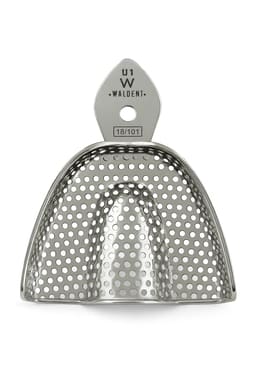
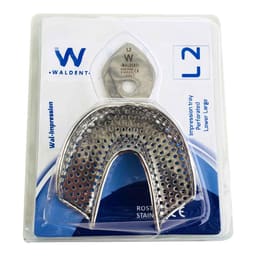
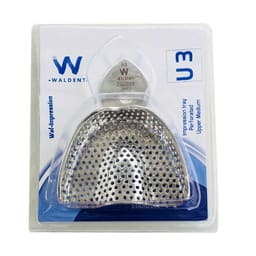
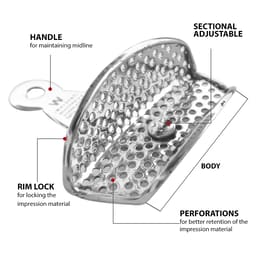
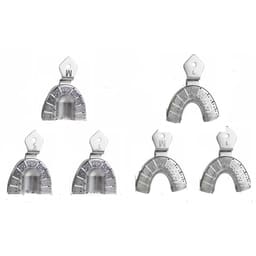
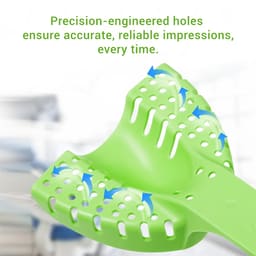
Perforated trays have evenly distributed holes that mechanically lock alginate and irreversible hydrocolloid materials in place during seating and removal, ensuring the impression stays firmly attached to the tray.
- Recommended product: Waldent Perforated Dentulous Impression Trays
- Key feature: punched perforations enable mechanical material retention without tray adhesive
- When to use: alginate and hydrocolloid impressions for study models and provisional work
Non-Perforated Impression Trays
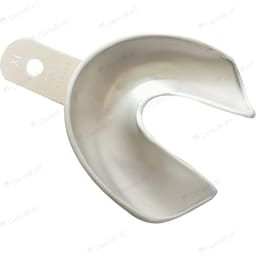
Non-perforated trays have smooth solid walls and require tray adhesive to retain elastomeric materials such as PVS and polyether, giving cleaner margins and superior dimensional accuracy.
- Available in dentulous and edentulous variants across the GDC and Waldent ranges
- Key feature: smooth wall finish maintains material wall thickness for accurate registration
- When to use: PVS, polyether, and polysulfide impressions for fixed prosthodontics and crown-and-bridge
Edentulous Impression Trays
Edentulous trays are anatomically shaped without depth for natural teeth, designed to capture the residual alveolar ridge, vestibules, and palatal vault for complete denture fabrication.
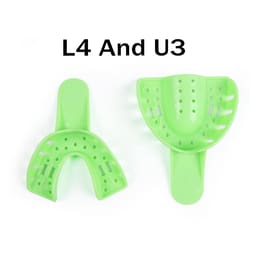
- Available in upper/lower 1–4 sizing across the GDC kit range
- Key feature: shallower flange profile for fully edentulous arches
- When to use: complete denture primary and final impressions
Dentulous Impression Trays
Dentulous trays have deeper occlusal compartments to accommodate natural tooth crowns and are graded by arch width, with upper trays palate-vaulted and lower trays tongue-relieved.
- Recommended product: Samit Mouldable Trays for thermoplastic adaptation
- Key feature: graded sizing covers narrow, average, and broad arches
- When to use: crown preparations, fixed prosthodontics, orthodontic study models
Implant Impression Trays
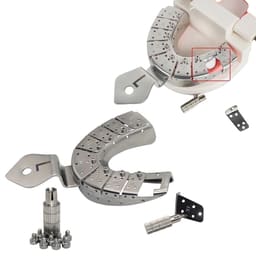
Implant trays incorporate occlusal windows or open-tray designs that allow access to transfer copings during pickup impression techniques used in implant prosthodontics.
- In stock: Dentalplant Implant Impression Trays
- Key feature: open-tray windows for direct pickup technique with screw-retained copings
- When to use: implant-level impressions for single, multi-unit, and full-arch restorations
Mouldable & Disposable Impression Trays
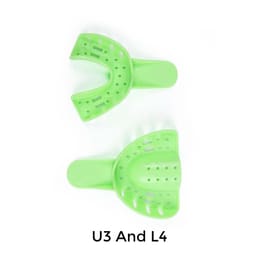
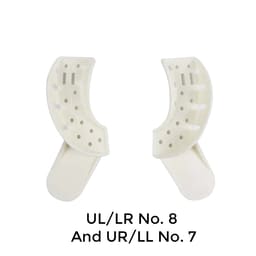
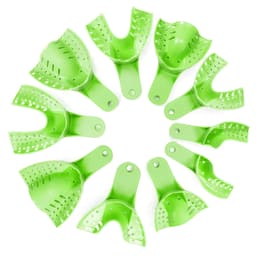
Mouldable and disposable trays are single-use, thermoplastic, or pre-formed plastic carriers that eliminate sterilisation overhead and adapt to varied arch anatomy chairside.
- In stock: ET Impression Tray Pack of 2
- Key feature: ready-to-use, single-patient design with no autoclave turnaround
- When to use: high-volume clinics, screening camps, and infection-control-sensitive settings
When Impression Trays Are Used
Impression trays are used in every clinical workflow that requires a stone model or digital scan reference. The choice of tray and material directly affects impression accuracy, fit of the final restoration, and chair-time efficiency across general, prosthodontic, and orthodontic practice.
- Complete denture and partial denture fabrication
- Crown, bridge, and fixed prosthodontic preparations
- Implant pickup and transfer impressions
- Orthodontic study models and aligner records
- Bite registration adjunct procedures — pair with Impression Materials
- Diagnostic models for treatment planning and case documentation
How to Choose the Right Impression Tray
- Arch type — dentulous trays for natural-teeth arches; edentulous trays for complete denture cases
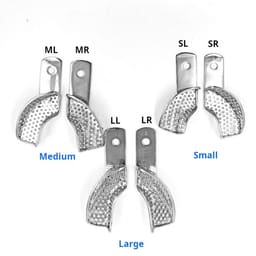
- Arch size and shape — match upper/lower sizing 1–4 to patient’s arch width and depth
- Impression material — perforated for alginate/hydrocolloid; non-perforated with adhesive for PVS/polyether
- Treatment indication — standard stock for routine work; implant trays for fixture-level impressions; mouldable for single-use scenarios
- Material handling — use Tray Adhesive on non-perforated trays for elastomeric retention
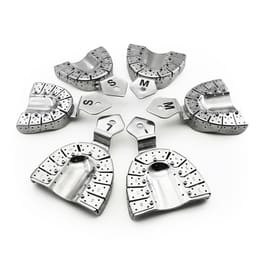
- Sterilisation needs — reusable stainless steel for repeat use; disposable for high-volume infection control
Trusted Brands at Dentalkart
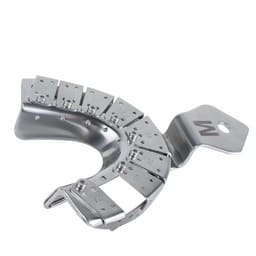
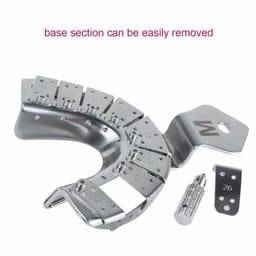
Dentalkart stocks impression trays from GDC (industry-leading edentulous and dentulous Indian range covering all upper/lower sizes 1–4, perforated and non-perforated), Waldent (popular Indian dentist brand with both dentulous and edentulous trays), Samit (mouldable thermoplastic and metallic perforated options), Cotisen (general-purpose and implant tray sets), Moriz (stainless steel perforated trays), Dentalplant (specialised implant impression trays) and ET (disposable single-use packs). Every product is authorised and authenticity-verified.
Why Buy Impression Trays from Dentalkart
Dentalkart is India’s trusted online dental supplier with the widest curated range of impression trays from globally and nationally recognised brands. Every SKU is sourced from authorised distributors and shipped from GST-verified inventory. Trusted by 50,000+ dentists across 110000+ Indian pincodes, we offer transparent pricing, secure payment, fast pan-India delivery, dedicated specialist support, and verified product authenticity — making us the preferred procurement partner for clinics, dental colleges, and prosthodontic labs nationwide.
Frequently Asked Questions (FAQs):
What is an impression tray and what is it used for?
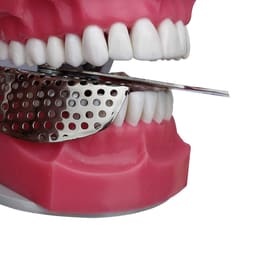
An impression tray is a rigid carrier used by dentists to hold impression material against the arches while it sets, capturing an accurate negative replica of the teeth and soft tissues. Trays are used for denture fabrication, crown and bridge work, implant restorations, orthodontic study models, and bite registration records.
Perforated vs non-perforated impression trays — which is better?
Perforated vs non-perforated comes down to the impression material. Perforated trays mechanically retain alginate and irreversible hydrocolloid through wall holes, while non-perforated trays have smooth walls that require tray adhesive to retain PVS, polyether, and polysulfide. Use perforated for alginate; non-perforated with adhesive for elastomeric precision impressions.
How do I choose the right impression tray size for my patient?
Choose tray size by trying in different upper/lower numbers (1–4) until the tray comfortably extends 3–4 mm beyond the most distal molar with 4–6 mm of material space around all teeth. Avoid trays that contact teeth or compress soft tissue. Larger arches need higher numbers; smaller arches need lower numbers.
Are stainless steel impression trays reusable, and how should they be sterilized?
Stainless steel impression trays are fully reusable and should be cleaned of all impression residue, scrubbed with detergent, ultrasonically cleaned, then autoclaved at 134°C for the standard sterilisation cycle. Plastic and mouldable trays are single-use disposable and must not be re-autoclaved as they will deform or melt.
Are Dentalkart’s impression trays authentic and shipped fast?
Yes, every impression tray sold on Dentalkart is sourced directly from GDC, Waldent, Samit, Cotisen, Moriz, Dentalplant, and ET authorised distributors with GST-compliant invoicing and full brand warranty. Pan-India delivery is typically 2–5 working days with order tracking, and bulk-volume pricing is available for clinics and dental colleges.