





Lingual Pliers
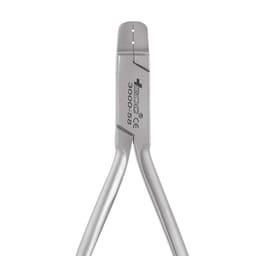
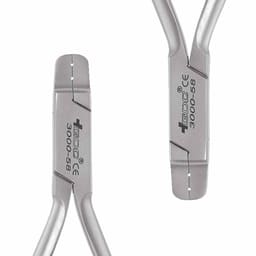
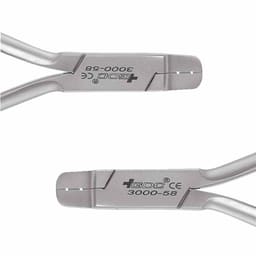
A lingual plier is an orthodontic bending plier shaped to adjust wire on the tongue side of the arch — a lingual arch, a transpalatal arch, or a lower lingual holding arch. Its fine, angled tips reach that set-back wire and place small, controlled bends where a labial plier cannot. Such pliers are used to fit, activate, and refine lingual appliances.
 Recommended
 Price- High to LowPrice- Low to High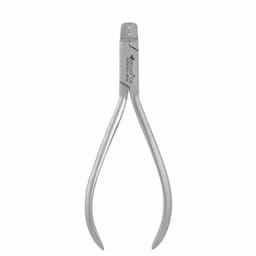
 40
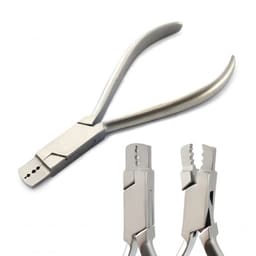
40Lingual Pliers
Some orthodontic appliances sit behind the teeth rather than in front of them — a lingual arch, a transpalatal bar, or a lower lingual holding arch, all made from wire running along the tongue or palatal side. Adjusting that wire is awkward with an ordinary plier, because the working area is set back and the bends have to be small and exact. Lingual pliers are shaped for it: fine, angled tips that reach the lingual wire and place a controlled bend without disturbing the rest of the appliance. They belong with the specialised bending orthodontic instruments kept for appliances that sit on the inside of the arch.
Types of lingual plier
Lingual pliers vary by tip shape and the bend each is meant to produce:
- Lingual arch forming plier — angled beaks for adapting a lingual arch or TPA to the palatal contour so it seats passively.
- Loop and omega style — tips that place the small loops or omega bends used to activate or adjust a lingual arch.
- Three-jaw / three-prong pattern — a design that grips and turns wire from more than one point for a tight, defined bend in a confined space.
The common thread is the angled reach: every pattern is built to work wire on the lingual side rather than the labial side. Which one an operator keeps depends on the appliances they most often fit.
The appliances they adjust
Lingual pliers are used across the inside-the-arch appliances:
- Lingual arch — a wire running along the lingual surfaces, adjusted to hold or control arch form and space.
- Transpalatal arch (TPA) — a wire crossing the palate between molars, activated for expansion, rotation, or anchorage.
- Lower lingual holding arch (LLHA) — a mandibular arch that maintains space and length, refined as the case progresses.
Each of these is made from firmer wire seated in a set-back position, which is why a shaped plier does the job a labial one cannot. The palatal and lingual wire being worked is drawn from the heavier laboratory wires used for such arches.
The bends they make
A lingual plier is put to work across the life of the appliance:
- Fitting — adapting the arch to the palatal or lingual contour so it seats without strain.
- Activation — placing a small bend that expands, holds, or adjusts the arch as treatment needs.
- Refinement — correcting the wire's form when the appliance is checked at a review.
Each is a short, accurate bend made in a tight space, which is exactly what the angled tips are for. Bending light labial arch wire and loops out in front is handled instead by the general-purpose light wire bird beak plier.
Choosing a lingual plier
For a plier making precise bends on firmer arch wire, a few things decide its value:
- Tip shape and reach — angled, tapered tips matched to the appliance and the bends you make most.
- A firm pivot — an accurately fitted joint that holds the two tips true so the bend lands where intended.
- A hardened working surface — tips that keep their form against the firmer wire a lingual arch uses.
Match the pattern to the appliances your practice fits most, and favour a well-finished joint and hardened tips for a bend that repeats cleanly. Sterilised alongside the rest of the appliance kit, a good lingual plier stays serviceable over long use.
Buy lingual pliers at Dentalkart
Lingual pliers here are the dedicated tools for adjusting lingual, transpalatal, and lower lingual holding arches — the reach and control a labial plier cannot give when the wire sits on the inside of the arch. An orthodontist fitting or reviewing these appliances can match the tip pattern to the work. Full specification and live stock for each one are shown on its own product page.
Frequently Asked Questions (FAQs):
What are lingual pliers used for?
They adjust wire on the tongue side of the arch — a lingual arch, a transpalatal arch, or a lower lingual holding arch. Their fine, angled tips reach that set-back wire and place small, controlled bends to fit or activate the appliance. A standard labial plier struggles with the angle, which is why these shaped pliers exist.
Why not just use a standard orthodontic plier?
A standard plier works on the labial arch wire in front of the teeth; a lingual plier is angled to reach behind them. The tip shape lets it grip and bend wire that runs along the palate or the lingual side, in a confined space and often near solder joints. The difference is all about access to the inside of the arch.
What appliances do they work on?
Chiefly the lingual arch, the transpalatal arch (TPA), and the lower lingual holding arch — appliances made from wire seated on the tongue or palatal side, often used for space maintenance or arch control. A lingual plier fits them to the contour and makes the small activating bends these arches need through treatment.
Can a bird beak plier do the same job?
For labial light-wire loops, a bird beak is the right tool, but it is not shaped for set-back lingual access. A lingual plier's angled tips reach the palatal wire a bird beak cannot comfortably work. Practices that fit lingual appliances keep the dedicated plier rather than forcing a labial one to the task.
Which lingual plier suits my practice?
Match the tip shape to the appliances you fit most, and check that the joint is well-fitted so the tips stay aligned for a repeatable bend. A hardened working surface holds its form against the firmer wire a lingual arch uses. The product page lists each plier's pattern and current stock to help you decide.