

Adhesives
4.6
A dental adhesive bonds a material to the tooth. Which one you need depends on what you are bonding: an orthodontic adhesive for brackets, a universal bonding agent for composite fillings, a resin cement for crowns and veneers, and a denture adhesive for removable dentures. They are not interchangeable.
Sort by - Recommended
 Recommended
 Price- High to LowPrice- Low to High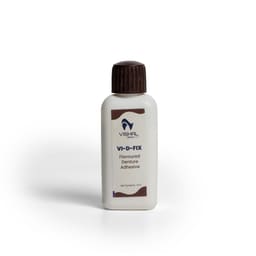
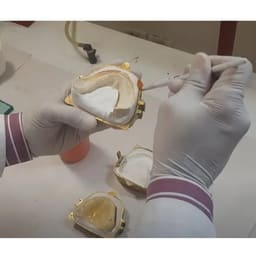

Flavored denture adhesive powder ensuring secure daily hold and comfortable fit
₹ 320₹ 370
13.51% Off
 3
3View Similar Products
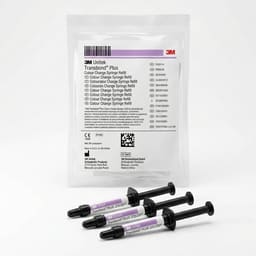
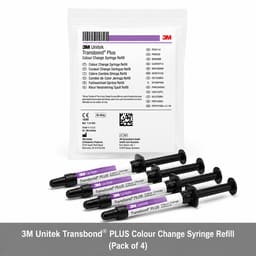
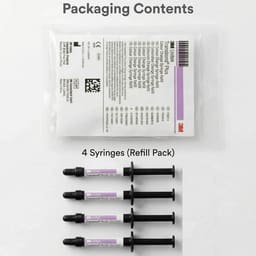
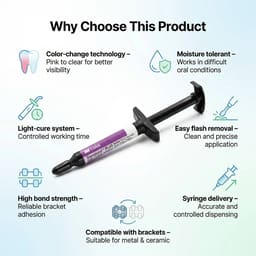
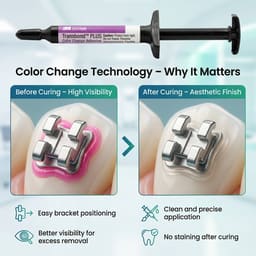
Light-cure orthodontic adhesive with color-change technology for precise bracket placement, easy excess removal, and reliable bonding even in moisture-prone clinical conditions.
₹ 13405₹ 17025
21.26% Off
134View Similar Products

Only 3 Left
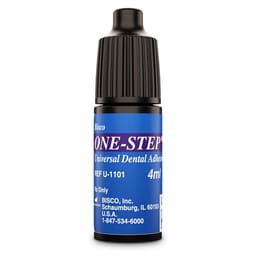
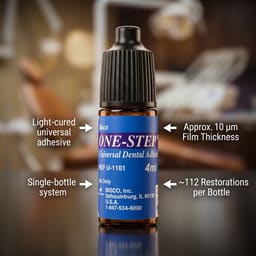
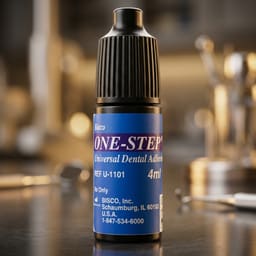
Bisco One-Step is a 5th Generation, 2-step universal dental adhesive designed for use with the total-etch (etch-and-rinse) bonding technique. It is a light-cured, single-bottle adhesive suitable for direct and indirect restorative procedures.
₹ 3795₹ 4560
16.78% Off
38View Similar Products
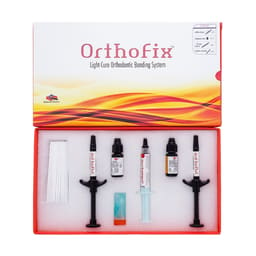
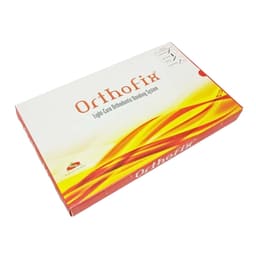
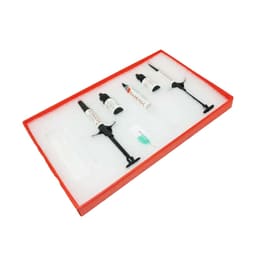
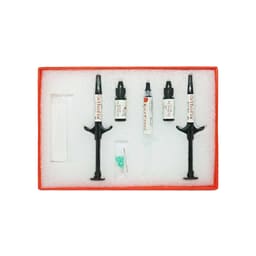
View Similar Products
Only 2 Left
★ 4.5
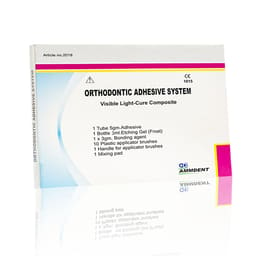
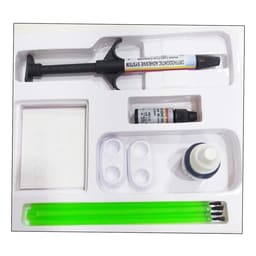
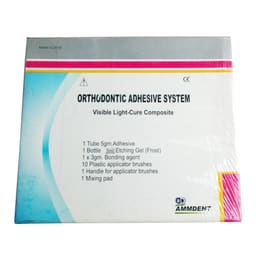
(2)The Visible Light Cure Composite is an orthodontic adhesive kit featuring advanced composition, enabling precise and strong bonding during orthodontic procedures.
₹ 905₹ 1786
49.33% Off
9View Similar Products
View Similar Products
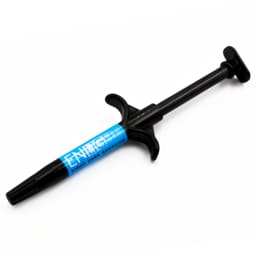
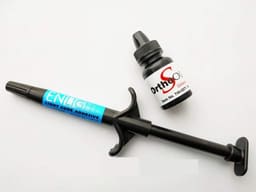
★ 5.0
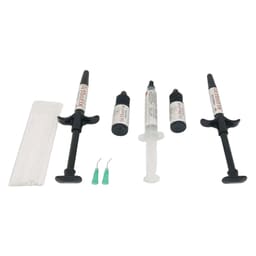
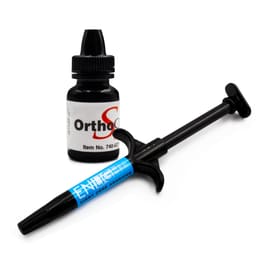
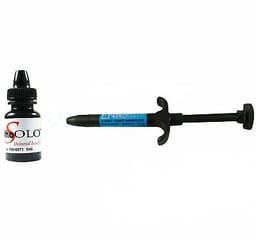
(27)Light Cure Adhesive Syringe + Bond
₹ 2325₹ 2395
2.92% Off
23View Similar Products
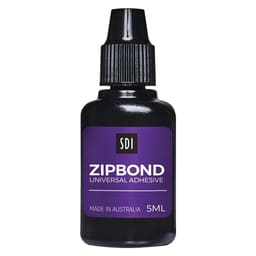
Only 5 Left
17.50% Off
35View Similar Products
Filters
Sort By
RecommendedDental Adhesives — Bonding Brackets, Fillings, Crowns and Dentures
A dental adhesive holds a material against tooth structure and keeps it there. That covers several different chemistries: orthodontic adhesives, universal bonding agents, resin cements and denture adhesives.
Each is engineered for one job. A bracket adhesive resists months of orthodontic force, then releases cleanly. A bonding agent seals a composite filling to dentine for years. Swap one for the other and the bond fails. So choose by the procedure in front of you, not by the word on the label.
Which dental adhesive do you need?
Pick by what you are bonding:
- Orthodontic brackets — a light-cure orthodontic adhesive.
- A composite filling — a universal bonding agent.
- A crown, veneer, inlay or onlay — a resin cement.
- Clear-aligner attachments — an attachment adhesive.
- A removable denture — a denture adhesive.
Orthodontic bonding adhesives
These are filled composites. They need to hold a bracket against months of orthodontic force — then debond cleanly at the end without tearing enamel.
Light-cure is the standard. You get an unhurried working time to seat the bracket exactly, then set it on command with the curing light.
The Anabond Orthofix Kit is a straightforward light-cure orthodontic bonding system for routine bracket bonding.
Colour-change and moisture-tolerant adhesives
Some orthodontic adhesives are tinted before curing and turn tooth-coloured after. That small trick solves two real problems:
- You can see the adhesive around the bracket pad, so you know the coverage is complete.
- You can spot and clear the excess before curing, not after.
Many of these are also moisture-tolerant, which helps with children and difficult isolation. The 3M Unitek Transbond Plus Colour Change refill is a moisture-tolerant colour-change system.
Universal bonding agents
These bond composite fillings to enamel and dentine. "Universal" means one bottle works in any etch mode:
- Total-etch — phosphoric acid on enamel and dentine first.
- Self-etch — the adhesive does the etching. Less post-op sensitivity.
- Selective-etch — acid on enamel only, self-etch on dentine. A common compromise.
Which mode to use is a clinical decision, not a habit — our guide to self-etch, total-etch and selective-etch sets out when each one applies.
A single-bottle system also means fewer steps and less chance of contamination between them.
Resin cement — for crowns and veneers
An indirect restoration is not bonded with a filling adhesive. It is luted with resin cement, which gives high bond strength, good aesthetics and colour stability under a thin veneer.
The Dentsply Calibra Ceram is a resin cement with multiple curing options.
Self-adhesive restoratives
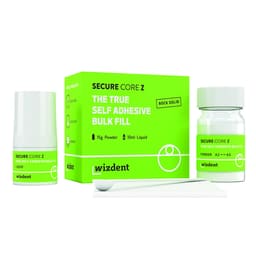
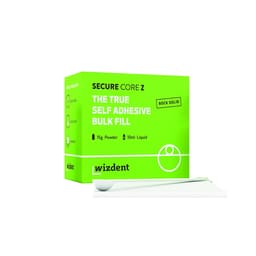
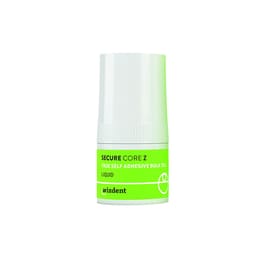
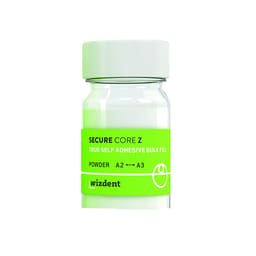
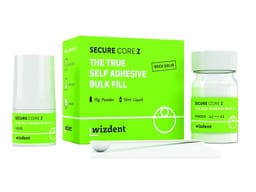
Some restorative materials bond to tooth structure with no separate adhesive step. Fewer steps, less chair time, and one less thing to get wrong. The Wizdent Secure Core Z is a self-adhesive bulk-fill of this type.
Aligner attachment adhesive
Clear aligners grip the tooth through small composite attachments. These need an adhesive that is strong, discreet and comfortable — bonded to enamel and shaped in the template. DentAct Aligner Fix is formulated for this job.
Denture adhesive
A different product entirely. This is a patient-applied paste or powder that improves the day-to-day retention and comfort of a removable denture. The Vishal Dentocare VI-D-Fix is a flavoured powder denture adhesive.
Light-cure or self-cure?
- Light-cure — you control when it sets. Best for bracket placement and direct restorations, where you want time to position and then a fast, commanded set.
- Self-cure and dual-cure — set chemically. Use them where light cannot reach: deep boxes, under opaque crowns, in the canal.
Why do brackets debond?
Almost always technique, not the adhesive. The usual causes:
- Inadequate or too-short etching
- Saliva contamination of the etched enamel
- Too little adhesive on the pad
- The bracket not fully seated
- Under-curing — light too weak, or too short a cure
Get isolation, etch time and curing-light output right and failures become rare.
What goes with the adhesive
Bonding is a sequence, not a single product. The etchant, primer and curing light matter as much as the adhesive itself.
The etchants and bonding resins sit in the bonds and etchants range.
The brackets, bands and wires the orthodontic adhesives hold sit in orthodontics.
Why buy dental adhesives from Dentalkart
Adhesives are shelf-life sensitive. A bottle past its date, or one that has been left warm and light-exposed, will not bond the way its datasheet promises.
Every adhesive here lists its type, curing mode and pack size, so the right material reaches the right procedure. Stock arrives in date and sealed, and the etchants, brackets and curing lights the workflow needs order from the same catalogue.
Frequently Asked Questions (FAQs):
What are dental adhesives used for?
Dental adhesives bond materials to tooth structure, and the type depends on the job. Orthodontic adhesives attach brackets to enamel. Universal bonding agents bond composite fillings to enamel and dentine. Resin cements lute crowns, veneers, inlays and onlays. Denture adhesives improve the retention of removable dentures. They are not interchangeable.
What is the difference between an orthodontic adhesive and a bonding agent?
They are built for different jobs. An orthodontic adhesive is a filled composite that must hold a bracket against months of force and then debond cleanly. A restorative bonding agent is an unfilled or lightly filled resin that wets enamel and dentine so a composite filling bonds permanently. Using one for the other will fail.
Should I use a total-etch, self-etch or selective-etch technique?
A universal adhesive works in all three. Total-etch uses phosphoric acid on enamel and dentine and gives strong enamel bonding. Self-etch skips the separate acid step and tends to cause less post-operative sensitivity. Selective-etch — acid on enamel only, self-etch on dentine — is a common compromise that takes the best of both.
Why do orthodontic brackets debond?
Debonding is usually a technique failure, not an adhesive failure. The common causes are inadequate etching, saliva contamination of the etched enamel, too little adhesive on the bracket pad, a bracket that was not fully seated, and under-curing from a weak light or too short a cure. Good isolation and adequate curing keep failures low.
Can dental adhesives bond in the presence of moisture?
Standard adhesives need a dry enamel surface to reach full bond strength. Moisture-tolerant orthodontic adhesives use modified chemistry to bond acceptably despite minor contamination, which helps with children and difficult isolation. They are a safeguard, not a substitute — good isolation still gives the most reliable bond.