
Dr. Yashasvi Sharma
Contributing Dental Clinician
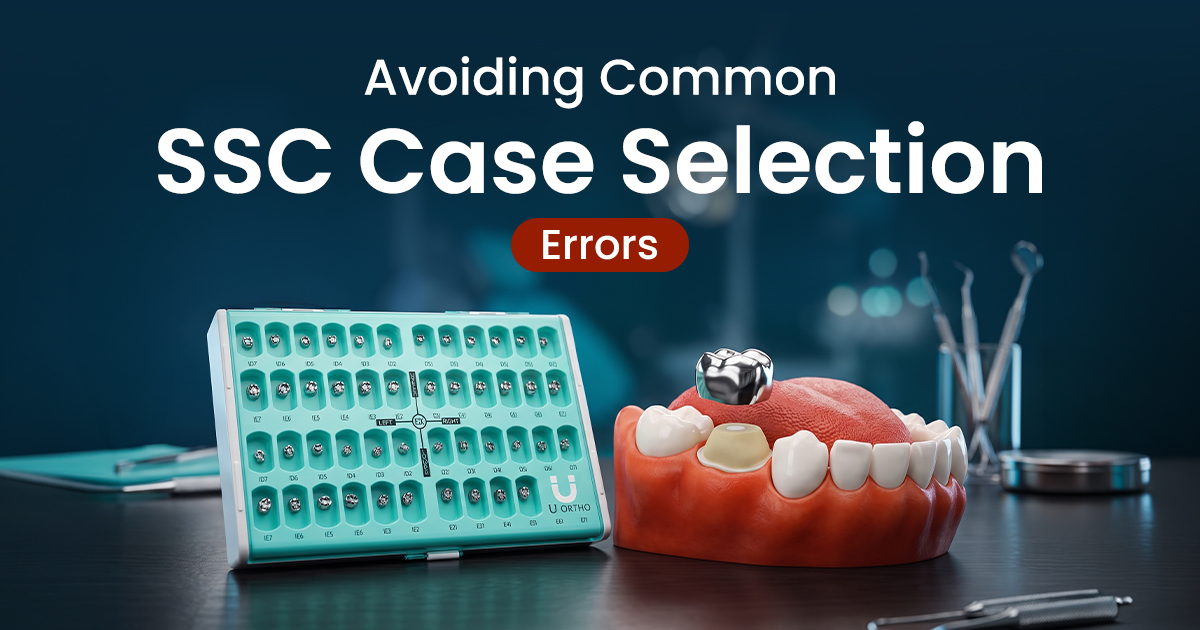
Avoiding Common SSC Case Selection Errors
A Pediatric Clinical Guide
SSCs are indicated for multi-surface carious primary molars, post-pulpotomy teeth, and high-caries-risk children. Proper case selection prevents premature failure and gingival issues, ensuring predictable, long-lasting restorations for young patients.
Table of Contents
What Are the Primary Indications for an SSC?
SSCs are primarily indicated for primary molars with extensive multi-surface caries, especially past proximal line angles. They provide full coronal coverage, protecting weakened teeth from occlusal forces and fracture. This is crucial after pulpotomy or pulpectomy, where teeth become brittle; an SSC is standard for restoring these teeth, ensuring longevity until exfoliation.
Using crown preparation kits ensures precise 1.0-1.5 mm occlusal reduction and minimal proximal reduction to break contact, essential for a passive fit. SSC durability and seal also make them ideal for developmental defects like amelogenesis imperfecta or dentinogenesis imperfecta, offering protection adhesive restorations cannot match.
- Multi-Surface Caries: Decay on two or more surfaces (e.g., MO/DO, buccolingual) where an SSC outperforms large fillings.
- Post-Endodontic Restoration: Mandatory for pulpotomy/pulpectomy-treated primary molars to prevent leakage and fracture.
- Developmental Defects: Conditions like enamel hypoplasia needing full coverage to prevent breakdown and sensitivity.
- High Caries Risk: For rampant caries, poor hygiene, or special needs, SSCs ensure predictable long-term outcomes.
- Fractured Teeth: Significant coronal tooth loss from trauma, restored by an SSC.
SSC Indication Checklist
Proximal box extending beyond line angle.
Weakened tooth needs full-coverage.
Insufficient structure for bonded restoration.
Heavy forces would fracture large fillings.
Which Cases Are Poor Candidates for SSCs?
Poor candidates for SSCs include non-restorable teeth or those with compromised periodontal support. This covers teeth with >2/3 root resorption, where remaining lifespan doesn't justify the procedure, or significant bone loss from infection. Placing an SSC on a tooth nearing natural exfoliation (within 12-18 months) is overtreatment; extraction may be prudent.
SSCs are contraindicated if insufficient coronal structure remains for mechanical retention, even with build-up. A minimum of 2-3 mm sound coronal tooth height is required. Another absolute contraindication is a known nickel allergy, as most SSCs contain 8-12% nickel, eliciting allergic reactions.
- Nearing Exfoliation: Significant root resorption, expected exfoliation within a year.
- Non-Restorable Tooth: Caries extends significantly subgingivally, or untreatable furcation involvement.
- Insufficient Tooth Structure: Less than 2 mm supragingival tooth structure for retention.
- Periodontal Compromise: Severe bone loss or mobility from infection/pathology.
- Known Nickel Allergy: Documented allergy to nickel-containing metals.
Critical Contraindications
Never place an SSC on a primary molar with furcation involvement or non-restorable perforation. This traps infection, causing abscesses and potential succedaneous tooth damage.
How Caries Risk Assessment Guides SSC Selection
Caries risk assessment determines choice between conservative fillings and full-coverage SSCs, especially for borderline cases. For high-risk children (e.g., frequent sugar, poor hygiene, active white spots), an SSC is often superior even for moderate lesions. Its full coverage protects all susceptible surfaces from new or recurrent decay, breaking the re-restoration cycle.
Conversely, a low-risk child with a single proximal lesion and excellent oral hygiene may suit a conservative Class II composite. The aim is to prevent future treatment. An SSC is a definitive, long-term solution for high-risk patients, as composite fillings may fail within 24-36 months due to marginal recurrent caries, leading to complex future treatment.
- High Risk: Opt for an SSC for full coverage, mitigating high recurrent caries likelihood. Includes children with special needs or xerostomia-causing medications.
- Moderate Risk: Evaluate lesion size. Large or cusp-involving lesions prefer SSCs. Smaller lesions may suit fillings if hygiene improves.
- Low Risk: Conservative intracoronal restorations suffice if the lesion doesn't compromise structural integrity.
Caries Risk & Restoration Choice
SSC vs. Pulpotomy: The Correct Treatment Sequence
It's a misconception to view SSCs and pulpotomies as competing treatments; they are sequential procedures for specific diagnoses. A pulpotomy treats vital primary teeth when caries reaches the pulp, while the SSC is the definitive restoration placed afterward. The decision is whether a pulpotomy is needed *before* placing the mandatory SSC.
Pulpotomy need is determined by clinical and radiographic findings. Signs include spontaneous pain, radiographic caries near pulp horn, or pulpal exposure during excavation. Profuse, uncontrolled bleeding (within 3-5 min with moist cotton) from an exposure indicates irreversible pulpitis, requiring pulpectomy or extraction, not a pulpotomy.
- Diagnosis First: Assess pulpal health pre-preparation. Check for spontaneous/nocturnal pain or sinus tracts.
- Radiographic Evidence: Look for periapical/furcal radiolucencies; assess caries depth to pulp. Furcal involvement contraindicates pulpotomy.
- Intraoperative Signs: Pinpoint, non-hemorrhagic exposure in asymptomatic tooth may allow direct pulp cap; pulpotomy often more predictable.
- Hemorrhage Control: Hemostasis after coronal pulp amputation indicates vitality. Uncontrolled bleeding signifies irreversible inflammation.
| Clinical Finding | Indication for Pulpotomy + SSC | Indication for Conservative Restoration |
|---|---|---|
| Pain History | Spontaneous or nocturnal pain | Pain only on stimulation (e.g., cold/sweets) |
| Radiograph | Caries in/near pulp horn | Caries confined to dentin, sound dentin over pulp |
| Caries Excavation | Carious pulp exposure | No pulp exposure best |
| Prognosis | Good (if followed by SSC) | Excellent (with good hygiene) |
Conclusion: Master SSC Case Selection
Clinical success of pediatric SSCs relies entirely on appropriate case selection. Critical judgment must balance decay extent, pulp vitality, and patient caries risk. Correctly choosing between a filling, pulpotomy with crown, or extraction directly impacts treatment longevity and prevents unnecessary retreatments. Always select the most definitive, predictable option.
- Caries Extent: Choose SSC for primary molars with decay on two or more surfaces, especially if undermining a cusp.
- Pulpal Health: Spontaneous pain or non-hemorrhagic furcal radiolucency indicates pulp therapy before crowning.
- Patient Risk: For high-caries-risk children, an SSC is superior to large multi-surface fillings due to full-coverage protection.
- Structural Integrity: Do not place SSC if less than 2-3 mm vertical coronal tooth structure is available for retention.
Frequently Asked Questions
Pre-crimped crowns are faster due to contoured cervical margins needing minimal adjustment, ideal for high-volume clinics. Straight-sided crowns offer more customization; they can be trimmed and contoured with pliers for a precise fit in cases with unusual morphology or tight contacts.
A large multi-surface composite is not recommended for primary molars, especially in high-risk patients. These teeth have broad, flat contacts and thinner enamel, susceptible to recurrent caries and fracture under occlusal load. SSCs provide superior durability, full coverage, and a much higher long-term success rate.
Premature SSC loss most often results from inadequate tooth preparation, insufficient mechanical retention (<2 mm tooth height), or cement failure. Inadequate occlusal reduction creates high points, dislodging the crown, while minimal taper or poor marginal adaptation causes luting cement failure.
Ideal reduction for pediatric SSCs is 1.0-1.5 mm occlusally for adequate metal thickness without altering vertical dimension. Proximal reduction should just break mesial/distal contacts for passive seating. Buccal and lingual surfaces require minimal to no reduction.
The main difference is material and aesthetics. SSCs are metal-based, durable, cost-effective, but not tooth-colored. Zirconia crowns are ceramic, offering excellent aesthetics, but are more expensive, less ductile, and require precise preparation. SSCs remain the standard for posterior primary teeth due to forgiveness and longevity.
Written by
Dr. Yashasvi Sharma
Contributing Dental Clinician
Dr. Yashasvi Sharma is a contributing Dental professional at Dentalkart Blogs, where she distills chair-side clinical experience into evidence-based, practice-ready guides for Indian dentists. Her work bridges the gap between academic dentistry and everyday practice, translating global research into actionable insights tailored to the realities of Indian clinical settings.
Keep reading
Browse all →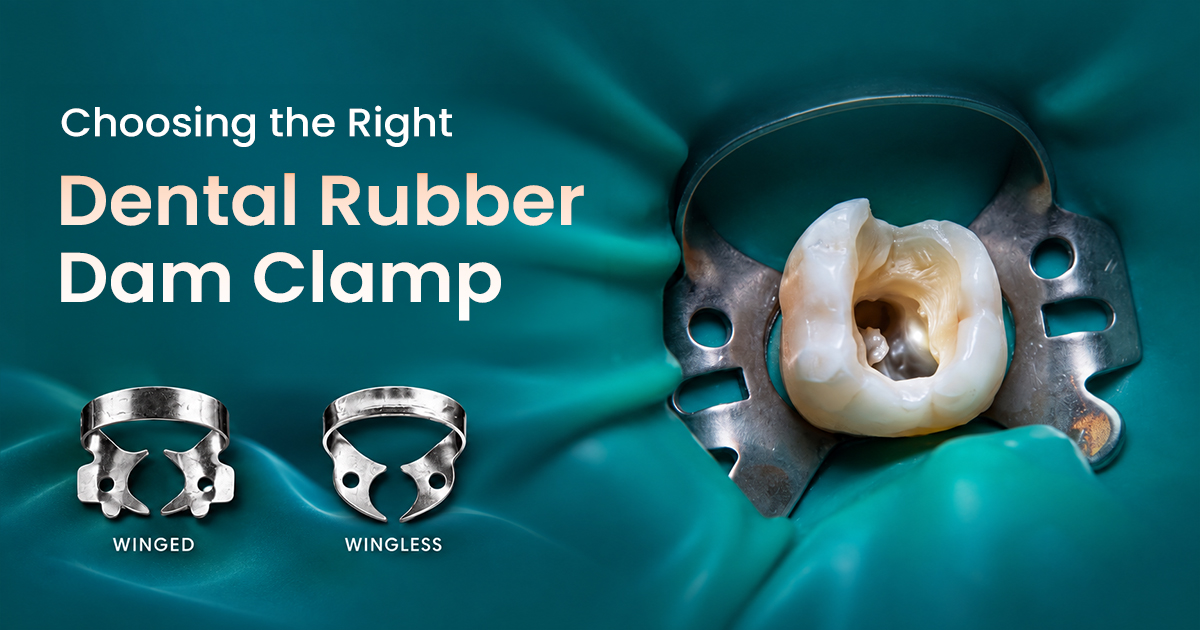
Choosing the Right Dental Rubber Dam Clamp
Choosing the Right Dental Rubber Dam ClampAn Isolation Selection Guide Selecting the correct dental dam clamps involves matching jaw design, bow configuration,

Bis-acryl vs. PMMA Temporary Materials
Bis-acryl vs. PMMA Temporary MaterialsA Case Selection Guide The choice between bis-acryl and PMMA provisional crown materials depends on the clinical case: bis

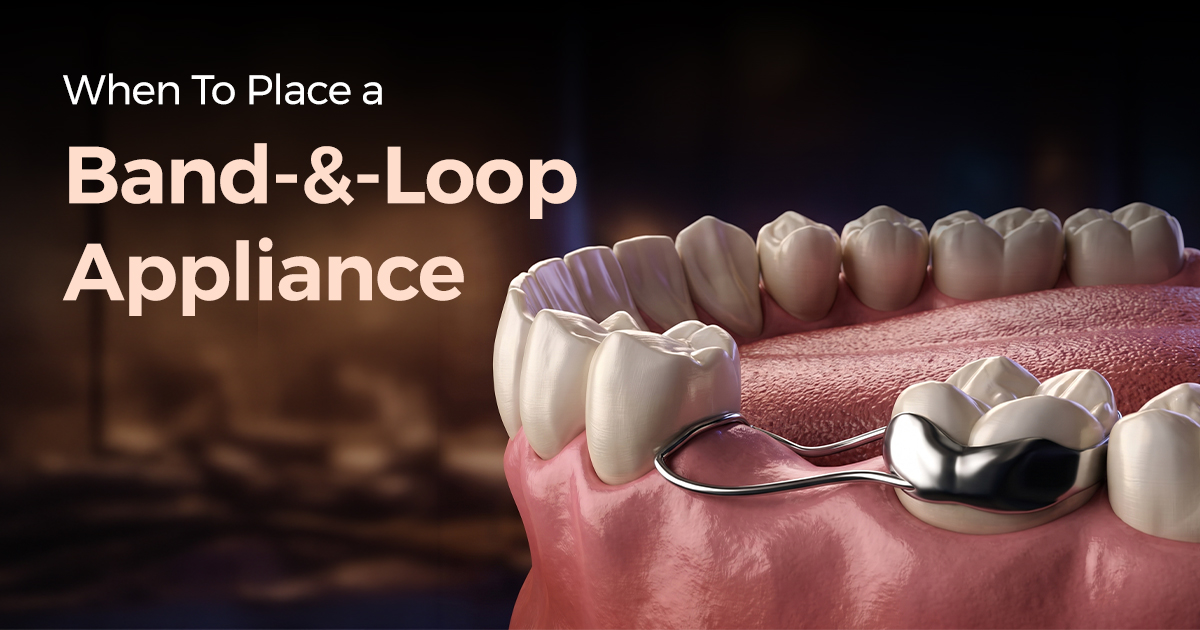
When To Place a Band-and-Loop Appliance
When To Place a Band-and-Loop ApplianceAn Evidence-Based Selection Protocol A band-and-loop is a unilateral, fixed appliance preserving mesiodistal dimension af
